 Dr. Vaishali Suri (P.T.)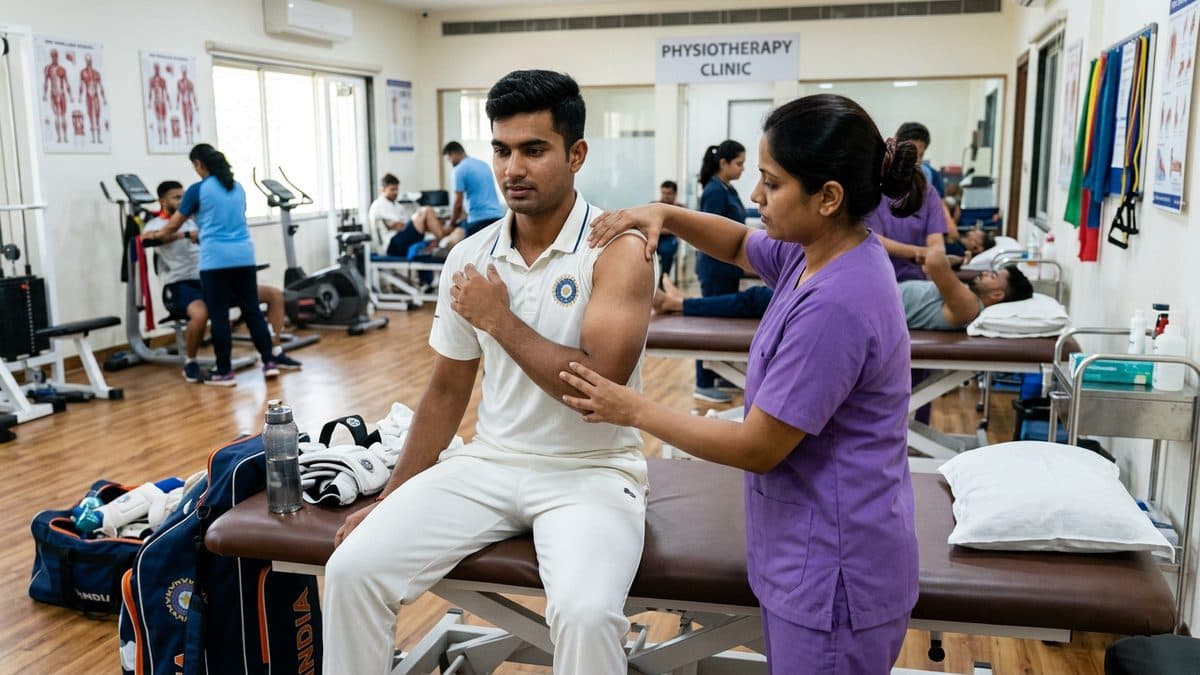
Physiotherapy for Cricket Injuries in Faridabad
Cricket is deeply embedded in Faridabad's sporting culture — played in schools, mohallas, sports academies, and parks across NIT, Ballabhgarh, Sector 14, and Green Field Colony. From junior cricket academies to senior club competitions, Faridabad produces talented cricketers who place considerable physical demands on their bodies.
Cricket has a distinct injury profile driven by its unique combination of explosive bowling, sustained batting, and intensive fielding — creating both acute trauma and chronic overuse injuries. Realign Rehab Clinic in NIT-5, Faridabad provides specialist sports physiotherapy for cricketers at all levels.
Most Common Cricket Injuries by Position
Fast Bowler Injuries (Highest Injury Rate)
- Lumbar spondylolysis (stress fracture of the pars interarticularis): The most serious cricket injury in young fast bowlers. Caused by repetitive hyperextension and rotation of the lumbar spine in bowling action. Requires 3–6 months of modified activity and specific rehabilitation. Physiotherapy addresses bowling mechanics and spinal loading.
- Lower back pain treatment (lumbar disc and facet pathology): Extreme bowling action loads with over 8× bodyweight transmitted through the lumbar spine. Disc herniation and facet irritation are common.
- Side strain (internal oblique avulsion): Sharp side pain during bowling delivery stride. Requires complete rest from bowling followed by core and oblique rehabilitation.
- Hamstring strain: From explosive run-up. Biceps femoris is most commonly injured. See our hamstring strain guide for detailed rehabilitation.
- Shoulder: Deceleration forces during follow-through stress the posterior rotator cuff treatment and labrum in fast bowlers.
Batsman Injuries
- Hand and finger injuries: Glove contact, ball impact on unprotected fingers
- Knee: Running between wickets, diving — ACL and meniscal injuries
- Shoulder: Dive fielding on the dominant shoulder
Wicketkeeper Injuries
- Knee (meniscal and patellar): Prolonged squatting loads the patellofemoral joint and menisci
- Wrist and hand: Repeated ball impact and diving
- Back: Prolonged crouching position
Fielder Injuries
- Shoulder strain from throwing (particularly long throws from the boundary)
- Ankle sprain from ground unevenness
- Hamstring and groin from explosive sprinting
Cricket Injury Prevention and Rehabilitation at Realign Clinic Faridabad
Physiotherapy Treatment for Cricket Injuries
Fast Bowler Lumbar Rehabilitation
Specific lumbar stabilisation exercises (transversus abdominis, multifidus), bowling mechanics analysis, and progressive return to bowling load programme. For spondylolysis: bone healing phase (6–8 weeks), then rehabilitation phase (8–12 weeks), then graduated return to bowling.
We coordinate with cricket coaches to modify bowling action where technique is a causative factor.
Hamstring Rehabilitation (Cricket-Specific)
Eccentric loading progression with cricket-specific movements: explosive run-up simulation, fielding dive patterns. See detailed protocol in our hamstring strain guide.
Shoulder Rehabilitation for Fielders and Bowlers
Rotator cuff and scapular strengthening, throwing mechanics assessment, proprioception training. Graduated return to throwing programme for fielders recovering from shoulder injuries.
Frequently Asked Questions — Cricket Injuries
Q: How do I know if I have a lumbar stress fracture from bowling?
Lumbar spondylolysis (stress fracture) typically presents as one-sided lower back pain that worsens with bowling and hyperextension, improving with rest. Pain may radiate to the buttock.
A clinical assessment and MRI (more sensitive than X-ray for early stress reactions) confirm the diagnosis. It is essential not to continue bowling through this pain — continued loading risks complete fracture and long-term spinal instability.
Q: When can a bowler return to bowling after a side strain?
A side strain (internal oblique avulsion or tear) typically requires 4–6 weeks of complete rest from bowling, followed by 4–6 weeks of progressive oblique and core rehabilitation, then a graduated return to bowling programme. Full return to competitive bowling typically occurs at 10–14 weeks with appropriate physiotherapy.
Q: Does Realign Clinic work with cricket academies in Faridabad?
Vaishali Suri provides sports physiotherapy services for cricket academies and clubs across Faridabad. Services include injury assessments, rehabilitation programmes, load management education, and injury prevention screening.
Contact us at +91 9818185589 to discuss team arrangements.
Book Cricket Injury Physiotherapy in Faridabad
Call +91 9818185589. Realign Rehab Clinic, NIT-5, Faridabad. Expert sports physiotherapy for cricketers — also see sports physiotherapy services and sports injury rehabilitation.
References
- Orchard JW et al. (2016). Fast bowling workloads and the relationship with lumbar spondylolysis. BJSM, 50(8):501–507.
- Stretch RA. (2003). Cricket injuries: a longitudinal study of the nature of injuries to South African cricketers. BJSM, 37(3):250–253.
Content author: Dr. Vaishali Suri (P.T.), MPT (Sports Medicine), BPT, MIAP, MIAP.