 Dr. Vaishali Suri (P.T.)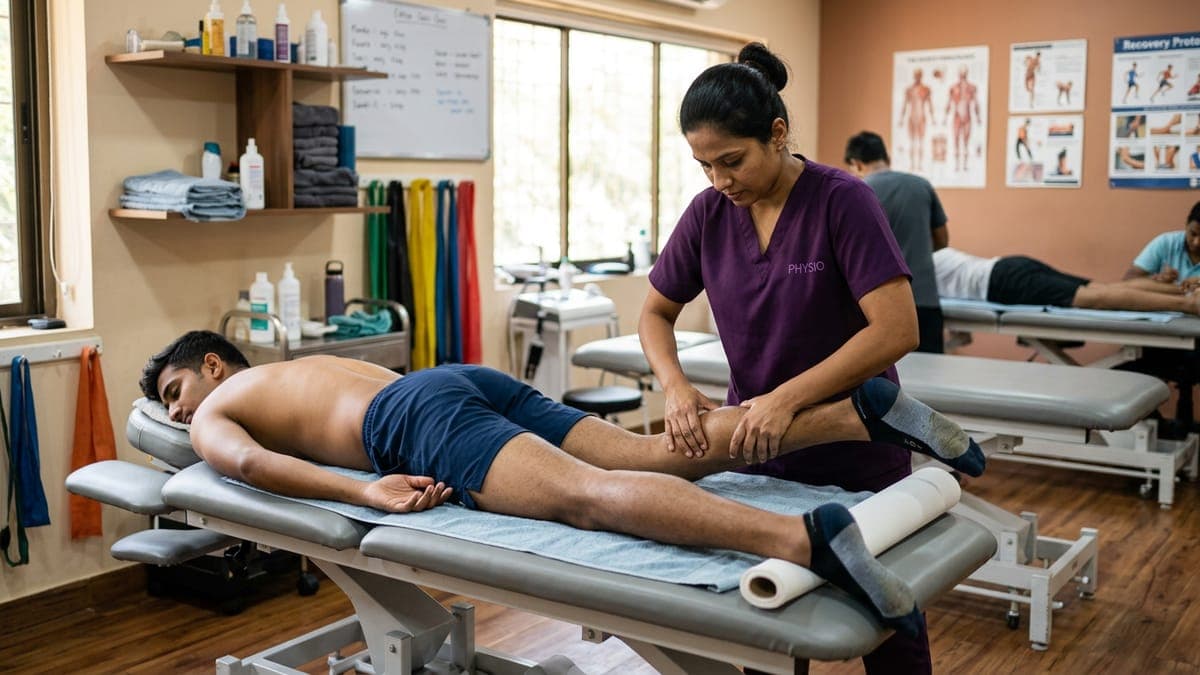
Calf Strain: Physiotherapy Treatment in Faridabad
Calf strains — tears of the gastrocnemius or soleus muscles — are among the most common acute muscle injuries in sport, particularly in running, court sports, and football. The sudden onset ('tennis leg') — a sharp pain at the back of the calf during push-off — is immediately distinctive.
With appropriate physiotherapy, most athletes return to sport within 4–8 weeks; without it, re-injury rates are markedly higher.
At Realign Rehab Clinic, NIT-5, Faridabad, our expert physiotherapists provide personalised, evidence-based care. Serving NIT, Green Field Colony, Ballabhgarh, Sector 21–82, and across Faridabad. Contact us: +91 9818185589.
Causes and Risk Factors
- Sudden acceleration or push-off from a stationary position
- Inadequate warm-up before explosive activity
- Tight, fatigued calf muscles from insufficient recovery
- Sudden change of direction in court sports (badminton, tennis, squash)
- Age-related reduction in muscle elasticity (medial gastrocnemius tears more common over 40)
- Previous calf strain — the single biggest risk factor for recurrence
- Achilles tendinopathy-related compensatory loading patterns
Signs and Symptoms
- Sudden sharp pain in the calf during push-off or sprinting ('tennis leg' pattern)
- Localised tenderness and swelling in the calf muscle belly
- Bruising appearing 24–48 hours after the injury
- Pain on calf stretching and resisted plantar flexion
- Difficulty walking on the affected leg
- In Grade 3 tears: a palpable defect in the muscle belly
Physiotherapy Treatment at Realign Rehab, Faridabad
- Acute phase (72 hours): POLICE (Protection, Most effective Loading, Ice, Compression, Elevation)
- Manual therapy: soft tissue techniques for haematoma resorption from day 3–5
- Progressive calf loading: isometric, concentric, and eccentric heel drops
- Gait retraining: normalising walking pattern before progressing to running
- Return-to-running protocol: walk-run intervals with systematic progression
- Sport-specific agility and reactive movement retraining before full return
- Achilles and calf flexibility programme as protection against recurrence
- Prevention programme: eccentric calf training as ongoing maintenance for athletes
Frequently Asked Questions
How long does a calf strain take to heal?
Grade 1 (mild): 1–2 weeks. Grade 2 (moderate tear): 4–6 weeks. Grade 3 (complete tear): 3–4 months. Return to sport requires objective strength and function testing, not just pain resolution.
Should I stretch a calf strain?
Gentle stretching is introduced from day 3–5 after the initial inflammatory phase, not immediately. Aggressive stretching of an acute tear worsens bleeding and delays healing.
Your physiotherapist will guide the timing and intensity of stretching.
When can I run after a calf strain?
Walking should be pain-free before beginning running. A graded walk-run interval programme typically starts at 3–4 weeks for Grade 2 injuries, with full running achieved at 6–8 weeks.
Full return to sport at 8–10 weeks.
Can I prevent calf strains?
Yes — eccentric calf training (single-leg heel drops), adequate warm-up, progressive training load increases, and avoiding over-fatigue measurably reduces calf strain risk. Athletes with previous calf injuries should include preventive loading as routine maintenance.
What does a calf strain feel like?
A sudden sharp 'snap' or 'kick' sensation at the back of the calf during push-off, followed by immediate pain, swelling, and difficulty walking. Many patients initially think they were hit from behind.
This is the classic 'tennis leg' presentation.
Book Your Consultation
Contact Realign Rehab Clinic today:
- 📍 NIT-5, Faridabad (near Green Field Colony, Ballabhgarh Road)
- 📞 +91 9818185589
- 🕑 Mon–Sat: 8 AM–8 PM