 Dr. Vaishali Suri (P.T.)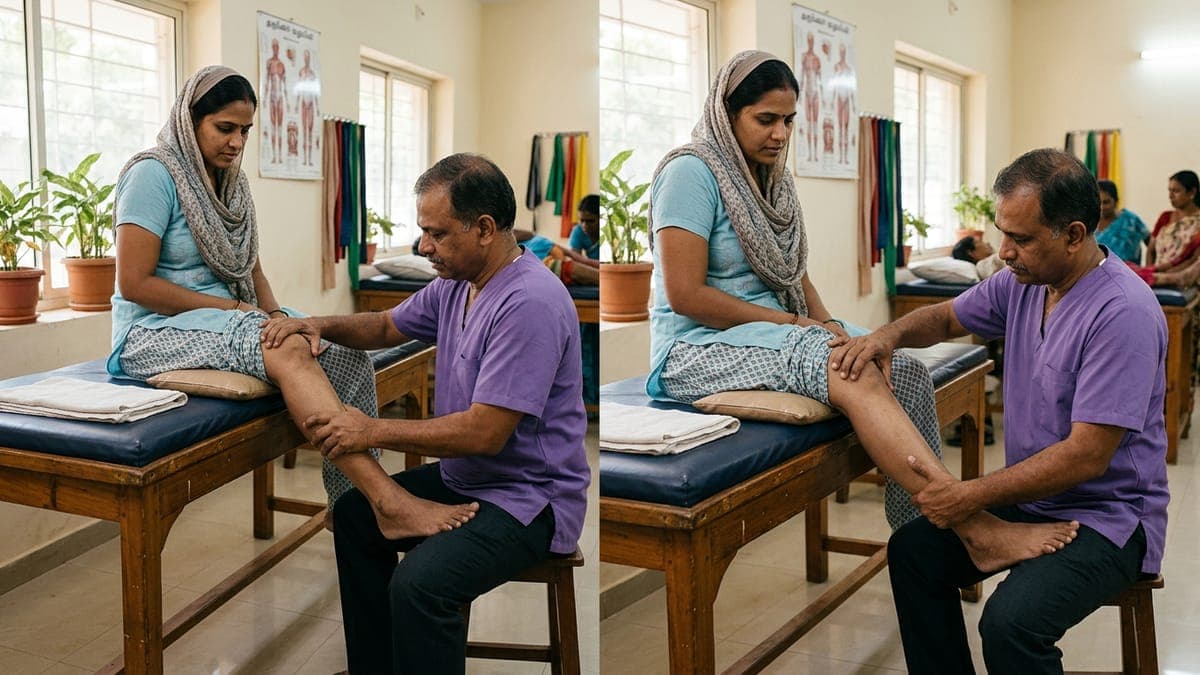
Knee Ligament Injuries: Physiotherapy Rehabilitation in Faridabad
The knee has four major ligaments: ACL (anterior cruciate), PCL (posterior cruciate), MCL (medial collateral), and LCL (lateral collateral). Ligament injuries — ranging from grade 1 sprains to complete ruptures — are among the most common and consequential sports injuries.
Whether you need surgery depends on which ligament, the grade of injury, your activity demands, and the success of physiotherapy rehabilitation.
At Realign Rehab Clinic, NIT-5, Faridabad, our expert physiotherapists provide personalised, evidence-based care. Serving NIT, Green Field Colony, Ballabhgarh, Sector 21–82, and across Faridabad. Contact us: +91 9818185589.
Causes and Risk Factors
- ACL rupture: sudden pivoting, landing, or hyperextension mechanisms — common in football, basketball
- MCL sprain: direct valgus force to the knee — contact sports, skiing
- PCL injury: dashboard-type mechanism or hyperflexion — road accidents, falls
- LCL/posterolateral corner injury: varus force or direct lateral blow
- Multiligament injuries: high-energy trauma (RTA, falls from height)
- Previous ligament injury: greatest risk factor for recurrence
Signs and Symptoms
- Acute injury: immediate pain, swelling (haemarthrosis), and giving way
- Positive clinical tests: Lachman's (ACL), valgus stress (MCL), drawer tests
- Instability: subjective giving way during direction changes, stairs, or uneven ground
- Effusion: joint swelling from bleeding into the joint (haemarthrosis in complete tears)
- Chronic instability: recurrent giving way with episodes of the knee 'buckling'
- Associated injuries: meniscal tears and cartilage damage commonly occur with ligament injuries
Physiotherapy Treatment at Realign Rehab, Faridabad
- Accurate diagnosis: clinical assessment + MRI to confirm ligament grade and associated injuries
- Conservative management for MCL grade 1–2, partial ACL tears in older adults, isolated PCL injuries
- Post-surgical ACL rehabilitation: the gold-standard is criteria-based, not time-based return to sport
- Neuromuscular retraining: hop tests, landing mechanics, agility drills
- Bracing guidance: functional bracing for return to sport
- Sport-specific progressive loading before clearance for full training
- Return-to-sport testing: strength symmetry, hop tests, psychological readiness
Frequently Asked Questions
Does every ACL tear require surgery?
No — partial ACL tears and complete tears in older, less-active patients are often successfully managed with physiotherapy alone. Surgery (ACL reconstruction) is typically recommended for young athletes who want to return to pivoting sports.
How long does ACL rehabilitation take?
Returning too early noticeably increases re-rupture risk.
Can I return to cricket/football after ACL surgery?
Yes — the majority of athletes return to their sport after proper ACL rehabilitation. Success rates are highest with criteria-based programmes. Our physiotherapist uses objective testing to keep safe return.
What is an MCL sprain?
An MCL (medial collateral ligament) sprain is stretching or tearing of the ligament on the inner knee, caused by a valgus (inward) force. Grade 1–2 MCL sprains are managed with physiotherapy in 3–6 weeks; grade 3 (complete) may require brace or surgical assessment.
How soon should I start physiotherapy after a knee ligament injury?
Within 24–48 hours, starting with swelling management, early movement, and quad activation. Early physiotherapy clearly reduces the swelling and muscle inhibition that follow ligament injuries.
Book Your Consultation
Contact Realign Rehab Clinic today:
- 📍 NIT-5, Faridabad (near Green Field Colony, Ballabhgarh Road)
- 📞 +91 9818185589
- 🕑 Mon–Sat: 8 AM–8 PM