
 Dr. Vaishali Suri (P.T.)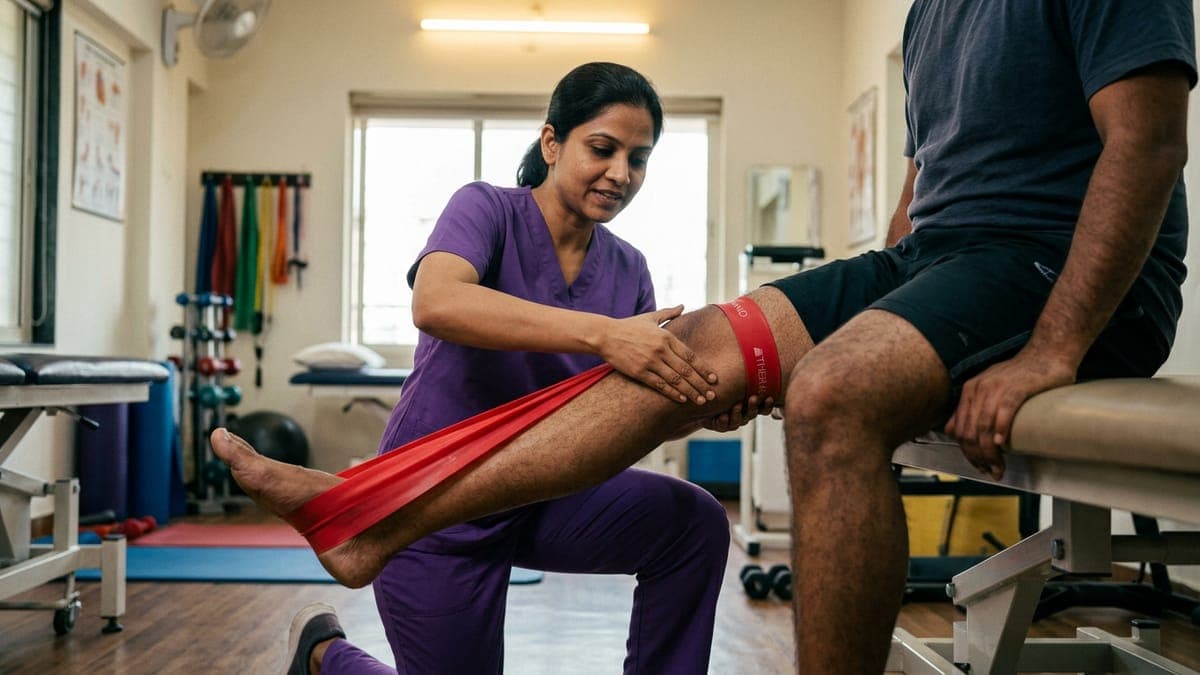
Patella Dislocation and Instability: Physiotherapy in Faridabad
Expert physiotherapy is critical to restore quadriceps strength, patellar tracking, and neuromuscular control to prevent recurrence.
At Realign Rehab Clinic , NIT-5, Faridabad, our expert physiotherapist Dr. Vaishali Suri provides evidence-based treatment designed for your specific needs.
We serve patients from NIT, Sector 14, Old Faridabad, Green Field Colony, Ballabhgarh, Surajkund, and surrounding areas.
Causes and Risk Factors
- Twisting or pivoting movement with the foot planted — most common mechanism
- Direct blow to the inner side of the kneecap pushing it outward
- Anatomical risk factors: shallow femoral groove, high-riding patella (patella alta), valgus knee alignment
- Generalized joint hypermobility — ligamentous laxity allowing easier dislocation
- Weak VMO (inner quad) and hip abductors providing insufficient patellar stability
- Female adolescents — the highest risk demographic due to anatomical factors and growth patterns
Signs and Symptoms
- Visible kneecap displaced to the outer side of the knee at the time of dislocation
- Significant knee swelling (haemarthrosis) following the injury
- Fear of the knee 'giving way' and reluctance to bend or load the knee after first episode
- Pain on the inner side of the kneecap (medial patellofemoral ligament injury)
- Weakness and inhibition of quadriceps after dislocation
- Apprehension test positive — fear response when the patella is pushed laterally
Physiotherapy Treatment at Realign Rehab, Faridabad
- VMO and quadriceps strengthening with patellar taping to optimise tracking during rehabilitation
- Hip abductor and external rotator strengthening to reduce valgus knee mechanics
- Patellar mobilisation and soft tissue work for medial retinaculum and MPFL recovery
- Proprioception and neuromuscular control training on unstable surfaces
- Sport-specific return-to-play programme with agility and direction-change testing
- Patient education on the risk of recurrence and long-term prevention strategies
Frequently Asked Questions
Do I need surgery after a patellar dislocation?
Most first-time dislocations are managed with physiotherapy — MPFL reconstruction is only recommended for recurrent instability (2+ dislocations) or significant cartilage damage. Even then, post-surgical physiotherapy is essential.
How long does rehabilitation take?
Return to sport typically requires 4–6 months after the first dislocation. VMO and hip strengthening is a 12-week programme.
The timeline is longer for recurrent dislocations or when cartilage damage occurred during dislocation.
When can I return to sport after patellar dislocation?
Typically 4–6 months with dedicated rehabilitation.
Is my knee weak permanently after dislocation?
No — with proper rehabilitation, most patients achieve full strength and stability. The key is completing the full rehabilitation programme, not just waiting until the acute pain has settled.
Book Your Consultation
📍 NIT-5, Faridabad | 📞 +91 9818185589 | Mon–Sat: 8 AM–8 PM
Related Articles: Shoulder Dislocation Rehabilitation in Faridabad: Prevent Re-dislocation | Wrist Pain from Keyboard and Mouse Use in Faridabad: Physiotherapy Solutions | Physiotherapy and Exercise for Weight Loss in Faridabad | Volleyball Injury Physiotherapy in Faridabad: Shoulder, Knee, and Ankle
Related Conditions: Wrist Pain Treatment | Urinary Incontinence Treatment | Tennis Elbow Treatment
Related Services: Advanced Sports Physiotherapy | Pediatric Physio