 Dr. Vaishali Suri (P.T.)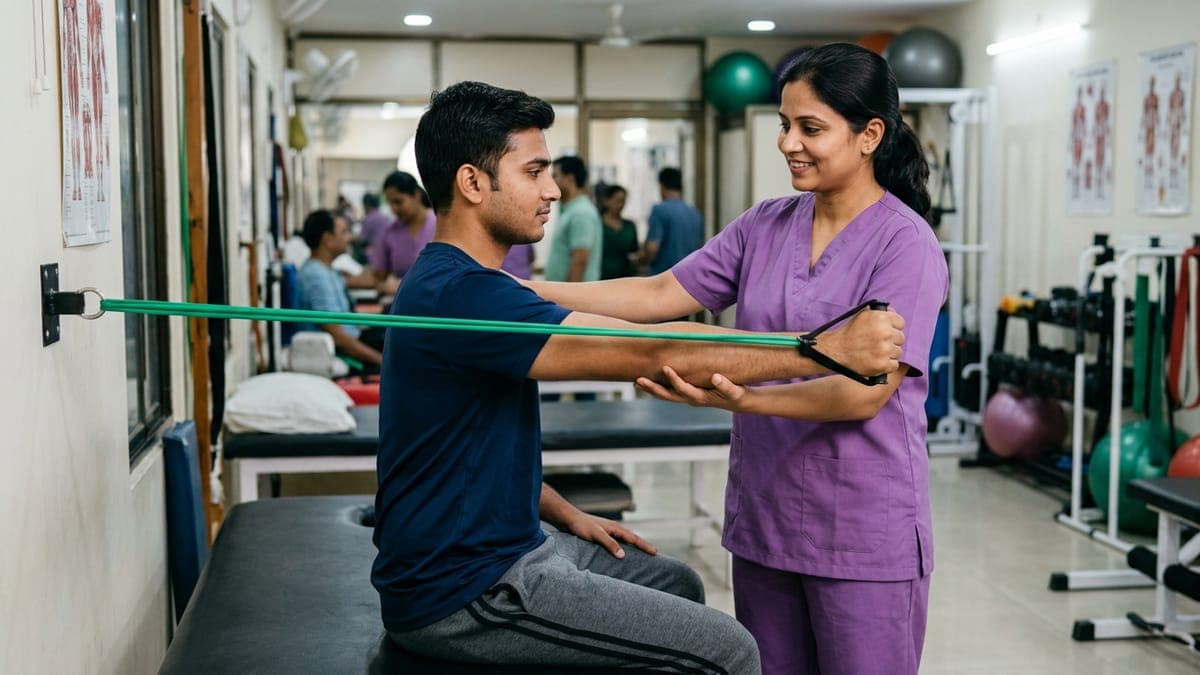
Shoulder Dislocation: Physiotherapy Rehabilitation in Faridabad
At Realign Rehab Clinic, NIT-5, Faridabad, our expert physiotherapists provide personalised, evidence-based care. Serving NIT, Green Field Colony, Ballabhgarh, Sector 21–82, and across Faridabad. Contact us: +91 9818185589.
Causes and Risk Factors
- Traumatic: direct blow to the shoulder or fall onto an outstretched arm — most common anterior dislocation mechanism
- TUBS pattern: Traumatic, Unilateral, Bankart lesion, Surgery often needed in young athletes
- AMBRI pattern: Atraumatic, Multidirectional, Bilateral, Rehabilitation responsive, Inferior capsule
- Previous dislocation: the strongest risk factor for recurrence
- Contact sports: rugby, wrestling, football, martial arts — high recurrence risk
Signs and Symptoms
- Acute: severe shoulder pain, prominent anterior shoulder deformity, arm held externally rotated
- Post-relocation: pain, swelling, and apprehension on shoulder movement
- Hill-Sachs lesion: impression fracture of the posterior humeral head
- Recurrent instability: giving way episodes with overhead activities or contact
Physiotherapy Treatment at Realign Rehab, Faridabad
- Acute phase (weeks 1–3): sling use, gentle pendulum exercises, pain management
- Phase 2 (weeks 3–6): rotator cuff reactivation, scapular stabilisation, gentle progressive mobility
- Phase 3 (weeks 6–12): progressive rotator cuff and scapular strengthening
- Phase 4 (3–6 months): sport-specific retraining, contact sport preparation
- Proprioception retraining: joint position sense is significantly impaired after dislocation
- Bankart lesion rehabilitation: conservative management for AMBRI pattern, surgical referral for TUBS with recurrence
- Throwing and overhead athlete rehabilitation: specific programme for cricketers, javelin athletes
- Return-to-sport criteria: objective strength and proprioception testing before clearance
Frequently Asked Questions
How long does it take to recover from a shoulder dislocation?
Return to daily activities: 4–6 weeks. Return to non-contact sport: 3–4 months.
Return to contact sport: 5–6 months. These timelines are based on achieving objective rehabilitation criteria, not just pain resolution.
Do I need surgery after a shoulder dislocation?
Not always. First-time dislocations in non-athletes and AMBRI-pattern instability respond well to physiotherapy. Surgery (Bankart repair) is recommended for athletes with recurrent TUBS-pattern instability and Bankart lesions.
How do I prevent shoulder dislocation from happening again?
Rotator cuff and scapular stabiliser strengthening, proprioception retraining, and sport-specific preparation are the keys. Athletes who complete a full physiotherapy rehabilitation programme have a 3× lower recurrence rate.
Can I return to cricket/rugby after a shoulder dislocation?
Yes — with proper rehabilitation. A sport-specific physiotherapy programme addressing the demands of your sport (bowling mechanics, tackling positions) is essential before returning to contact or overhead sport.
What is a Bankart lesion?
Conservative rehabilitation works for partial lesions; surgery is needed for complete lesions with recurrence.
Book Your Consultation
Contact Realign Rehab Clinic today:
- 📍 NIT-5, Faridabad (near Green Field Colony, Ballabhgarh Road)
- 📞 +91 9818185589
- 🕑 Mon–Sat: 8 AM–8 PM