
 Dr. Vaishali Suri (P.T.)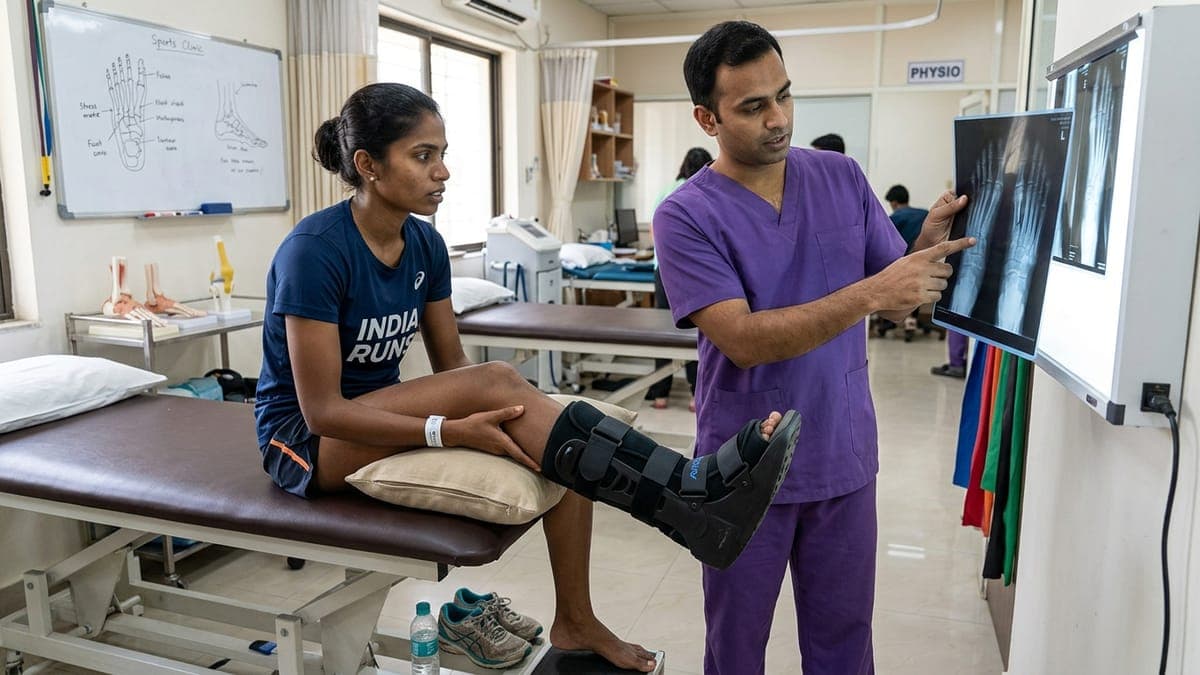
Stress Fractures: Physiotherapy Management in Faridabad
Stress fractures are microscopic bone injuries caused by repetitive loading that outpaces the bone's ability to remodel and repair. Unlike acute fractures from a single traumatic event, stress fractures develop gradually.
Often with insidious onset and subtle symptoms that are easily dismissed as 'shin splints' or 'growing pains.' Left unmanaged, stress fractures can progress to complete fractures requiring surgery. Physiotherapy combined with appropriate load management is the cornerstone of treatment.
At Realign Rehab Clinic, NIT-5, Faridabad, our expert physiotherapists provide personalised, evidence-based care. Serving NIT, Green Field Colony, Ballabhgarh, Sector 21–82, and across Faridabad. Contact us: +91 9818185589.
Causes and Risk Factors
- Sudden increase in training volume or intensity without adequate bone adaptation time
- Low bone density: osteoporosis, vitamin D deficiency, or female athlete triad
- Running on hard surfaces: concrete, asphalt — increasing ground reaction forces
- Inadequate footwear providing insufficient impact attenuation
- Biomechanical risk factors: flat feet, leg length discrepancy, hip weakness
- Nutritional deficiencies: low calcium, vitamin D, or inadequate caloric intake
- History of previous stress fractures — highest risk factor for recurrence
Signs and Symptoms
- Localised bone pain that increases progressively with activity and improves with rest
- Point tenderness over the affected bone (tibia, metatarsals, navicular, hip most common)
- Pain that was initially present only during activity but progresses to pain at rest
- Swelling over the affected area in some locations
- Positive hop test (one-leg hop reproduces pain) for tibial stress fractures
- In femoral neck stress fractures: groin pain that can refer to the knee
Physiotherapy Treatment at Realign Rehab, Faridabad
- Accurate diagnosis: MRI is the gold standard (bone scan or X-ray may show fractures later)
- Load management: activity modification, non-weight-bearing where indicated
- Bone healing optimisation: nutritional assessment, vitamin D supplementation guidance
- Graduated return-to-running protocol: systematic increase in loading over 8–12 weeks
- Biomechanical correction: gait retraining, orthotic prescription, footwear assessment
- Hip and core strengthening to reduce tibial and metatarsal impact loading
- Cross-training: cycling, pool running, and swimming to maintain fitness during recovery
- Prevention programme: load monitoring and bone health optimisation
Frequently Asked Questions
How is a stress fracture diagnosed?
MRI is the most sensitive test and can detect stress reactions before they become fractures. X-rays are often normal in the first 3 weeks.
Bone scan and CT are alternatives. A physiotherapist will conduct clinical tests (hop test, tuning fork test) during assessment.
How long do stress fractures take to heal?
Low-risk sites (tibial shaft, metatarsal shaft): 6–8 weeks. High-risk sites (femoral neck, navicular, 5th metatarsal): 8–16 weeks with strict non-weight-bearing. Return-to-sport after a structured protocol typically takes 12–16 weeks total.
Can I run with a stress fracture?
Running on an active stress fracture risks complete fracture — which can require surgery. Cross-training in a pool or on a bike maintains fitness during recovery without loading the bone.
Return to running must be gradual and structured.
What is the difference between shin splints and a stress fracture?
Shin splints (medial tibial stress syndrome) cause diffuse pain along the inner tibia, particularly at the start of runs. Stress fractures cause localised point tenderness that is pinpointable with a finger, and pain that is present even with walking in later stages.
Physiotherapy assessment distinguishes the two.
How do I prevent stress fractures?
The answer depends on your diagnosis, symptoms and examination. A qualified clinician can advise on the safest next step for you.
Book Your Consultation
Contact Realign Rehab Clinic today:
- 📍 NIT-5, Faridabad (near Green Field Colony, Ballabhgarh Road)
- 📞 +91 9818185589
- 🕑 Mon–Sat: 8 AM–8 PM