 Dr. Vaishali Suri (P.T.)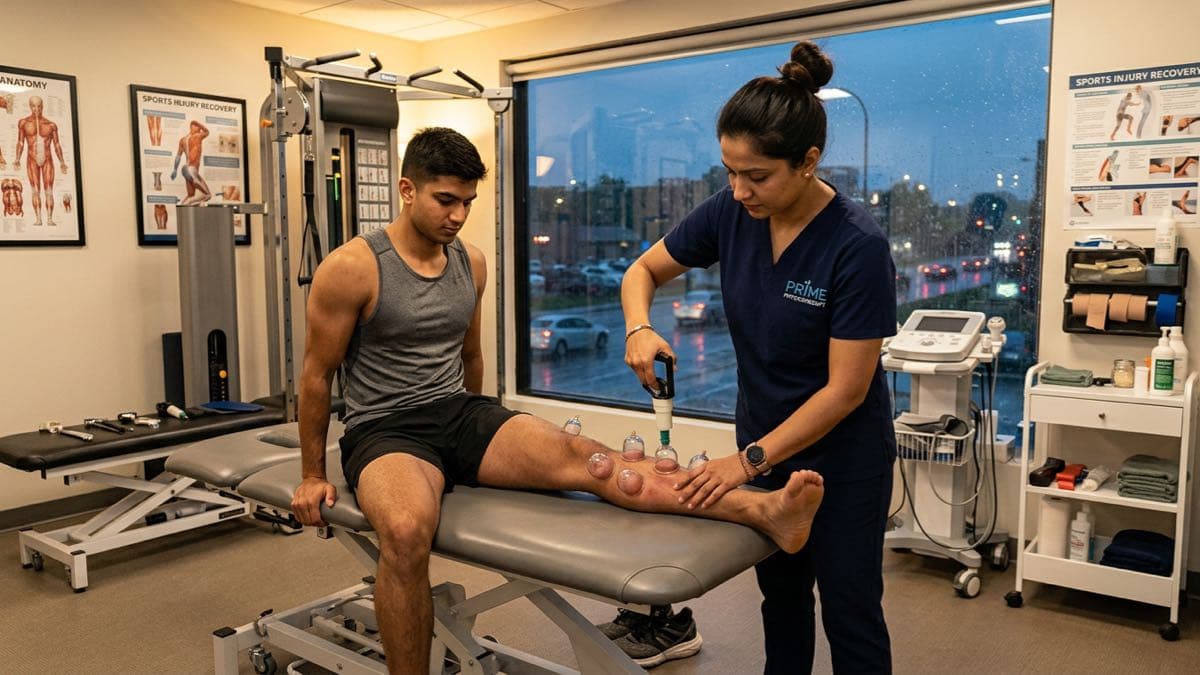
From Ancient Practice to Olympic Podiums: Cupping Therapy in Sports
When swimmer Michael Phelps walked out to compete at the 2016 Rio Olympics, the world noticed something unusual: circular purple marks across his shoulders and back. This sparked global curiosity about cupping therapy — an ancient technique that elite athletes worldwide now rely on for faster recovery and enhanced performance.
Today, cupping therapy is used by cricketers, footballers, marathon runners, and gym athletes across India, including right here in Faridabad.
Written and reviewed by Dr. Vaishali Suri (MPT (Sports Medicine), BPT, MIAP), Founder, Realign Rehab Clinic, NIT-5 Faridabad.
Why Do Athletes Use Cupping Therapy?
Intense training creates micro-tears in muscle fibers, triggers inflammation, and leads to metabolic waste accumulation — lactic acid, cytokines, and metabolic byproducts that cause soreness and delayed recovery. Recovery is the limiting factor in athletic performance: the faster you recover, the harder and more frequently you can train.
Cupping therapy accelerates recovery through multiple mechanisms that work together.
1. Rapid Clearance of Metabolic Waste
High-intensity exercise produces metabolites that cause the burning sensation during exercise and the muscle soreness that follows. Cupping dramatically increases local microcirculation, flushing these waste products from the muscle tissue far faster than passive rest alone.
2. Reduced Delayed Onset Muscle Soreness (DOMS)
DOMS peaks 24-72 hours after intense exercise. A 2019 randomized trial found that athletes receiving cupping therapy after intensive resistance training reported markedly lower DOMS scores and returned to full training capacity faster than the control group.
3. Fascial Release for Better Movement
Repeated athletic training creates fascial restrictions and adhesions that limit flexibility and alter movement patterns, increasing injury risk. Cupping — especially gliding cupping with oil — effectively releases these restrictions, improving range of motion and movement efficiency between training sessions.
4. Trigger Point Prevention and Treatment
Athletes are particularly prone to developing trigger points from repetitive training loads. Regular cupping therapy prevents trigger point accumulation and keeps muscles functioning properly throughout a training block.
5. Parasympathetic Recovery
Many athletes report feeling noticeably relaxed after cupping therapy. The skin stimulation from cupping activates the parasympathetic nervous system, contributing to mental recovery alongside physical recovery — important during high-stress competition periods.
Sports That Benefit Most from Cupping
- Swimming: Upper back, shoulder, and lat recovery. Michael Phelps is the most famous advocate.
- Running and athletics: Hamstrings, calves, IT band release for runners experiencing tightness.
- Cricket: Shoulder and lower back maintenance for bowlers; forearm release for batsmen.
- Football and Kabaddi: Quadriceps, hamstrings, hip flexor recovery after intense matches.
- Weightlifting and CrossFit: Full-body muscle recovery and thoracic mobility improvement.
- Badminton and Tennis: Shoulder, forearm, and wrist maintenance and recovery.
Research Evidence for Cupping in Sports
- A 2019 RCT found athletes receiving cupping after exercise had noticeably lower pain scores and faster recovery of strength compared to controls.
- A study in the Journal of Bodywork and Movement Therapies found that dry cupping over the hamstrings immediately improved flexibility in active athletes.
- Research in Evidence-Based Complementary and Alternative Medicine confirmed that cupping reduces markers of exercise-induced muscle damage.
Pre-Event vs Post-Event Cupping
Cupping is typically recommended after training and competition for recovery purposes. Pre-event cupping can help release tension and improve range of motion but should be used cautiously as it can temporarily affect proprioception.
At Realign Rehab Clinic, our sports physiotherapists advise on the peak timing based on your sport and competition schedule.
Cupping for Sports Injury Prevention
Beyond recovery, regular cupping therapy helps prevent common sports injuries:
- Reduces muscle tightness that predisposes to strains and tears
- Maintains fascial health and ideal joint range of motion
- Identifies and treats developing trigger points before they become painful
- Supports most effective biomechanics by maintaining tissue extensibility throughout training
Frequently Asked Questions
How soon after exercise should I get cupping therapy?
For recovery purposes, cupping can be done within 24-48 hours after intense training or competition. Allow 1-2 hours after maximal exertion before the session to let the acute inflammatory response begin settling.
How often should athletes get cupping?
Frequency depends on training load. During intensive training blocks, weekly cupping sessions are common among professional athletes. During the off-season, monthly maintenance sessions may be sufficient to maintain tissue health.
Is cupping therapy available for young athletes in Faridabad?
Yes. Cupping can be safely used for teenage athletes (typically 14 and above) with appropriate physiotherapist assessment and parental consent. At Realign Rehab Clinic, we work with youth athletes from sports academies across Faridabad.
Book Sports Cupping in Faridabad
Serious about your performance? Add cupping therapy to your recovery toolkit.
At Realign Rehab Clinic in Faridabad, our sports physiotherapists provide professional cupping therapy matched to athletes at every level. Call +91 9818185589 or book online.
References
- Salomonowitz G, et al. Immediate effects of silicone cupping on hamstring flexibility in athletes. Journal of Bodywork and Movement Therapies. 2022.
- Al-Bedah AMN, et al. The medical perspective of cupping therapy. Journal of Traditional and Complementary Medicine. 2019;9(2):90-97.
- Wang YQ, et al. Effect of wet cupping therapy on exercise-induced muscle damage. Evidence-Based Complementary and Alternative Medicine. 2017.
- Rozenfeld E, Kalichman L. New is the well-forgotten old: The use of dry cupping in musculoskeletal medicine. J Bodyw Mov Ther. 2016;20(1):173-178.
Why Evidence-Based Physiotherapy Makes the Difference
At Realign Rehab Clinic , NIT-5, Faridabad, every treatment plan is grounded in current clinical evidence and built around the individual patient. We do not follow generic protocols — we identify the root cause of your specific presentation and design a programme that directly addresses it.
This approach consistently produces faster recovery, more durable results, and lower recurrence rates than passive or symptom-only management.
Frequently Asked Questions About This Condition
How soon will I see results from physiotherapy?
Most patients notice measurable improvement within 3–4 sessions. Real functional progress typically occurs within 4–8 weeks.
The speed of recovery depends on the severity and chronicity of your condition, your compliance with the home exercise programme, and the accuracy of the diagnosis.
Do I need a referral to see a physiotherapist in Faridabad?
No referral is needed to see a physiotherapist at Realign Rehab Clinic. You can self-refer directly by calling +91 9818185589 .
We will assess your condition and determine if any imaging or specialist referral is required.
What should I do between physiotherapy sessions?
Your physiotherapist will provide a specific home exercise programme to perform between sessions. Consistency with these exercises is the single most important factor in your recovery speed.
Activity modification advice (what to avoid) is equally important and will be explained at each session.
Can I return to work and sport while receiving physiotherapy?
In most cases, yes — with appropriate modifications. Our physiotherapist will provide clear, specific activity guidelines based on your condition and progress.
Returning to work and sport earlier (with modifications) usually produces better outcomes than prolonged rest.
Contact Realign Rehab Clinic, Faridabad
Ready to start your recovery? Realign Rehab Clinic offers complete physiotherapy at NIT-5, Faridabad, and home visits across all sectors of Faridabad including Green Field Colony, Ballabhgarh, and Sector 21–82.
- 📍 NIT-5, Faridabad (near Green Field Colony, Ballabhgarh Road)
- 📞 +91 9818185589
- 🕑 Mon–Sat: 8 AM–8 PM
Related Articles: Sports Soft Tissue Therapy for Athletes in Faridabad | Sports Soft Tissue Therapy Benefits: What Patients Should Know | Cupping Therapy vs Dry Needling: Which Pain Treatment Is Better? | Cupping Therapy Benefits & Types Explained — Faridabad
Related Conditions: Sports Injury Rehab | Slip Disc Recovery | Postpartum Recovery
Related Services: Advanced Sports Physiotherapy | Cupping Therapy