 Dr. Vaishali Suri (P.T.)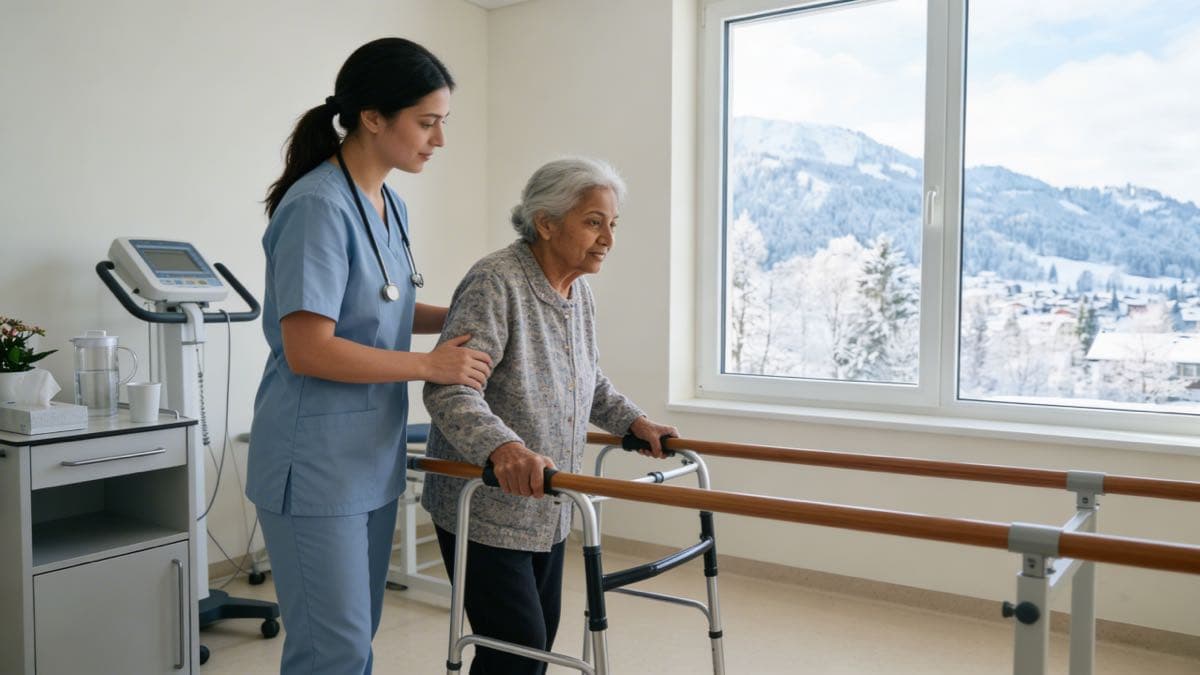
Post-Surgical Rehabilitation: Your Complete Recovery Guide
Surgery is often just the first step in a patient's recovery journey. Whether you have undergone a total knee replacement, hip replacement, ACL reconstruction, spinal surgery, or fracture fixation, post-surgical rehabilitation is essential for restoring function, reducing pain, and achieving the best possible outcome.
Research consistently shows that structured physiotherapy after surgery leads to faster recovery, better mobility, and lower complication rates.
Written and reviewed by Dr. Vaishali Suri (MPT (Sports Medicine), BPT, MIAP), Founder, Realign Rehab Clinic, NIT-5 Faridabad.
At Realign Rehab Clinic, we specialize in post-surgical rehabilitation programs designed to guide you safely from the operating table back to your daily life.
Why Post-Surgical Physiotherapy Matters
Surgery repairs the structural problem, but the body still needs to heal, regain strength, and relearn movement patterns. Without proper rehabilitation:
- Muscles can weaken and atrophy due to disuse
- Joints can become stiff from scar tissue formation and immobility
- Patients may develop compensatory movement patterns that lead to secondary problems
- Fear of movement (kinesiophobia) can delay recovery
A 2019 meta-analysis published in the British Journal of Sports Medicine found that supervised physiotherapy after ACL reconstruction measurably improved knee function, quadriceps strength, and return-to-sport rates compared to unsupervised rehabilitation.
Post-Surgical Rehabilitation by Surgery Type
Total Knee Replacement (TKR)
Knee replacement is one of the most common orthopedic surgeries. Rehabilitation typically begins within 24 hours of surgery.
Phase 1 (Weeks 1-2): Early Mobilization
- Ankle pumps and quadriceps sets to prevent blood clots
- Gentle knee flexion and extension exercises
- Walking with a walker or crutches
- Ice and elevation for swelling management
Phase 2 (Weeks 2-6): Progressive Strengthening
- Active-assisted and active range of motion exercises
- Straight leg raises, mini squats, step-ups
- Transition from walker to cane
- Goal: Achieve 90-100 degrees of knee flexion by week 6
Phase 3 (Weeks 6-12): Functional Recovery
- Full weight-bearing exercises
- Stair climbing, balance training
- Stationary cycling, resistance exercises
- Goal: Return to most daily activities
A study in the Journal of Bone and Joint Surgery (2020) demonstrated that patients who completed structured physiotherapy after TKR had markedly better knee function scores at 12 months compared to those with minimal rehabilitation.
Total Hip Replacement (THR)
Hip precautions (avoiding excessive flexion, adduction, and internal rotation) are critical in the early weeks to prevent dislocation.
- Weeks 1-6: Gentle hip exercises within precaution guidelines, gait training with walking aids, hip abductor strengthening
- Weeks 6-12: Progressive weight-bearing, balance exercises, functional activities like sitting-to-standing and stair climbing
- 3-6 months: Advanced strengthening, return to recreational activities
ACL Reconstruction
ACL rehabilitation is one of the longest recovery processes, typically requiring 9-12 months before returning to pivoting sports.
- Weeks 0-2: Pain and swelling management, gentle range of motion, quadriceps activation
- Weeks 2-6: Progressive knee flexion, partial weight-bearing, proprioceptive exercises
- Months 2-4: Full weight-bearing, closed-chain strengthening, cycling, pool exercises
- Months 4-6: Running progression, agility drills, sport-specific training
- Months 6-12: Return-to-sport testing, plyometrics, full sport participation
Spinal Surgery (Discectomy, Laminectomy, Fusion)
Spinal rehabilitation varies significantly depending on the procedure. General principles include:
- Early walking within pain limits (usually within 24-48 hours)
- Avoiding bending, lifting, and twisting in the initial weeks
- Progressive core stabilization exercises starting at 4-6 weeks
- Gradual return to normal activities over 3-6 months
Key Principles of Effective Post-Surgical Rehabilitation
- Start Early: Early mobilization reduces complications like deep vein thrombosis, pneumonia, and muscle wasting
- Follow a Progressive Plan: Exercises should advance gradually based on tissue healing timelines and clinical milestones
- Manage Pain Proactively: Use ice, positioning, gentle movement, and prescribed medications to keep pain under control
- Commit to Home Exercises: In-session work is important, but daily home exercises drive long-term recovery
- Communicate with Your Team: Keep your physiotherapist and surgeon informed about your progress, concerns, and any new symptoms
Warning Signs to Watch For
Contact your physiotherapist or surgeon immediately if you experience:
- Sudden increase in pain or swelling
- Fever, redness, or drainage at the surgical site
- Numbness, tingling, or loss of sensation in the operated limb
- Calf pain or swelling (possible deep vein thrombosis)
- Inability to bear weight when previously able
References
- Bade MJ, et al. Early high-intensity rehabilitation following total knee arthroplasty improves outcomes. J Orthop Sports Phys Ther. 2017;47(10):726-736.
- Filbay SR, Grindem H. Evidence-based recommendations for the management of anterior cruciate ligament (ACL) rupture. Best Practice & Research Clinical Rheumatology. 2019;33(1):33-47.
- Bandholm T, et al. Exercise therapy for patients with knee and hip osteoarthritis treatment and after arthroplasty. Ugeskr Laeger. 2014;176(44).
Why Evidence-Based Physiotherapy Makes the Difference
At Realign Rehab Clinic , NIT-5, Faridabad, every treatment plan is grounded in current clinical evidence and designed for the individual patient. We do not follow generic protocols — we identify the root cause of your specific presentation and design a programme that directly addresses it.
This approach consistently produces faster recovery, more durable results, and lower recurrence rates than passive or symptom-only management.
Frequently Asked Questions About This Condition
How soon will I see results from physiotherapy?
Most patients notice measurable improvement within 3–4 sessions. Meaningful functional progress typically occurs within 4–8 weeks.
The speed of recovery depends on the severity and chronicity of your condition, your compliance with the home exercise programme, and the accuracy of the diagnosis.
Do I need a referral to see a physiotherapist in Faridabad?
No referral is needed to see a physiotherapist at Realign Rehab Clinic. You can self-refer directly by calling +91 9818185589 .
We will assess your condition and determine if any imaging or specialist referral is required.
What should I do between physiotherapy sessions?
Your physiotherapist will provide a specific home exercise programme to perform between sessions. Consistency with these exercises is the single most important factor in your recovery speed.
Activity modification advice (what to avoid) is equally important and will be explained at each session.
Can I return to work and sport while receiving physiotherapy?
In most cases, yes — with appropriate modifications. Our physiotherapist will provide clear, specific activity guidelines based on your condition and progress.
Returning to work and sport earlier (with modifications) usually produces better outcomes than prolonged rest.
Contact Realign Rehab Clinic, Faridabad
Ready to start your recovery? Realign Rehab Clinic offers thorough physiotherapy at NIT-5, Faridabad, and home visits across all sectors of Faridabad including Green Field Colony, Ballabhgarh, and Sector 21–82.
- 📍 NIT-5, Faridabad (near Green Field Colony, Ballabhgarh Road)
- 📞 +91 9818185589
- 🕑 Mon–Sat: 8 AM–8 PM
Related Articles: Knee Replacement Rehabilitation in Faridabad: Recovery After TKR | Post-COVID Rehabilitation in Faridabad: Long COVID Physiotherapy | Why Does My Back Hurt? A Physiotherapy Guide for Faridabad Patients | Stroke Rehabilitation in Faridabad: Physiotherapy for Recovery
Related Conditions: Work Injury Rehab | Sports Injury Rehab | Slip Disc Recovery
Related Services: Orthopedic Physio | Vestibular Rehab