 Dr. Vaishali Suri (P.T.)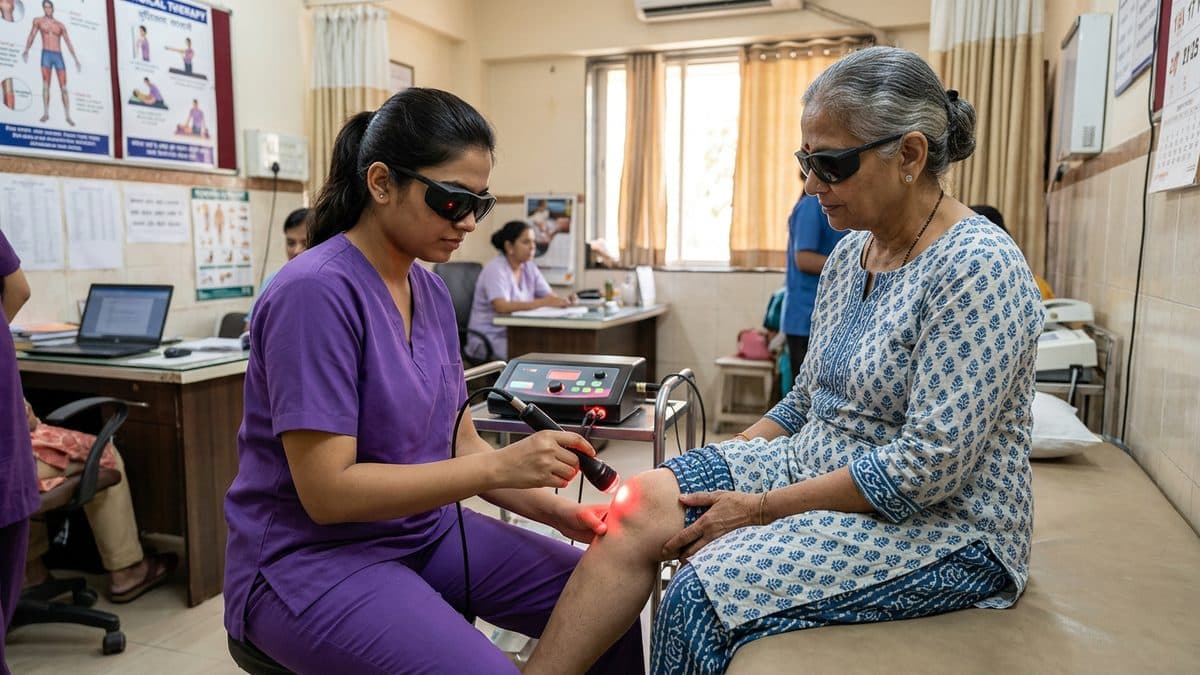
What Is Low-Level Laser Therapy?
Low-level laser therapy (LLLT), also called photobiomodulation (PBM), uses specific wavelengths of light (typically 600–1000 nm) at low power levels to stimulate biological processes at the cellular level. Unlike surgical lasers that cut or ablate tissue, LLLT does not heat tissue — it stimulates cellular energy production (ATP synthesis) through cytochrome c oxidase in the mitochondria.
Evidence-Based Effects
Multiple systematic reviews support LLLT for: Reduced inflammation: Decreases pro-inflammatory cytokines (IL-6, TNF-alpha). Accelerated tissue repair: Stimulates fibroblast activity, collagen synthesis, and angiogenesis.
Pain relief: Reduces central and peripheral sensitisation. Nerve regeneration: Promotes Schwann cell activity and axonal sprouting.
Conditions Treated
LLLT is effective for: Achilles tendinopathy, lateral epicondylalgia (tennis elbow), plantar fasciitis treatment, carpal tunnel syndrome syndrome, osteoarthritis treatment (knee and hand), neck pain, shoulder pain, and wound healing.
Treatment Parameters
The therapeutic window for LLLT is specific — too little or too much energy is ineffective. We use calibrated laser units with precise dose (J/cm²) delivery to support the best therapeutic outcomes.
What to Expect
Treatment is painless — patients typically feel nothing during laser application. Sessions last 5–15 minutes per area.
A course of 6–12 sessions is typically recommended for chronic conditions, with most patients noticing improvement after 3–4 sessions.
Laser Therapy in Faridabad
At Realign Rehab Clinic, NIT-5, Faridabad, LLLT is integrated into thorough physiotherapy programmes. Book your consultation today.
What Is Low-Level Laser Therapy (LLLT)?
Low-Level Laser Therapy (LLLT) — also called photobiomodulation (PBM) or cold laser therapy. Uses specific wavelengths of light (typically 630–1000 nm) at low power to stimulate biological tissue healing, reduce inflammation, and decrease pain.
Unlike surgical or cutting lasers that generate heat to destroy tissue, therapeutic lasers work through photochemical mechanisms at doses too low to damage tissue. LLLT is widely used in physiotherapy for wound healing, musculoskeletal pain, and inflammatory conditions.
How LLLT Works: Photobiomodulation Mechanisms
Laser light at therapeutic wavelengths is absorbed by chromophores in mitochondria — primarily cytochrome c oxidase — stimulating:
- Increased ATP production (cellular energy for repair)
- Reduced oxidative stress and reactive oxygen species
- Stimulation of fibroblast activity (collagen synthesis for tissue repair)
- Modulation of inflammatory cytokines (reduced IL-1β, TNF-α)
- Neuroinhibitory effects that reduce nerve conduction velocity and pain signal transmission
Conditions Treated with LLLT at Realign Clinic Faridabad
- Neck and back pain: Reduces cervical and lumbar muscle spasm and joint inflammation
- Tennis elbow and tendinopathies: Accelerates tendon healing and reduces chronic tendon inflammation
- Wound healing: Post-surgical scars, diabetic wounds, pressure sores — stimulates fibroblast activity
- Rheumatoid arthritis: Reduces joint inflammation and morning stiffness
- Herpes zoster (shingles) post-herpetic neuralgia: Reduces nerve pain
- Medial tibial stress syndrome: Emerging evidence for tibial bone stress acceleration
Frequently Asked Questions — Laser Therapy
Q: Is laser therapy safe?
Yes — LLLT is very safe when applied by a trained physiotherapist with appropriate dosimetry and protective eyewear. It is non-invasive, painless (no sensation for most patients), and has no known serious adverse effects at therapeutic doses.
Contraindications include: direct over eyes (always use protective goggles), over malignancies, over active haemorrhage, during pregnancy (over the abdomen).
Q: Does laser therapy hurt?
No. LLLT is completely painless — patients typically feel nothing during treatment, or at most a slight warmth. The lack of sensation makes it particularly well-suited for sensitive areas, wounds, and patients with pain sensitivity.
Q: How many laser therapy sessions are needed?
Typically 8–12 sessions for musculoskeletal conditions, 2–3 times per week. Wound healing may require more sessions depending on wound size and healing rate. Most patients notice improvement from session 3–4.
Book Laser Therapy in Faridabad
Call +91 9818185589. Realign Rehab Clinic, NIT-5, Faridabad. Laser therapy as part of in-depth physiotherapy treatment programmes.
References
- Chow RT et al. (2009). Efficacy of low-level laser therapy in the management of neck pain. Lancet, 374(9705):1897–1908.
- Bjordal JM et al. (2003). Low-level laser therapy in acute pain. Photomed Laser Surg, 21(3):141–146.
Content author: Dr. Vaishali Suri (P.T.), MPT (Sports Medicine), BPT, MIAP, MIAP.