
 Dr. Vaishali Suri (P.T.)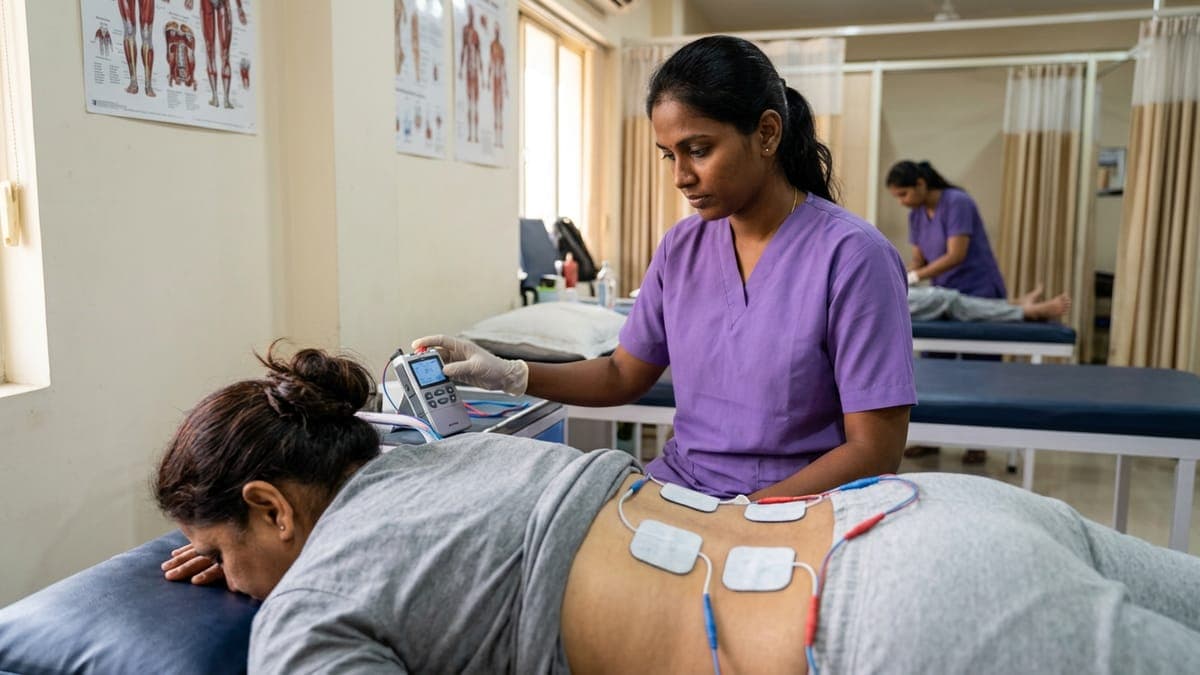
What Is TENS Therapy?
TENS (Transcutaneous Electrical Nerve Stimulation) therapy is a non-invasive pain relief technique that uses low-voltage electrical currents delivered through electrode pads placed on the skin. TENS devices send gentle electrical impulses through the skin to underlying nerves — interrupting or modifying pain signals before they reach the brain.
TENS therapy is one of the most widely used pain management tools in physiotherapy worldwide and is available at Realign Rehab Clinic in Faridabad.
How TENS Works: Gate Control and Endorphin Release
TENS produces pain relief through two main mechanisms:
- Gate Control Theory (High-Frequency TENS, 80–150 Hz): Activates large-diameter Aβ sensory fibres that compete with pain signals from smaller Aδ and C fibres, "closing the gate" to pain transmission in the dorsal horn of the spinal cord. Produces immediate but shorter-duration pain relief.
- Endogenous Opioid Release (Low-Frequency TENS, 2–10 Hz): Triggers release of endorphins and enkephalins — the body's natural pain-relieving chemicals — through acupuncture-like stimulation. Pain relief is delayed but longer-lasting (30–60 minutes post-treatment).
Conditions Treated with TENS at Realign Clinic Faridabad
- Knee osteoarthritis: NICE guidelines support TENS for knee OA pain management
- Neck pain: Cervical TENS reduces acute and chronic neck pain effectively
- Shoulder pain: Subacromial impingement and rotator cuff treatment tendinopathy pain reduction
- Neuropathic pain: Diabetic peripheral neuropathy, post-herpetic neuralgia
- Post-surgical pain: Reduces analgesic requirements after orthopaedic surgery
- Labour pain: Obstetric TENS provides effective non-pharmacological pain relief during labour
TENS Therapy Parameters: How We Set the Machine
Effective TENS requires correct parameter selection — the wrong settings produce no benefit. At Realign Clinic, we optimise parameters for each condition:
- High-frequency TENS (80–150 Hz, pulse width 50–200 μs): For immediate pain relief. Produces tingling sensation. Used for acute and chronic pain. Intensity: comfortable but strong tingling — never painful.
- Low-frequency TENS (2–10 Hz, pulse width 200–300 μs): For endorphin release. Produces visible muscle twitches. Used for chronic pain and neuropathic conditions. Intensity: tolerable muscle twitch.
- Burst-mode TENS: Low-frequency bursts delivered at high frequency — combines both mechanisms for patients who do not respond to pure high or low frequency.
Electrode Placement for Common Conditions
- Low back pain: One pair of electrodes on either side of the painful spinal level, paravertebral placement
- knee pain treatment: One electrode medial, one lateral to the kneecap — or in the popliteal space for posterior knee pain
- Neck pain: Paravertebral placement at the cervical level — avoiding direct placement on the anterior neck (carotid sinus)
- Shoulder pain: Over the deltoid and posterior shoulder — guided by area of maximum pain
TENS Safety and Contraindications
TENS is very safe when contraindications are respected:
- Never use over: Anterior neck/carotid sinus, directly over the heart, open wounds, skin infections, or eyes
- Contraindicated in: Patients with pacemakers (absolute contraindication), epilepsy (certain placements), first trimester pregnancy (abdominal placement)
- Use with caution in: Areas of reduced sensation (neuropathy), metal implants near electrode placement
Buying a TENS Machine for Home Use in Faridabad
Portable TENS machines are widely available in pharmacies and online in Faridabad, typically priced ₹500–₹3,000 for consumer-grade devices. At Realign Clinic, we advise on appropriate devices for home use and provide electrode placement guidance for your specific condition.
Ensuring you get maximum benefit from your home TENS unit. Call +91 9818185589 for advice.
Frequently Asked Questions — TENS Therapy
Q: Does TENS therapy cure pain or just mask it?
TENS provides genuine pain relief by modifying nerve signals — it is not just masking pain in the way some analgesics are. However, for musculoskeletal conditions, TENS is most effective as an adjunct to physiotherapy rather than a standalone treatment.
Addressing the underlying cause (muscle weakness, movement dysfunction, joint stiffness) through physiotherapy is what produces lasting pain relief. TENS is excellent for managing pain during the rehabilitation process.
Q: Can I use TENS every day?
Yes — TENS is safe for daily use and many chronic pain patients use it daily. Some patients use it for 30–60 minutes before exercise (pain relief enabling better movement), others use it during activities or for acute pain management.
Prolonged use can reduce effectiveness (habituation) — varying parameters and electrode placement maintains benefit over time.
Q: Is TENS available as a home treatment in Faridabad?
Yes — TENS is one of the few physiotherapy modalities that can be used independently at home with proper guidance. We can advise on appropriate home TENS units and provide training in electrode placement and parameter selection for your specific condition during a clinic or home visit.
Call +91 9818185589.
Book TENS Therapy at Realign Clinic Faridabad
Call +91 9818185589. Realign Rehab Clinic, NIT-5, Faridabad. TENS therapy as part of thorough physiotherapy assessment and treatment. Also see: home exercise guide.
References
- Johnson M et al. (2012). Transcutaneous electrical nerve stimulation for acute and chronic pain. Cochrane Database Syst Rev.
- Nnoaham KE & Kumbang J. (2008). Transcutaneous electrical nerve stimulation (TENS) for chronic pain. Cochrane Database Syst Rev.
Content author: Dr. Vaishali Suri (P.T.), MPT (Sports Medicine), BPT, MIAP, MIAP.