
 Dr. Vaishali Suri (P.T.)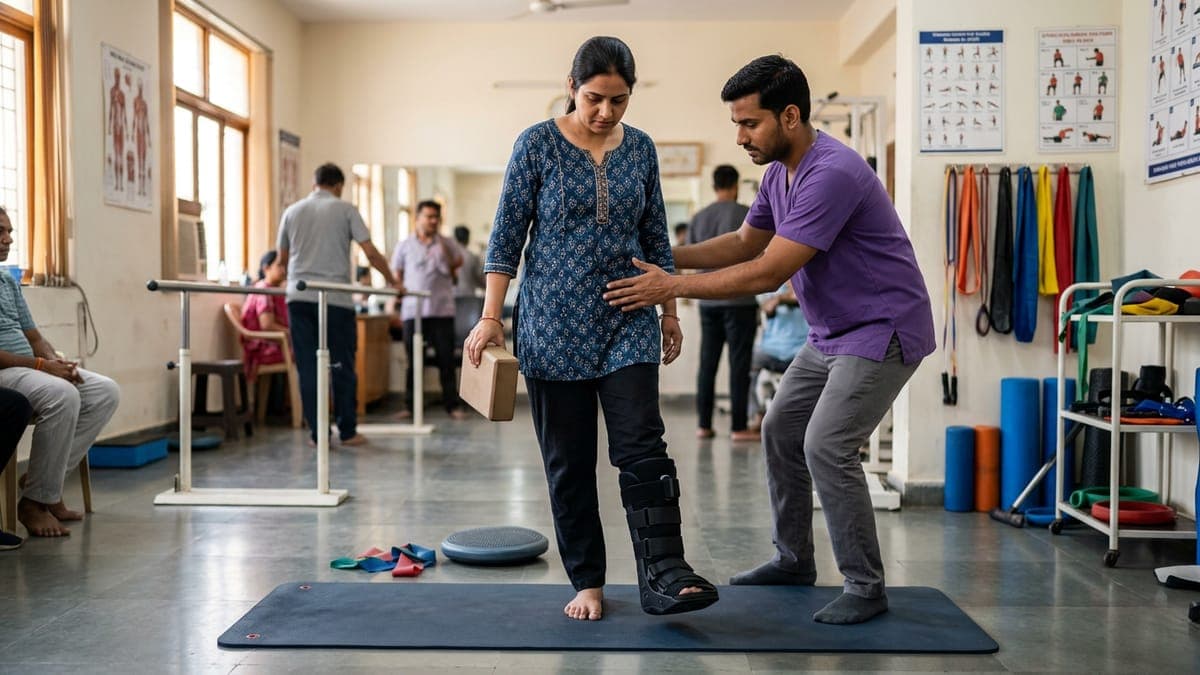
Fibula Fracture Rehabilitation: Physiotherapy in Faridabad
The fibula — the thin bone on the outer side of the lower leg. Can fracture at several locations: at the ankle (lateral malleolus, the most common), at the fibula shaft from direct impact, or as a stress fracture from overuse.
After the fracture heals, physiotherapy is essential to restore full ankle mobility, leg strength, and safe return to walking, sport, and daily activities.
At Realign Rehab Clinic , NIT-5, Faridabad, our expert physiotherapist Dr. Vaishali Suri provides evidence-based treatment built around your specific needs.
We serve patients from NIT, Sector 14, Old Faridabad, Green Field Colony, Ballabhgarh, Surajkund, and surrounding areas.
Causes and Risk Factors
- Ankle inversion sprain with rotational force fracturing the lateral malleolus
- Direct blow to the outer lower leg in sport or road traffic accidents
- Stress fracture in runners or military recruits from repetitive impact loading
- Avulsion fracture at the ankle from sudden forceful ankle ligament pull
- Fall from height landing on the outer foot and ankle
- Pathological fracture in patients with osteoporosis or bone metastases
Signs and Symptoms
- Outer ankle or lower leg pain, swelling, and bruising immediately after injury
- Inability or difficulty weight-bearing through the injured leg
- Tenderness directly over the fibula bone on palpation
- Stiffness after cast removal — restricted dorsiflexion and plantarflexion
- Weakness of peroneal and calf muscles after immobilisation in cast or boot
- Instability or lack of confidence walking on uneven ground
Physiotherapy Treatment at Realign Rehab, Faridabad
- Oedema management — elevation, compression, and manual lymphatic drainage
- Early ankle range-of-motion exercises within fracture healing protocol limits
- Progressive weight-bearing programme from crutches to full independent walking
- Peroneal and calf muscle strengthening — the muscles that protect the fibula
- Proprioception and balance retraining on progressively challenging surfaces
- Gait retraining — restoring normal heel-toe walking pattern after the fracture
Frequently Asked Questions
When can I walk normally after a fibula fracture?
Most patients with lateral malleolus fractures managed in a walking boot can begin partial weight-bearing at 2–4 weeks and progress to full weight-bearing at 6–8 weeks. Physiotherapy from week 6 onward accelerates recovery significantly.
Do I need surgery for a fibula fracture?
Most undisplaced fibula fractures are managed conservatively in a cast or walking boot. Displaced fractures, bimalleolar fractures, or fractures with significant ligament injury may require surgical fixation (ORIF).
Your orthopaedic surgeon will advise.
How long does physiotherapy take after fibula fracture?
Most patients need 8–12 weeks of physiotherapy. Athletes returning to sport may need 4–6 months of complete rehabilitation. Consistent attendance and home exercise compliance noticeably affect recovery speed.
Will my ankle be as strong as before?
With dedicated physiotherapy, most patients achieve full functional recovery. Adequate peroneal and calf strengthening is key — these muscles protect the fibula and ankle ligaments from re-injury.
Book Your Consultation
📍 NIT-5, Faridabad | 📞 +91 9818185589 | Mon–Sat: 8 AM–8 PM
Related Articles: Post-Fracture Stiffness Treatment in Faridabad: Physiotherapy After Any Fracture | Wrist Fracture Rehabilitation in Faridabad: Recovery After Colles Fracture | Wrist Pain from Keyboard and Mouse Use in Faridabad: Physiotherapy Solutions | Physiotherapy and Exercise for Weight Loss in Faridabad
Related Conditions: Wrist Pain Treatment | Urinary Incontinence Treatment | Tennis Elbow Treatment
Related Services: Advanced Sports Physiotherapy | Pediatric Physio