
 Dr. Vaishali Suri (P.T.)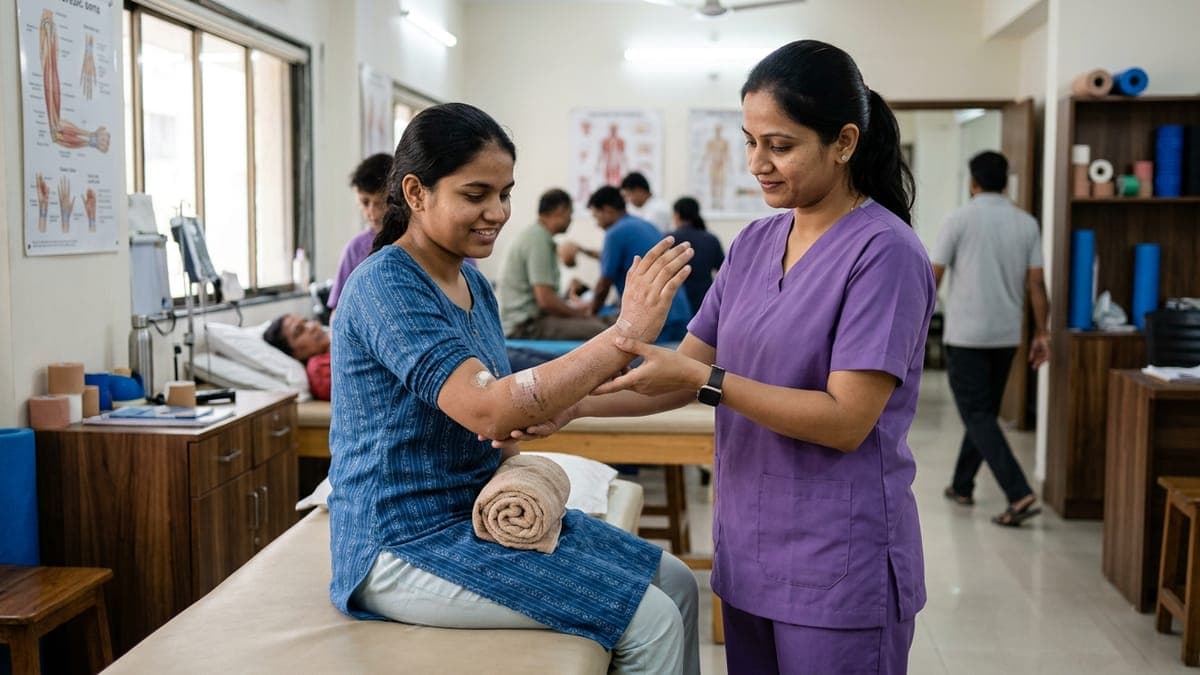
Post-Fracture Stiffness: Physiotherapy to Restore Movement in Faridabad
After a fracture is treated — whether by cast immobilisation, internal fixation, or surgical plating — restoring full joint movement and muscle strength is the next critical challenge. Post-fracture stiffness is one of the most common and frustrating complications of fracture treatment.
Joints that are immobilised for 6 weeks or more develop significant capsular contracture, muscle wasting, and proprioceptive deficits that require structured physiotherapy to address.
At Realign Rehab Clinic , NIT-5, Faridabad, our expert physiotherapists provide personalised, evidence-based care. We serve patients from NIT, Green Field Colony, Ballabhgarh, Sector 21–82, and across Faridabad.
Book: +91 9818185589 .
Causes and Risk Factors
- Prolonged immobilisation (casting or splinting) allowing capsular contracture to develop
- Intra-articular fractures causing cartilage injury and subsequent joint stiffness
- Haematoma and fibrosis around the fracture site from healing
- Muscle atrophy from disuse during immobilisation
- Nerve injury associated with the fracture causing weakness and altered sensation
- Post-surgical scarring and soft tissue fibrosis around the fracture and implant
- Inadequate early mobilisation following fracture fixation
Signs and Symptoms
- Stiffness and restricted range of motion at the affected joint
- Pain at end-range of movement as the capsule stretches
- Weakness of muscles crossing the affected joint
- Swelling that persists weeks after fracture healing
- Altered proprioception and movement coordination
- Fear of re-fracture limiting active movement attempts
Physiotherapy Treatment at Realign Rehab, Faridabad
- Joint mobilisation: graded mobilisation to stretch the joint capsule and restore range of motion
- Progressive strengthening: closed and open-chain exercises starting from current strength level
- Manual therapy: soft tissue techniques for scar tissue and muscle fibrosis around the fracture
- Proprioception retraining: balance and coordination exercises for lower limb fractures
- Hydrotherapy: buoyancy-assisted range of motion in early rehabilitation
- Electrotherapy: ultrasound to improve tissue extensibility before stretching
- Oedema management: compression garments, elevation, and lymphatic drainage
- Progressive weight-bearing programme based on fracture healing confirmed by X-ray
Frequently Asked Questions
When can I start physiotherapy after a fracture?
Timing depends on the fracture and treatment. After surgical fixation: often within 24–48 hours for gentle exercises.
After cast removal: immediately. Your physiotherapist will coordinate with your orthopaedic surgeon for the appropriate start time.
Why is my joint still stiff after my fracture healed?
Stiffness after fracture healing is caused by joint capsule contracture, scar tissue formation, and muscle atrophy during immobilisation. This is very common and responds well to physiotherapy, though it requires consistent work over several months.
How long does it take to regain movement after a fracture?
Mild to moderate stiffness: 6–12 weeks of physiotherapy. Severe contracture: 3–6 months. The earlier physiotherapy begins, the faster and more complete the recovery.
Can physiotherapy break up scar tissue after a fracture?
Yes — specific manual therapy techniques including joint mobilisation, deep transverse friction therapy, and ultrasound therapy effectively soften and remodel scar tissue, restoring movement.
Do I need physiotherapy after every fracture?
Not necessarily — minor, undisplaced fractures in young healthy patients may not require formal physiotherapy. However, fractures around joints, complex fractures, and fractures in older patients almost always benefit from physiotherapy.
Book Your Consultation
Start your recovery today — contact Realign Rehab Clinic:
- 📍 NIT-5, Faridabad (near Green Field Colony, Ballabhgarh Road)
- 📞 +91 9818185589
- 🕑 Mon–Sat: 8 AM–8 PM