 Dr. Vaishali Suri (P.T.)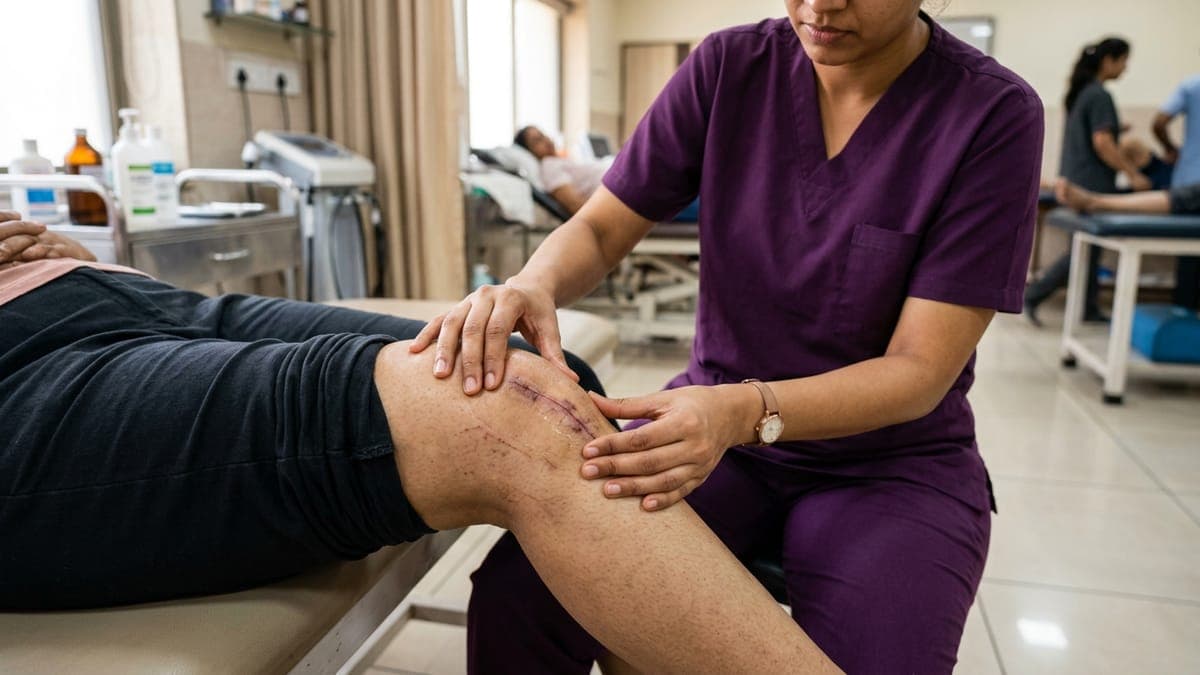
Scar Tissue Management with Physiotherapy in Faridabad
Scar tissue forms as part of the natural healing process after surgery, injury, or burns. While scar formation is necessary for healing, excessive or poorly managed scar tissue can restrict movement, cause pain, compress nerves, and create long-term functional problems.
Physiotherapy-based scar management is a highly effective and evidence-based approach to improving scar quality, reducing adhesions, and restoring full function.
At Realign Rehab Clinic , NIT-5, Faridabad, our expert physiotherapists deliver personalised, evidence-based rehabilitation. We serve patients from NIT, Green Field Colony, Ballabhgarh, Sector 21–82, and across Faridabad.
Book your assessment: +91 9818185589 .
Causes and Risk Factors
- Surgical scars: from orthopaedic surgery (knee, hip, shoulder replacement, ACL repair)
- Traumatic wound scars: lacerations, burns, or abrasions
- Post-Caesarean section abdominal scars causing core dysfunction
- Abdominal surgery scars (appendix, laparoscopic procedures)
- Skin grafts from burns or excisions
- Joint contractures from prolonged immobilisation or burns
- Internal adhesions from abdominal, pelvic, or chest surgery
Signs and Symptoms
- Tight, itchy, or painful scar that limits movement at a nearby joint
- Raised, firm, or rope-like scar tissue (hypertrophic or keloid scarring)
- Restricted range of motion at a joint due to scar contracture
- Pulling sensation during movement as the scar tethers underlying tissues
- Hypersensitivity or numbness around the scar from nerve involvement
- Asymmetry in movement patterns due to scar adhesion
Physiotherapy Treatment at Realign Rehab, Faridabad
- Scar mobilisation: circular, transverse frictions, and skin rolling to release adhesions
- Silicone gel/sheet application guidance for hypertrophic scar management
- Kinesiology taping over scars to normalise mechanical load and reduce sensitivity
- Ultrasound therapy to promote collagen remodelling and soften scar tissue
- Myofascial release for scars involving deep fascial layers
- Desensitisation programme for hypersensitive scars (graded tactile stimulation)
- Joint mobilisation to restore range of motion restricted by contracture
- Functional exercises to normalise movement patterns affected by scar adhesion
Frequently Asked Questions
When can I start scar mobilisation after surgery?
Scar mobilisation can generally begin once the wound is fully closed and there are no open areas or signs of infection — usually around 6–8 weeks post-surgery. Your physiotherapist will assess scar maturity before beginning mobilisation.
Does scar mobilisation hurt?
Initial scar mobilisation may feel tight or uncomfortable, particularly if the scar is hypersensitive. We begin gently with desensitisation techniques and progress gradually.
Most patients find sensitivity decreases noticeably after 2–4 weeks of regular soft tissue therapy.
Can physiotherapy help a Caesarean section scar?
Yes — C-section scar management is an important area of post-natal physiotherapy. Scar adhesion can contribute to lower abdominal pain, bladder issues, and core dysfunction.
We address both the surface scar and deeper fascial layers.
How long does scar tissue management take?
Ideal scar management continues for 12–18 months post-injury or surgery, as collagen continues to remodel throughout this period. Most patients commit to 2–3 months of intensive physiotherapy with a home maintenance programme thereafter.
Can old scars still be treated?
Yes — though results are better with earlier intervention, old scars (even years old) can benefit from physiotherapy. Myofascial release and desensitisation techniques can improve function and reduce pain even in established scars.
Book Your Consultation
Contact Realign Rehab Clinic, Faridabad today:
- 📍 NIT-5, Faridabad (near Green Field Colony, Ballabhgarh Road)
- 📞 +91 9818185589
- 🕑 Mon–Sat: 8 AM–8 PM