 Dr. Vaishali Suri (P.T.)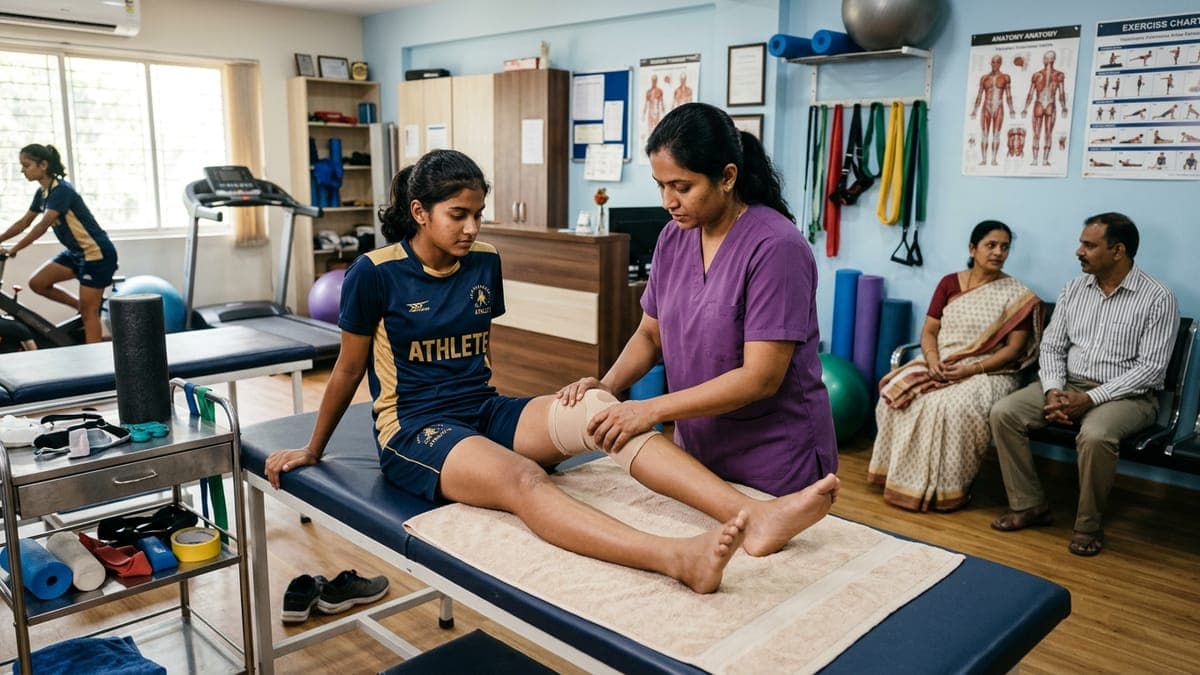
Sports Injuries in Teenagers: Physiotherapy in Faridabad
Adolescent athletes in Faridabad — playing cricket, football, athletics, badminton, and wrestling. Are at a unique stage of musculoskeletal development where growing bones and physes (growth plates) create specific injury risks not seen in adults.
Physiotherapy for teenage sports injuries requires understanding of growth-related conditions like Osgood-Schlatter, Sever's disease, and spondylolysis, alongside the standard sports injury conditions.
At Realign Rehab Clinic, NIT-5, Faridabad, our expert physiotherapists provide personalised, evidence-based care. Serving NIT, Green Field Colony, Ballabhgarh, Sector 21–82, and across Faridabad. Contact us: +91 9818185589.
Causes and Risk Factors
- Rapid growth: bones grow faster than muscles and tendons during puberty, increasing injury risk
- Open physes (growth plates): vulnerable to stress fractures and apophyseal avulsion injuries
- Training load mismanagement: adult training volumes imposed on a developing skeleton
- Sport specialisation too early: year-round single sport without off-season recovery
- Hormonal changes affecting tissue laxity and bone density
- Competitive pressure leading to playing through pain
Signs and Symptoms
- Osgood-Schlatter disease: tibial tubercle pain and swelling in growing adolescents
- Sever's disease: heel pain at the calcaneal apophysis in 8–14 year olds
- Spondylolysis: lumbar stress fracture from hyperextension (cricketers, gymnasts)
- Apophyseal avulsion injuries: forceful muscle contraction avulsing bony attachments
- Ligament sprains: ACL, ankle, and knee MCL injuries common in court and field sports
- Overuse tendinopathy: patellar, Achilles, and shoulder tendons
Physiotherapy Treatment at Realign Rehab, Faridabad
- Growth-related condition management: load modification, not rest, for Osgood-Schlatter and Sever's
- Spondylolysis management: activity restriction, bracing guidance, and rehabilitation
- Age-appropriate ACL rehabilitation with return-to-sport criteria
- Training load education: parents, coaches, and athletes guided on safe progression
- Multi-sport encouragement: reducing single-sport specialisation risk
- Parent and coach education on recognising warning signs and not playing through pain
- Strength and conditioning programme appropriate for skeletal maturity
- School communication: liaison letters for PE and sports participation restrictions when needed
Frequently Asked Questions
What is Osgood-Schlatter disease?
Osgood-Schlatter is pain and swelling at the tibial tubercle (the bony bump below the knee) in growing adolescents, caused by the patellar tendon pulling on the still-developing bone. It is not a disease but a growth-related condition that resolves when growth is complete.
When should a teenager with sports pain see a physiotherapist?
Any pain that persists beyond 1 week, limits training, changes movement patterns, or is associated with swelling or deformity should be assessed by a physiotherapist. Growth plate injuries can look similar to sprains and must be distinguished.
Can teenagers play sport with Osgood-Schlatter?
Yes, with modification. Complete rest is rarely recommended.
Activity is adjusted to a pain-free level, with specific exercises and ice after activity. Most athletes continue sport throughout the condition with appropriate management.
How long does Sever's disease last?
Sever's disease (calcaneal apophysitis) typically lasts 2–8 months, resolving once the growth plate fuses. Heel cups, calf stretching, and activity modification significantly manage symptoms during this period.
Does early sport specialisation cause injuries?
Yes — research consistently shows that single-sport specialisation before age 15 markedly increases overuse injury risk. Multi-sport participation until 15–16 is strongly recommended by sports medicine organisations worldwide.
Book Your Consultation
Contact Realign Rehab Clinic today:
- 📍 NIT-5, Faridabad (near Green Field Colony, Ballabhgarh Road)
- 📞 +91 9818185589
- 🕑 Mon–Sat: 8 AM–8 PM