 Dr. Vaishali Suri (P.T.)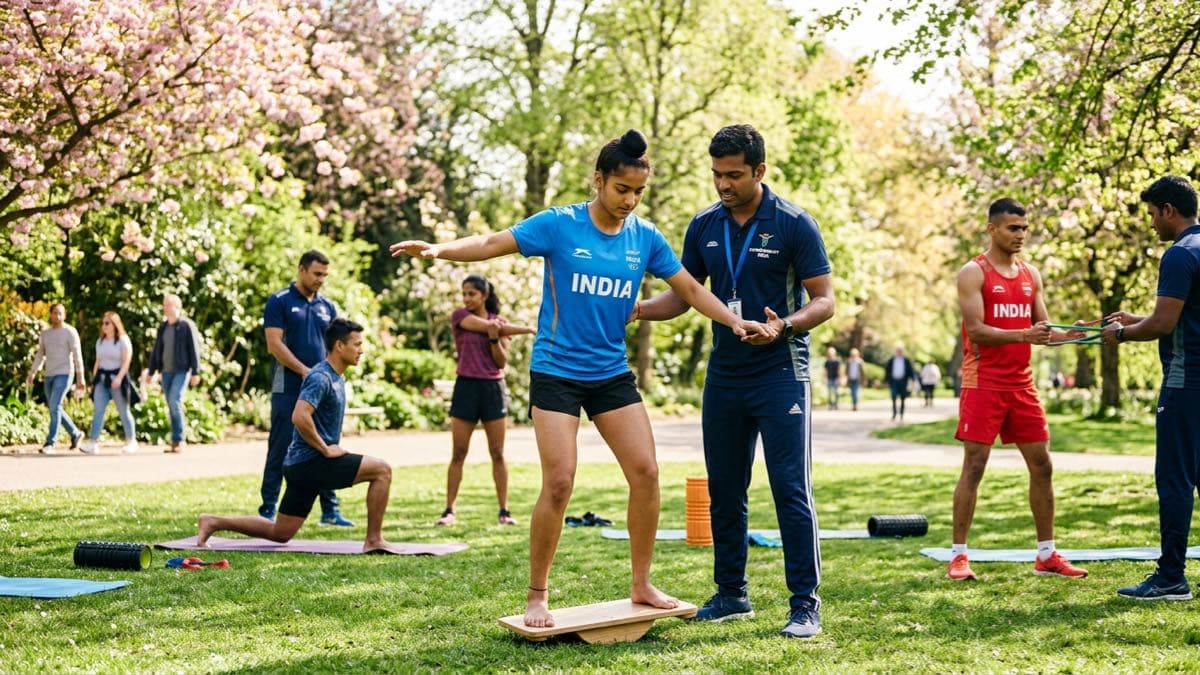
How sports physiotherapy Helps Athletes Recover Faster
Sports injuries are an inevitable part of athletic life. Whether you are a professional athlete, a weekend warrior, or someone who exercises regularly, injuries like sprains, strains, ligament tears.
Overuse conditions can sideline you for weeks or even months. Sports physiotherapy is a specialized branch of rehabilitation focused on helping athletes recover from injuries, regain peak performance, and prevent re-injury.
Written and reviewed by Dr. Vaishali Suri (MPT (Sports Medicine), BPT, MIAP), Founder, Realign Rehab Clinic, NIT-5 Faridabad.
At Realign Rehab Clinic, our sports rehabilitation programs are grounded in current research and designed for the demands of each sport and individual.
Common Sports Injuries We Treat
- ACL and meniscus tears — common in sports involving pivoting, cutting, and sudden deceleration
- rotator cuff treatment injuries — prevalent in overhead sports like cricket, swimming, and badminton
- Hamstring strains — frequently seen in running, football, and track events
- Tennis/golfer's elbow — overuse tendinopathies of the lateral and medial epicondyles
- Shin splints and stress fractures — common in runners and dancers
- plantar fasciitis treatment — heel pain from repetitive impact loading
The POLICE Principle: Modern First Aid for Sports Injuries
The traditional RICE protocol (Rest, Ice, Compression, Elevation) has been updated to POLICE, reflecting current evidence:
- P — Protection: Avoid activities that aggravate the injury
- OL — Best Loading: Controlled movement and progressive loading to stimulate tissue healing
- I — Ice: Apply ice for 15-20 minutes to manage swelling in the acute phase
- C — Compression: Use bandages or braces to control swelling
- E — Elevation: Raise the injured area above heart level to reduce swelling
A landmark 2012 paper in the British Journal of Sports Medicine introduced the POLICE framework, emphasizing that early controlled loading (rather than complete rest) promotes better tissue healing and functional recovery.
Phases of Sports Rehabilitation
Phase 1: Acute Management (0-72 hours)
The focus is on controlling pain, reducing swelling, and protecting the injured tissue. Modalities like cryotherapy, compression, electrotherapy (TENS, IFT), and gentle range of motion exercises are used.
Complete immobilization is avoided unless structurally necessary.
Phase 2: Subacute Recovery (3 days to 6 weeks)
Progressive loading begins. This includes range of motion exercises, isometric strengthening, proprioceptive training, and manual therapy.
Tissue healing is guided through controlled stress according to Wolff's Law (bone) and Davis's Law (soft tissue) — tissues adapt and remodel according to the forces placed upon them.
Phase 3: Strengthening and Conditioning (6-12 weeks)
Resistance training, dynamic stability exercises, plyometrics, and sport-specific drills are introduced progressively. Eccentric exercises have strong evidence for tendinopathy rehabilitation, as demonstrated in studies by Alfredson et al. published in the American Journal of Sports Medicine.
Phase 4: Return to Sport (12+ weeks)
Evidence-Based Techniques We Use
Manual Therapy
Joint mobilization and soft tissue techniques improve range of motion and reduce pain. A systematic review in JOSPT (2017) found that manual therapy combined with exercise produces superior outcomes compared to exercise alone for many musculoskeletal conditions.
Neuromuscular Training
Dry Needling and Myofascial Release
These techniques address trigger points and fascial restrictions that contribute to pain and movement dysfunction. Evidence supports their use as adjuncts to exercise-based rehabilitation.
Kinesiology Taping
Applied strategically to support muscles and joints, reduce swelling, and provide proprioceptive feedback during the recovery process.
Preventing Re-Injury
Re-injury prevention is just as important as initial recovery. Our programs include:
- Movement analysis to identify faulty biomechanics
- Sport-specific conditioning programs
- Flexibility and mobility routines
- Load management education — understanding training volume, intensity, and recovery
- Psychological support for confidence in returning to sport
References
- Bleakley CM, Glasgow P, MacAuley DC. PRICE needs updating, should we call the POLICE? British Journal of Sports Medicine. 2012;46(4):220-221.
- Alfredson H, et al. Heavy-load eccentric calf muscle training for the treatment of chronic Achilles tendinosis. Am J Sports Med. 1998;26(3):360-366.
- Thorborg K, et al. FIFA 11+ injury prevention programme effectiveness. British Journal of Sports Medicine. 2017;51(7):562-571.
- Doherty C, et al. Recovery from a first-time lateral ankle sprain and the predictors of outcome. Am J Sports Med. 2016;44(4):995-1003.
Why Evidence-Based Physiotherapy Makes the Difference
At Realign Rehab Clinic , NIT-5, Faridabad, every treatment plan is grounded in current clinical evidence and built around the individual patient. We do not follow generic protocols — we identify the root cause of your specific presentation and design a programme that directly addresses it.
This approach consistently produces faster recovery, more durable results, and lower recurrence rates than passive or symptom-only management.
Frequently Asked Questions About This Condition
How soon will I see results from physiotherapy?
Most patients notice measurable improvement within 3–4 sessions. Real functional progress typically occurs within 4–8 weeks.
The speed of recovery depends on the severity and chronicity of your condition, your compliance with the home exercise programme, and the accuracy of the diagnosis.
Do I need a referral to see a physiotherapist in Faridabad?
No referral is needed to see a physiotherapist at Realign Rehab Clinic. You can self-refer directly by calling +91 9818185589 .
We will assess your condition and determine if any imaging or specialist referral is required.
What should I do between physiotherapy sessions?
Your physiotherapist will provide a specific home exercise programme to perform between sessions. Consistency with these exercises is the single most important factor in your recovery speed.
Activity modification advice (what to avoid) is equally important and will be explained at each session.
Can I return to work and sport while receiving physiotherapy?
In most cases, yes — with appropriate modifications. Our physiotherapist will provide clear, specific activity guidelines based on your condition and progress.
Returning to work and sport earlier (with modifications) usually produces better outcomes than prolonged rest.
Contact Realign Rehab Clinic, Faridabad
Ready to start your recovery? Realign Rehab Clinic offers in-depth physiotherapy at NIT-5, Faridabad, and home visits across all sectors of Faridabad including Green Field Colony, Ballabhgarh, and Sector 21–82.
- 📍 NIT-5, Faridabad (near Green Field Colony, Ballabhgarh Road)
- 📞 +91 9818185589
- 🕑 Mon–Sat: 8 AM–8 PM
Related Articles: Sports Injury Prevention in Faridabad: Physiotherapy-Based Strategies | ACL Injury Rehabilitation in Faridabad: Complete Recovery Programme | Yoga Injury Treatment in Faridabad: Physiotherapy for Yoga-Related Pain | Whiplash Injury Treatment in Faridabad: Physiotherapy for Road Accident Neck Pain
Related Conditions: Sports Injury Rehab | Work Injury Rehab | Wrist Pain Treatment
Related Services: Advanced Sports Physiotherapy | Orthopedic Physio