
 Dr. Vaishali Suri (P.T.)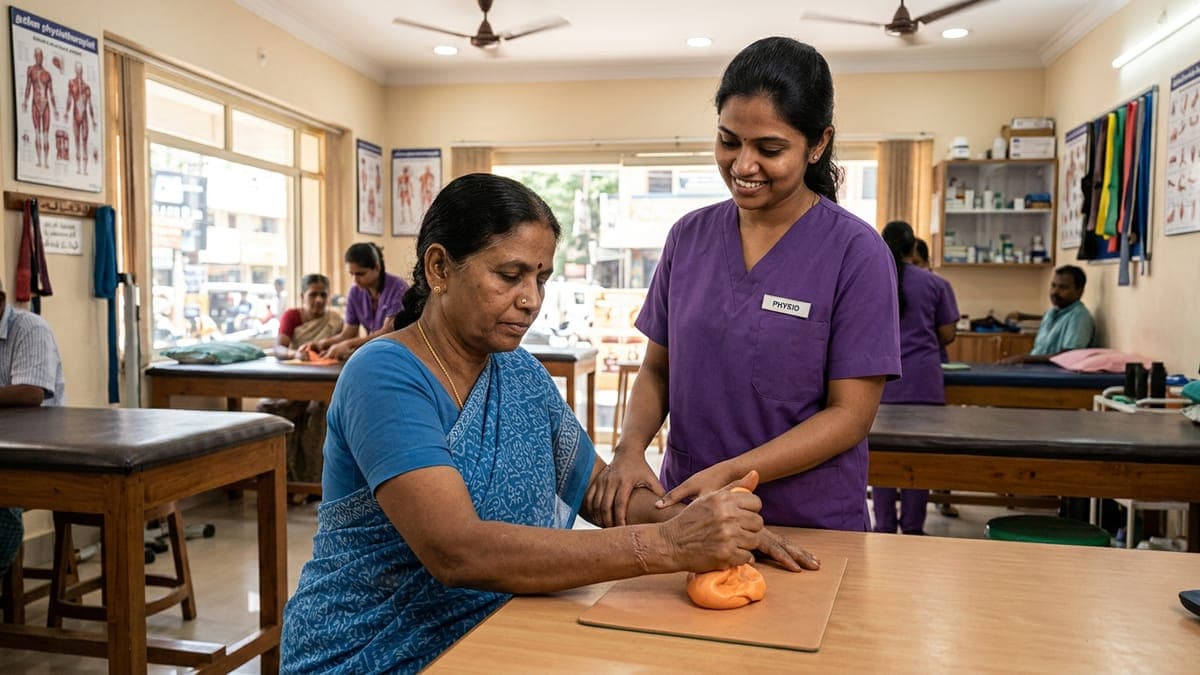
Wrist Fracture Rehabilitation: Physiotherapy in Faridabad
Wrist fractures — predominantly distal radius fractures — are the most common fractures in adults, typically resulting from a fall onto an outstretched hand. After the fracture has been treated (by cast, backslab, or surgical fixation with plate/screws), physiotherapy rehabilitation is essential to restore wrist movement, grip strength, and functional hand use.
Without structured rehabilitation, stiffness and weakness can persist for months or permanently.
At Realign Rehab Clinic, NIT-5, Faridabad, our expert physiotherapists provide personalised, evidence-based care. Serving NIT, Green Field Colony, Ballabhgarh, Sector 21–82, and across Faridabad. Contact us: +91 9818185589.
Causes and Risk Factors
- Osteoporosis: most common in post-menopausal women where a low-energy fall causes fracture
- Sports injuries: cycling falls, gymnastic landings, skateboarding
- Road traffic accidents
- Fragility fractures in elderly patients from minimal trauma
Signs and Symptoms
- Post-cast or post-surgical wrist stiffness: reduced flexion, extension, forearm rotation
- Weak grip strength affecting daily tasks: turning taps, opening jars, writing
- Swelling and oedema of the wrist and hand persisting weeks after fracture
- Finger stiffness from immobilisation (fingers should be exercised throughout casting)
- Nerve symptoms: tingling in the thumb and fingers from carpal tunnel or median nerve irritation
Physiotherapy Treatment at Realign Rehab, Faridabad
- Oedema management: elevation, retrograde soft tissue drainage, and compression immediately after cast removal
- Gentle wrist mobilisation: within pain-free range initially, progressing to end-range stretching
- Forearm rotation restoration: pronation/supination — often the last movement to return
- Grip strength programme: progressive resistance from putty exercises to functional loading
- Fine motor retraining: pinch, opposition, and task-specific hand activities
- Ultrasound therapy to improve tissue extensibility before stretching
- CRPS management where present: desensitisation, mirror therapy, and graded exposure
- Return-to-sport or work programme based on specific demands
Frequently Asked Questions
When should I start physiotherapy after a wrist fracture?
Physiotherapy for the fingers should begin immediately after casting to prevent stiffness. Wrist rehabilitation begins as soon as the fracture is stable — either within days (surgical fixation) or at 5–6 weeks (cast removal).
Never wait until pain resolves before starting.
How long does wrist stiffness last after a fracture?
Full recovery, including grip strength, typically takes 4–6 months.
Why is my grip so weak after a wrist fracture?
Grip weakness after fracture results from muscle inhibition during pain, disuse atrophy during immobilisation, and reduced nerve conduction from swelling. Progressive grip training restores strength — most patients regain near-normal grip within 3–4 months.
Do I need physiotherapy for a wrist fracture managed in a cast?
Yes — physiotherapy dramatically improves outcomes. Even with non-surgical treatment, the wrist requires specific rehabilitation to regain full function. Without it, stiffness and weakness often persist for 12+ months.
Can I drive after a wrist fracture?
Return to driving depends on which hand is affected, your car type, and grip strength. Typically 6–8 weeks after simple fractures in a cast, or 4–6 weeks after surgical fixation.
Your physiotherapist can assess driving readiness.
Book Your Consultation
Contact Realign Rehab Clinic today:
- 📍 NIT-5, Faridabad (near Green Field Colony, Ballabhgarh Road)
- 📞 +91 9818185589
- 🕑 Mon–Sat: 8 AM–8 PM