 Dr. Vaishali Suri (P.T.)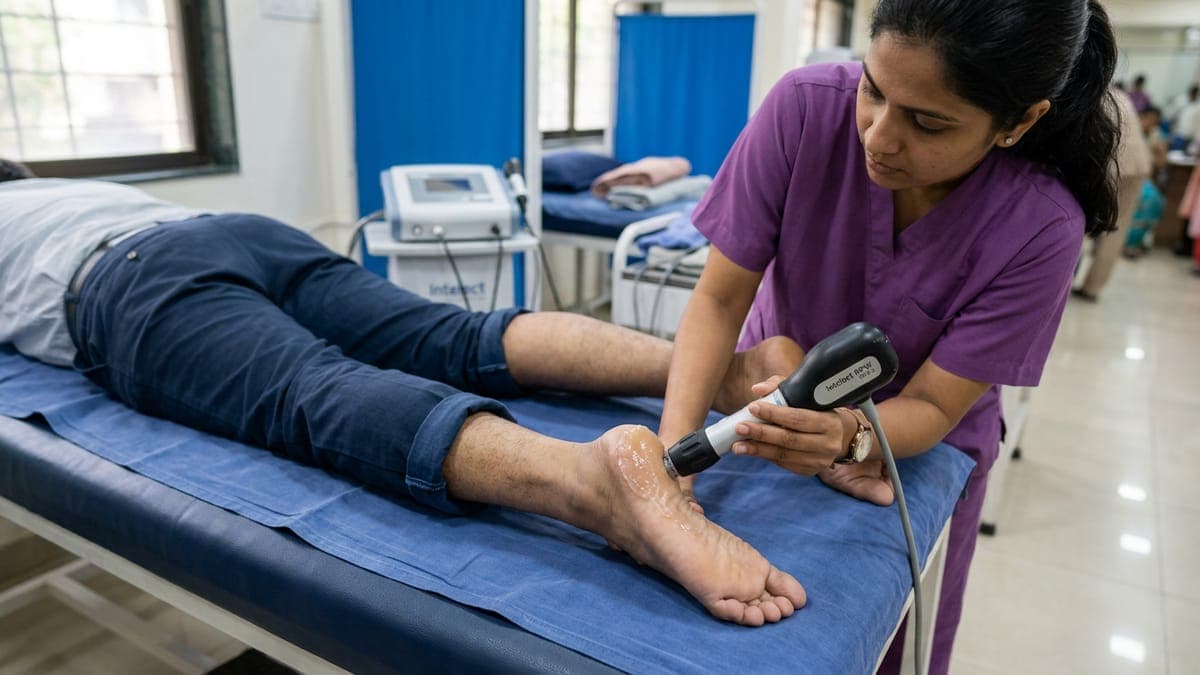
Heel Spur Treatment: Physiotherapy in Faridabad
A heel spur (calcaneal spur) is a bony growth on the underside of the heel bone, often associated with plantar fasciitis. Despite their alarming appearance on X-ray, heel spurs are usually not the primary cause of heel pain — the associated plantar fascia inflammation is.
At Realign Rehab Clinic, NIT-5, Faridabad, our expert physiotherapists provide personalised, evidence-based care. Serving NIT, Green Field Colony, Ballabhgarh, Sector 21–82, and across Faridabad. Contact us: +91 9818185589.
Causes and Risk Factors
- Chronic plantar fascia tension pulling repeatedly on its calcaneal attachment
- Biomechanical factors: flat feet, high arches, and overpronation altering fascial loading
- Obesity increasing plantar fascia stress
- Prolonged standing on hard surfaces: teachers, factory workers, retail staff
- Running with poor technique or inadequate footwear
- Achilles and calf tightness reducing ankle dorsiflexion and increasing fascial load
- Age-related calcaneal bone changes and fat pad atrophy
Signs and Symptoms
- Heel pain worst with the first steps in the morning or after prolonged rest
- Sharp, stabbing pain at the inner aspect of the heel
- Pain improving with activity initially but returning after prolonged walking
- Tenderness on pressing the undersurface of the heel
- Pain going barefoot on hard floors
- Secondary altered gait from pain avoidance
Physiotherapy Treatment at Realign Rehab, Faridabad
- Shockwave therapy: clinically proven for heel spur associated with chronic plantar fasciitis
- Deep soft tissue mobilisation and plantar fascia myofascial release
- Intrinsic foot strengthening: short foot exercise, toe curls, and heel raises
- Stretching: plantar fascia, calf (gastrocnemius and soleus), and Achilles
- Footwear assessment and metatarsal pad or orthotic prescription
- Taping techniques for immediate plantar fascia offloading
- Night splinting to maintain dorsiflexion and reduce morning pain
- Dry needling for associated plantar intrinsic muscle trigger points
Frequently Asked Questions
Is a heel spur the same as plantar fasciitis?
Not exactly. Plantar fasciitis is inflammation of the plantar fascia; a heel spur is a bony growth at the fascial attachment. They often coexist, but the fascia inflammation causes the pain — the spur itself is usually incidental.
Can physiotherapy remove a heel spur?
Physiotherapy cannot remove the bony spur, but it successfully resolves the plantar fasciitis pain in the vast majority of cases. The spur remains but becomes painless.
How long does heel spur physiotherapy take?
Most cases resolve in 6–12 weeks with targeted physiotherapy. Chronic cases (over 6 months) may need shockwave therapy, taking 3–4 months for full resolution.
Is surgery needed for a heel spur?
Very rarely. Surgery (spur removal or fascial release) is only considered after 12 months of failed conservative management.
What is shockwave therapy for heel pain?
Shockwave therapy uses acoustic pulses to stimulate tissue healing in the plantar fascia. It is particularly effective for chronic cases and is available at Realign Rehab Clinic.
Most patients need 3–5 sessions.
Book Your Consultation
Contact Realign Rehab Clinic today:
- 📍 NIT-5, Faridabad (near Green Field Colony, Ballabhgarh Road)
- 📞 +91 9818185589
- 🕑 Mon–Sat: 8 AM–8 PM