
 Dr. Vaishali Suri (P.T.)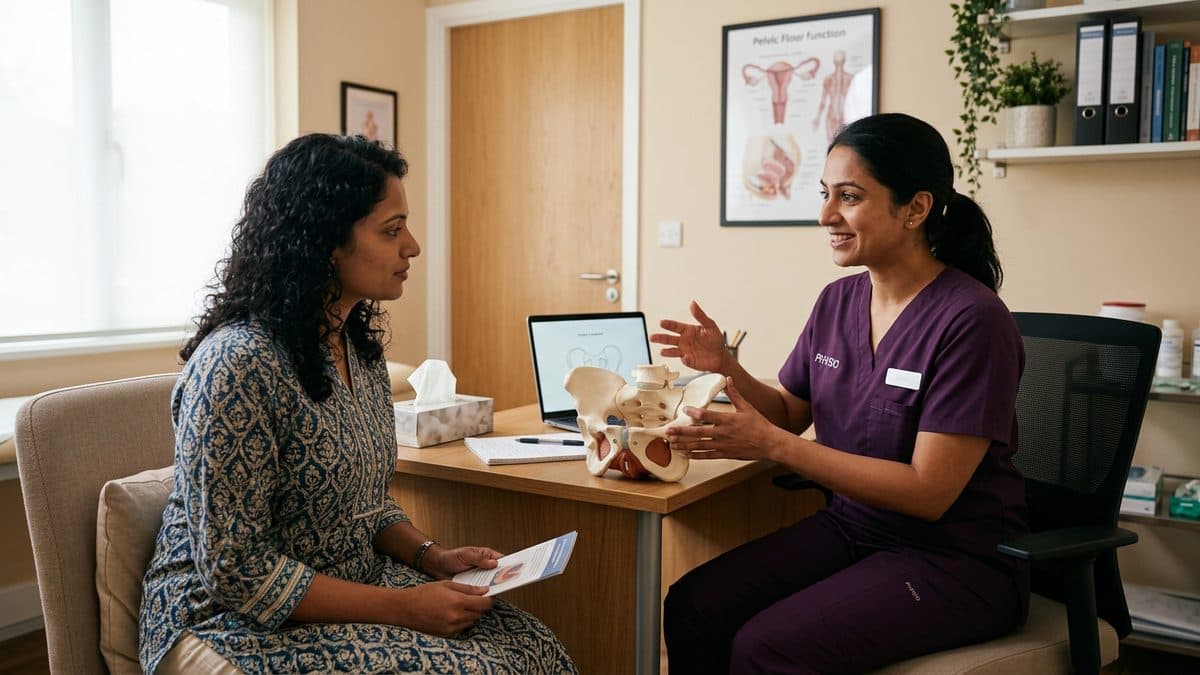
The Pelvic Floor: Your Body's Hidden Foundation
The pelvic floor is a group of muscles and connective tissues forming the base of the pelvis. It supports the pelvic organs (bladder, uterus, rectum), maintains continence, plays a role in sexual function, and works with the core to stabilise the spine.
Pelvic floor dysfunction is extremely common — affecting up to 1 in 3 women and many men — yet remains underdiagnosed and undertreated due to embarrassment and lack of awareness.
Conditions Treated with Pelvic Floor Physiotherapy
Urinary Stress Incontinence: Leaking urine on coughing, sneezing, laughing, or exercise. Most common pelvic floor problem.
Urge Incontinence: Sudden, compelling need to urinate with leaking before reaching the toilet. Pelvic Organ Prolapse: Descent of the bladder (cystocele), uterus, or rectum into the vaginal canal.
Pelvic Pain: Chronic pelvic pain, dyspareunia (pain during intercourse), vaginismus. Overactive Pelvic Floor: Muscles that are too tight rather than too weak — causes pain, urgency, and incomplete emptying.
Male Pelvic Floor Dysfunction: Post-prostatectomy incontinence, pelvic pain.
Treatment Approach
Pelvic Floor Assessment
A full assessment identifies whether the pelvic floor is weak, overactive, or uncoordinated — as different problems require different treatments. The common mistake of prescribing Kegel exercises for all pelvic floor problems can worsen symptoms if the pelvic floor is overactive rather than weak.
Pelvic Floor Muscle Training (PFMT)
For weakness: progressive pelvic floor strengthening with correct technique, appropriate resistance and repetitions, functional integration into daily activities.
Down-Training
For overactive pelvic floor: breathing techniques, relaxation exercises, and manual therapy to reduce muscle overactivity.
Bladder Training
For urge incontinence: progressively increasing the time between urge and voiding, urgency suppression techniques, fluid management advice.
Pelvic Floor Physiotherapy in Faridabad
At Realign Rehab Clinic, NIT-5, Faridabad, pelvic health consultations are conducted with complete privacy and sensitivity. Book your confidential consultation today.
What Is the Pelvic Floor and Why Does It Matter?
The pelvic floor is a group of muscles, ligaments, and connective tissue forming a hammock-like structure at the base of the pelvis. These muscles support the bladder, bowel, and uterus, control urinary and bowel continence, contribute to sexual function, and stabilise the spine and pelvis.
Pelvic floor dysfunction is far more prevalent than most people realise — affecting 1 in 3 women at some point in their lifetime and significantly impacting quality of life. Physiotherapy is the first-line evidence-based treatment for most pelvic floor disorders.
Conditions Treated with Pelvic Floor Physiotherapy at Realign Clinic
- Stress urinary incontinence: Leaking with coughing, sneezing, jumping, laughing. The most evidence-based indication for pelvic floor physiotherapy.
- Urgency urinary incontinence: Sudden strong urge to urinate with inability to reach the toilet. Bladder training and pelvic floor rehabilitation are primary treatments.
- Diastasis recti: Abdominal muscle separation after pregnancy — affects core and pelvic floor function. See our diastasis recti guide.
- Pelvic organ prolapse: Descent of bladder, uterus, or bowel. Physiotherapy is first-line treatment for mild-moderate prolapse.
- Pelvic pain: Vaginismus, vulvodynia, dyspareunia (painful intercourse). Pelvic floor physiotherapy addresses both hypertonic (tight) and hypotonic (weak) patterns.
- Postpartum recovery: Return to exercise and sport after vaginal or C-section delivery. Safe return timeline based on objective pelvic floor assessment.
Pelvic Floor Assessment: What to Expect
A pelvic floor physiotherapy assessment at Realign Clinic includes: symptom history, postural and movement assessment, abdominal assessment (diastasis recti screen), and. With patient consent — an internal pelvic floor assessment to evaluate muscle strength, coordination, and tender points.
All assessments are performed sensitively and professionally by Dr. Vaishali Suri in a private, respectful environment.
Internal assessment is never performed without full informed consent and can be omitted if preferred.
Kegel Exercises vs Functional Pelvic Floor Training
Kegel exercises (isolated pelvic floor contractions) are a starting point but not the complete picture. Evidence shows that functional pelvic floor training — integrating pelvic floor activation into everyday movements (squats, lifting, jumping).
Produces better real-world outcomes for incontinence and prolapse than isolated Kegels alone. Many women perform Kegels incorrectly (bearing down rather than lifting up) — a physiotherapy assessment ensures correct technique.
Frequently Asked Questions — Pelvic Floor Physiotherapy
Q: Is it normal to leak urine after having a baby?
We recommend a pelvic floor assessment at 6–8 weeks postpartum, regardless of symptoms, to guide safe return to exercise and address any dysfunction early.
Q: Can pelvic floor physiotherapy help with painful sex?
Yes — vaginismus and dyspareunia (painful intercourse) are often caused by pelvic floor muscle hypertonicity (excessively tight muscles). Pelvic floor physiotherapy using manual techniques, breathing, and progressive desensitisation effectively treats these conditions.
Vaishali Suri provides this in a sensitive, professional environment at Realign Clinic Faridabad.
Book Pelvic Floor Physiotherapy in Faridabad
Call +91 9818185589. Realign Rehab Clinic, NIT-5, Faridabad. Sensitive, professional women's health physiotherapy. Also see: pelvic floor rehabilitation, urinary incontinence, women's health services.
References
- Dumoulin C et al. (2018). Pelvic floor muscle training versus no treatment or inactive control treatments for urinary incontinence in women. Cochrane Database Syst Rev.
- Bø K. (2004). Pelvic floor muscle training is effective in treatment of female stress urinary incontinence, but how does it work? Int Urogynecol J, 15(2):76–84.
Content author: Dr. Vaishali Suri (P.T.), MPT (Sports Medicine), BPT, MIAP, MIAP.