 Dr. Vaishali Suri (P.T.)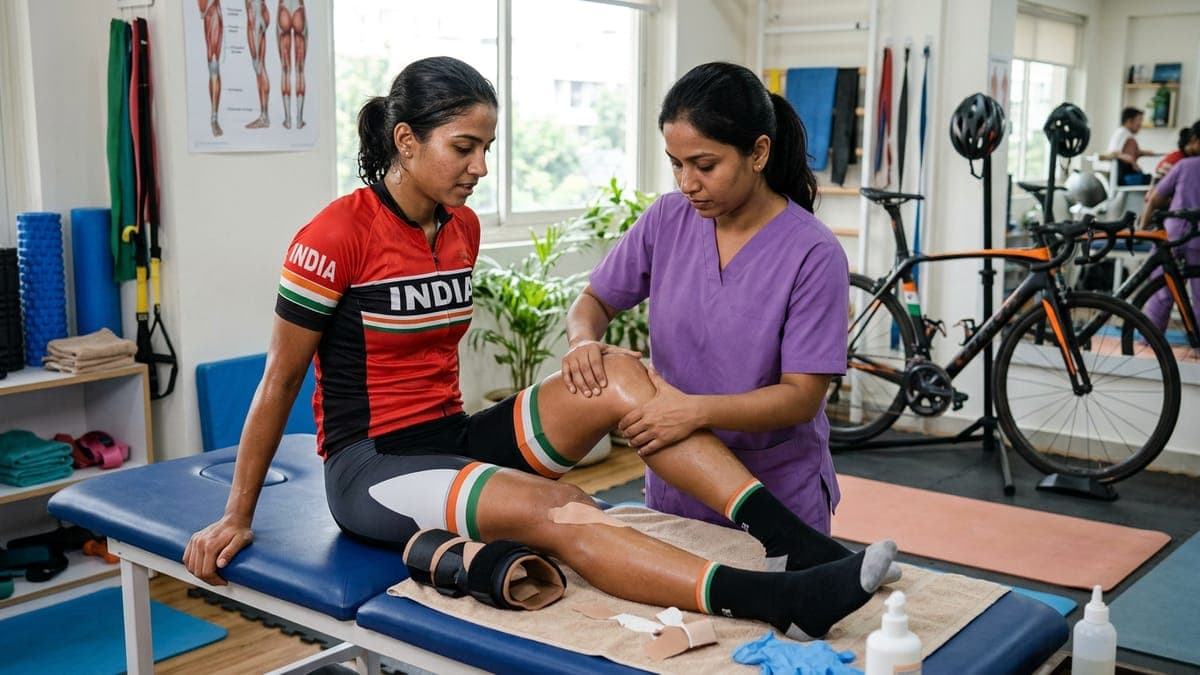
Physiotherapy for Cycling Injuries in Faridabad
Cycling — both road cycling and indoor spinning — is booming in Faridabad and across the NCR. With more cyclists on the roads, physiotherapy clinics are seeing a corresponding rise in cycling-related musculoskeletal complaints.
Unlike contact sports, cycling injuries are almost entirely overuse-based, resulting from repeated suboptimal movement patterns rather than acute trauma. This makes bike fit and biomechanical assessment as important as the physiotherapy itself.
At Realign Rehab Clinic , NIT-5, Faridabad, our expert physiotherapists deliver personalised, evidence-based rehabilitation. We serve patients from NIT, Green Field Colony, Ballabhgarh, Sector 21–82, and across Faridabad.
Book your assessment: +91 9818185589 .
Causes and Risk Factors
- Poor bike fit: saddle height, cleat position, and handlebar reach all affect injury risk significantly
- Sudden increases in training volume or intensity (classic overuse pattern)
- Muscle imbalances: tight hip flexors and weak glutes from prolonged seated riding
- Iliotibial band syndrome from leg length discrepancy or excessive Q-angle
- Patellofemoral pain from saddle height errors or overuse
- Lower back pain from excessive lumbar flexion on aggressive bike fits
- Road cycling falls causing acute fractures, abrasions, and shoulder injuries
Signs and Symptoms
- Knee pain: most common cycling complaint — lateral (ITB), anterior (patellofemoral), or medial
- Lower back and neck pain from sustained postures
- Saddle-related pain: perineal numbness, hip flexor tightness, or iliotibial issues
- Achilles tendinopathy from low saddle height or overly stiff cleats
- Wrist and shoulder pain from handlebar loading on long rides
- Numbness or tingling in the hands (ulnar nerve compression)
Physiotherapy Treatment at Realign Rehab, Faridabad
- Cycling-specific biomechanical assessment and bike fit recommendations
- ITB foam rolling, stretching, and hip abductor strengthening
- Patellofemoral rehabilitation: VMO activation, step exercises, and taping
- Core and lower back strengthening for endurance riding posture
- Hip flexor stretching and mobility work to counter prolonged seated flexion
- Achilles rehabilitation: eccentric loading and footwear/cleat assessment
- Progressive return-to-cycling programme with volume and intensity guidance
- Ergonomic advice on saddle angle, handlebar height, and cleat position
Frequently Asked Questions
What is the most common cycling injury?
The most frequent types are IT band syndrome (lateral knee pain) and patellofemoral pain (anterior knee pain).
Can I cycle through knee pain?
It depends on the severity and cause. Minor discomfort may be managed by adjusting bike fit and reducing intensity. Sharp or worsening pain requires physiotherapy assessment before continuing.
Does bike fit really matter for injury prevention?
Bike fit is one of the most important injury prevention tools for cyclists. Saddle height, cleat position, and handlebar reach all directly affect injury risk.
Even small adjustments (5–10mm) can resolve chronic pain.
How do I prevent lower back pain from cycling?
Core strengthening, hip flexor stretching, and optimising handlebar height are the key strategies. Help maintain your bike fit allows a neutral or mildly flexed lumbar spine rather than a severely rounded position.
How long does cycling-related knee pain take to resolve?
Most cycling knee injuries resolve in 4–8 weeks with physiotherapy and bike fit correction. Chronic ITB syndrome or patellofemoral dysfunction may take 8–12 weeks.
Book Your Consultation
Contact Realign Rehab Clinic, Faridabad today:
- 📍 NIT-5, Faridabad (near Green Field Colony, Ballabhgarh Road)
- 📞 +91 9818185589
- 🕑 Mon–Sat: 8 AM–8 PM