
 Dr. Vaishali Suri (P.T.)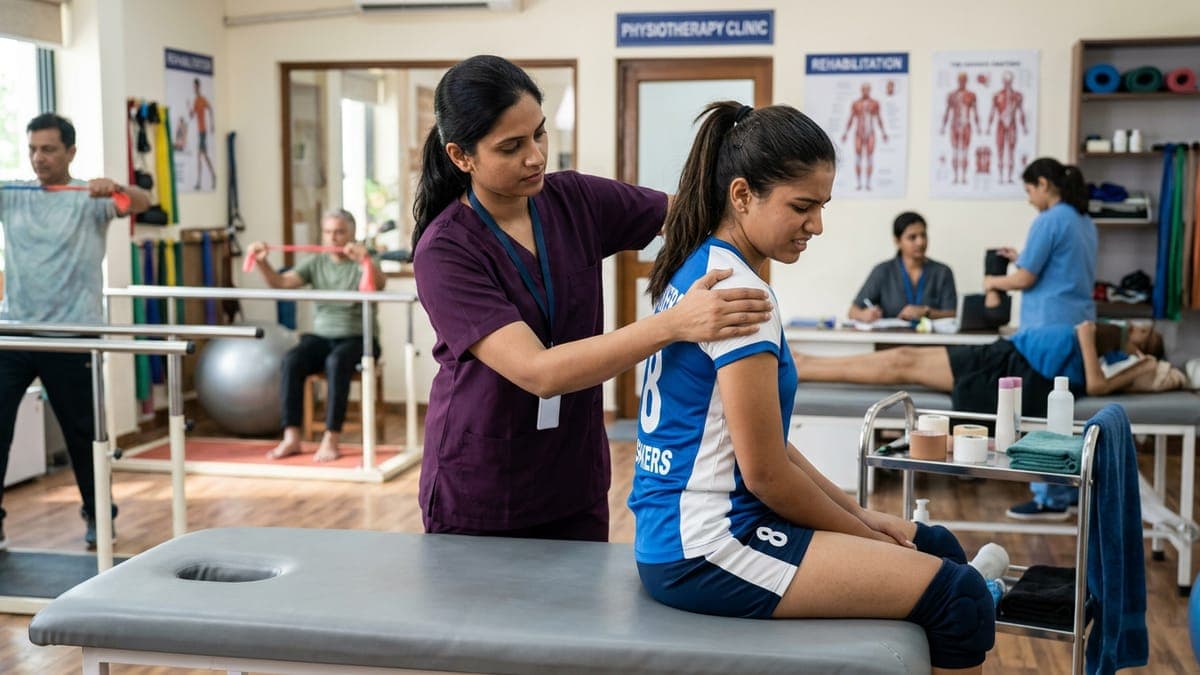
Volleyball Injuries: Physiotherapy Treatment in Faridabad
Volleyball — both indoor and beach — places unique demands on the shoulder, knee, and ankle, with jumping, spiking, blocking, and diving creating high-force repetitive loading. Faridabad's volleyball community, from school and college teams to adult recreational players, frequently presents with jumper's knee, shoulder impingement, ankle sprains, and finger injuries that physiotherapy can effectively treat.
At Realign Rehab Clinic , NIT-5, Faridabad, our expert physiotherapist Dr. Vaishali Suri provides evidence-based treatment matched to your specific needs.
We serve patients from NIT, Sector 14, Old Faridabad, Green Field Colony, Ballabhgarh, Surajkund, and surrounding areas.
Causes and Risk Factors
- Jumper's knee (patellar tendinopathy) — repetitive jumping loading the patellar tendon
- Shoulder impingement and rotator cuff overuse from spiking and serving
- Ankle sprain — most common acute volleyball injury from jump landings
- Finger sprains and dislocations — from blocking and setting
- Low back pain from repeated hyperextension during jumping and spiking
- Overuse tendinopathy in beach volleyball from playing on sand with barefoot or minimal footwear
Signs and Symptoms
- Anterior knee pain below the kneecap — patellar tendon tenderness
- Shoulder pain during spiking approach — particularly at ball contact
- Ankle pain and instability after landing on another player's foot
- Swollen, painful finger joints from blocking injuries
- Low back stiffness after multiple sets or extended training sessions
- Achilles tendon tightness from barefoot beach volleyball loading
Physiotherapy Treatment at Realign Rehab, Faridabad
- Eccentric decline squat protocol for patellar tendinopathy — gold-standard treatment
- Rotator cuff and scapular stabilisation programme for spiking shoulder
- Ankle proprioception and ligament rehabilitation after sprain
- Finger buddy taping and progressive mobilisation for sprain/dislocation
- Plyometric jump training modification to reduce tendon load during rehabilitation
- Return-to-sport protocol with court-specific functional testing
Frequently Asked Questions
How do I know if I have jumper's knee?
Jumper's knee (patellar tendinopathy) causes pain directly below the kneecap at the patellar tendon, worst during and after jumping, squatting, or stair descending. The tendon is tender on direct pressure.
A physiotherapy assessment confirms the diagnosis.
Can I play volleyball with jumper's knee?
In the early stages, yes — with load management. We work with players to modify training volumes, substitute less-aggravating training activities, and implement the rehabilitation protocol alongside continued participation where possible.
How long does volleyball shoulder impingement take to heal?
With appropriate physiotherapy: 6–10 weeks for mild-moderate impingement. The return-to-spiking protocol follows a progressive loading schedule. Most players return to full competition within 8–12 weeks.
Do I need to stop playing for a sprained ankle?
Grade 1 sprains: often 1–2 weeks rest then return to play. Grade 2: 3–6 weeks with physiotherapy.
Grade 3: 6–12 weeks. Early physiotherapy and proprioception training is critical to prevent chronic ankle instability and recurrent sprains.
Book Your Consultation
Ready to get back to pain-free living? Contact Realign Rehab Clinic today.
📍 NIT-5, Faridabad (near Green Field Colony, Sector 15)
📞 +91 9818185589
🕑 Monday–Saturday: 9 AM–7 PM
Related Articles: Tennis Injury Physiotherapy in Faridabad: Shoulder, Elbow, and Knee Treatment | Sports Injuries in Teenagers in Faridabad: Physiotherapy for Young Athletes | Kho-Kho and Wrestling Injury Physiotherapy in Faridabad | Kabaddi Injury Physiotherapy in Faridabad: Traditional Sport, Modern Rehab
Related Conditions: Wrist Pain Treatment | Urinary Incontinence Treatment | Tennis Elbow Treatment
Related Services: Advanced Sports Physiotherapy | Pediatric Physio