 Dr. Vaishali Suri (P.T.)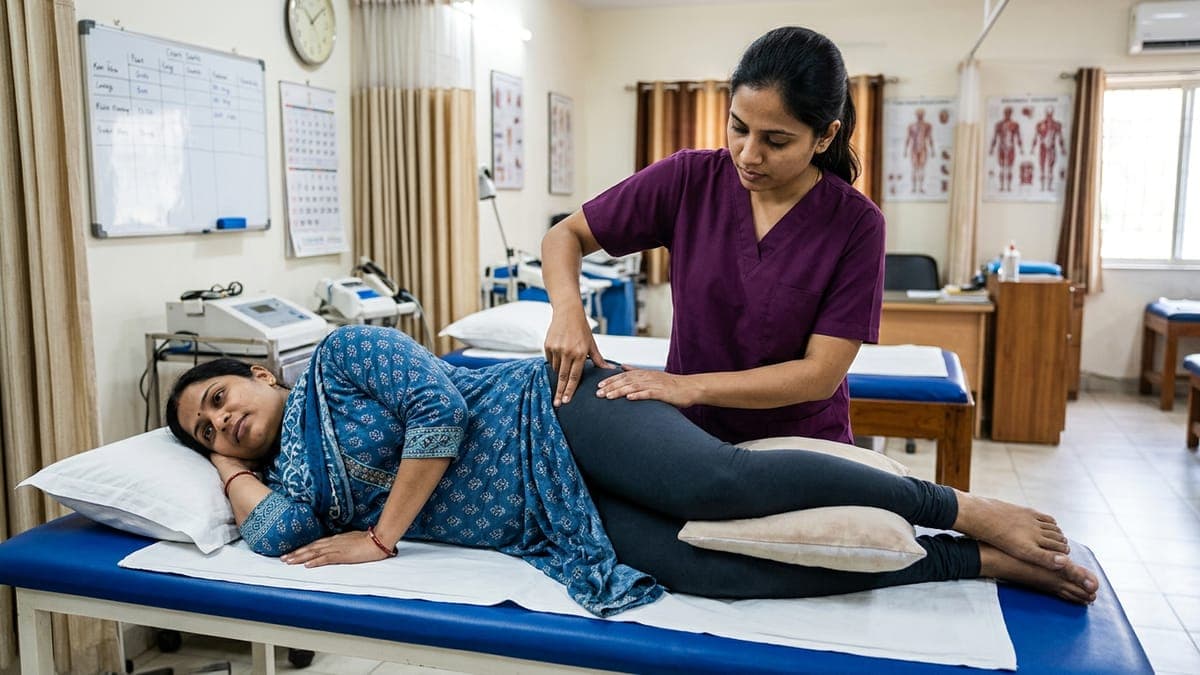
Greater Trochanteric Pain Syndrome (Lateral Hip Pain): Physiotherapy in Faridabad
Greater trochanteric pain syndrome (GTPS) — formerly called trochanteric bursitis. Is characterised by pain over the lateral (outer) hip, aggravated by lying on the affected side, crossing the legs, climbing stairs, and prolonged standing.
It is the most common cause of lateral hip pain in adults and is particularly prevalent in middle-aged women. Physiotherapy guided by gluteal tendinopathy principles produces excellent outcomes.
At Realign Rehab Clinic, NIT-5, Faridabad, our expert physiotherapists provide personalised, evidence-based care. Serving NIT, Green Field Colony, Ballabhgarh, Sector 21–82, and across Faridabad. Contact us: +91 9818185589.
Causes and Risk Factors
- Compressive loading of the gluteal tendons: crossing the legs, adducted hip postures
- Gluteus medius and minimus tendinopathy from repetitive compressive loading
- Hip abductor weakness causing excessive hip adduction during walking
- Sudden increase in running mileage or stair climbing
- Biomechanical factors: wide pelvis (increased Q-angle), leg length discrepancy
- Hormonal factors: post-menopausal women have higher GTPS prevalence from tendon changes
- Direct trauma: fall onto the lateral hip
Signs and Symptoms
- Pain over the outer hip and upper thigh, sometimes radiating to the lateral thigh
- Severe pain on lying on the affected side at night — a common presentation
- Pain on direct pressure over the greater trochanter
- Pain worsened by crossing the legs, adducting the hip, or prolonged standing
- Buttock and lateral hip pain when walking, climbing stairs, or running
- Pain reproduced by single-leg stance on the affected leg
Physiotherapy Treatment at Realign Rehab, Faridabad
- Load management: reducing compressive provocations (leg crossing, adducted sitting)
- Sleep position modification: pillow between the knees to prevent hip adduction at night
- Progressive gluteal loading: the Grimaldi gluteal rehabilitation protocol
- Hip abductor and external rotator strengthening: the foundation of GTPS rehabilitation
- Gait retraining: reducing hip adduction during walking (Trendelenburg pattern correction)
- Shockwave therapy for refractory gluteal tendinopathy
- Corticosteroid injection guidance for severe acute pain (short-term adjunct only)
- Running load management for runners: mileage reduction and gait correction
Frequently Asked Questions
What causes pain on the outer hip?
Greater trochanteric pain syndrome (gluteal tendinopathy) is the most common cause of outer hip pain. It is caused by compression of the gluteal tendons over the greater trochanter, not primarily inflammation of the bursa as was previously thought.
Should I have a steroid injection for outer hip pain?
Injections provide short-term relief but inferior long-term outcomes compared to physiotherapy. The LEAP trial showed physiotherapy was markedly better at 1 year.
Injections are used as a short-term bridge for severe pain, alongside physiotherapy.
Is crossing my legs bad for hip pain?
Yes — crossing the legs places the hip in an adducted position that compresses the gluteal tendons over the greater trochanter. Avoiding leg crossing is one of the most important immediate interventions for GTPS.
Why does my outer hip hurt at night?
Lying on the affected hip compresses the gluteal tendons. A pillow between the knees to prevent hip adduction, and alternating to the other side or back-lying, sharply reduces night pain.
How long does greater trochanteric pain syndrome take to resolve?
Most patients see clear improvement in 8–12 weeks with the Grimaldi rehabilitation programme. Complete resolution takes 3–6 months. The key is persistent adherence to the progressive loading programme.
Book Your Consultation
Contact Realign Rehab Clinic today:
- 📍 NIT-5, Faridabad (near Green Field Colony, Ballabhgarh Road)
- 📞 +91 9818185589
- 🕑 Mon–Sat: 8 AM–8 PM