 Dr. Vaishali Suri (P.T.)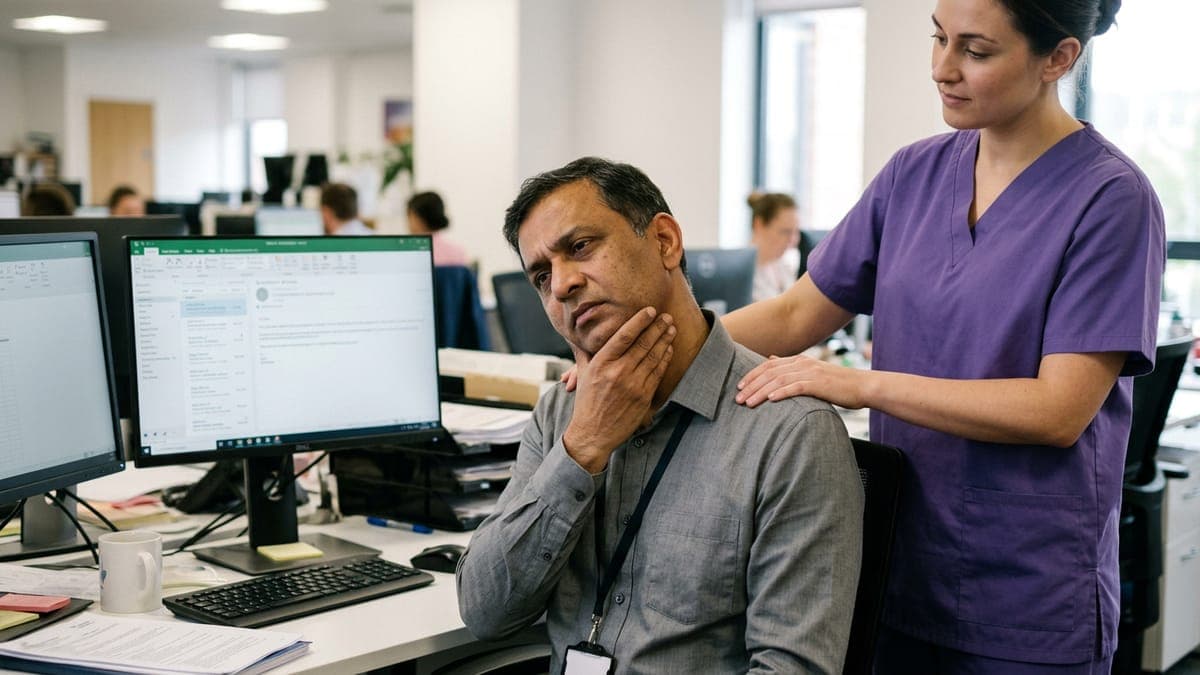
Neck Stiffness for Office Workers: Physiotherapy in Faridabad
Neck stiffness is one of the most universal complaints among Faridabad's desk-working population. Spending 8–10 hours per day with the head slightly forward, shoulders rounded.
Eyes fixed on a monitor creates a perfect storm of sustained muscle loading, joint compression, and disc stress. Without intervention, what begins as end-of-day stiffness progresses to chronic neck pain, cervicogenic headaches, and eventually cervical disc disease.
At Realign Rehab Clinic, NIT-5, Faridabad, our expert physiotherapists provide personalised, evidence-based care. Serving NIT, Green Field Colony, Ballabhgarh, Sector 21–82, and across Faridabad. Contact us: +91 9818185589.
Causes and Risk Factors
- Forward head posture: every 2.5 cm of forward head translation increases effective head weight by 4–5 kg
- Monitor positioned too low, forcing sustained neck flexion
- Rounded shoulders narrowing the cervical neural foramina
- Sustained static neck position without movement breaks
- Stress-related upper trapezius and levator scapulae hypertonicity
- Smartphone use in a head-down position ('text neck')
- Poorly adjusted car headrest contributing to overnight neck stiffness
Signs and Symptoms
- Neck stiffness and reduced rotation range, worst in the morning or afternoon
- Aching across the upper shoulders and base of the skull
- Cervicogenic headaches: head pain starting at the neck base
- Clicking or grinding on neck rotation
- Fatigue of the neck muscles after prolonged screen work
- Occasional arm tingling in more advanced cases
Physiotherapy Treatment at Realign Rehab, Faridabad
- Cervical joint mobilisation: restoring range of motion at C0–C7
- Deep cervical flexor strengthening: chin tuck exercise targeting longus colli
- Upper trapezius and levator scapulae stretching and soft tissue release
- Thoracic mobility: thoracic extension and rotation to offload the cervical spine
- Postural retraining: scapular retraction and cervical neutral position
- Dry needling for suboccipital and trapezius trigger points
- Ergonomic assessment: monitor height, keyboard position, and chair setup
- Movement break protocol: 5-minute neck movement routine every 45–60 minutes
Frequently Asked Questions
Why does my neck get stiff after working at a computer?
Sustained forward head posture overloads the posterior cervical muscles, compresses facet joints, and causes deep flexor inhibition. The neck was not designed for hours of sustained static loading in a slightly flexed position.
What is the best stretch for neck stiffness?
The chin tuck (gently drawing the chin back to create a 'double chin') is the single most important neck exercise for desk workers. Thoracic extension over a foam roller and upper trapezius stretches are also highly effective.
How do I set up my desk to prevent neck pain?
Monitor at eye level or slightly below, keyboard at elbow height, screen 50–70 cm from your eyes, and a chair that supports a neutral lumbar curve. Our physiotherapist can assess your specific workstation and make specific recommendations.
How often should I take breaks for my neck?
Every 45–60 minutes of desk work, perform a 5-minute movement break: chin tucks, shoulder rolls, thoracic rotation, and a short walk. This is more effective than a single long break at lunch.
How many sessions of physiotherapy do I need for desk-related neck pain?
Most desk-related neck stiffness responds measurably in 6–10 sessions over 4–6 weeks. The key is combining manual therapy with a home exercise programme that you maintain independently.
Book Your Consultation
Contact Realign Rehab Clinic today:
- 📍 NIT-5, Faridabad (near Green Field Colony, Ballabhgarh Road)
- 📞 +91 9818185589
- 🕑 Mon–Sat: 8 AM–8 PM