
 Dr. Vaishali Suri (P.T.)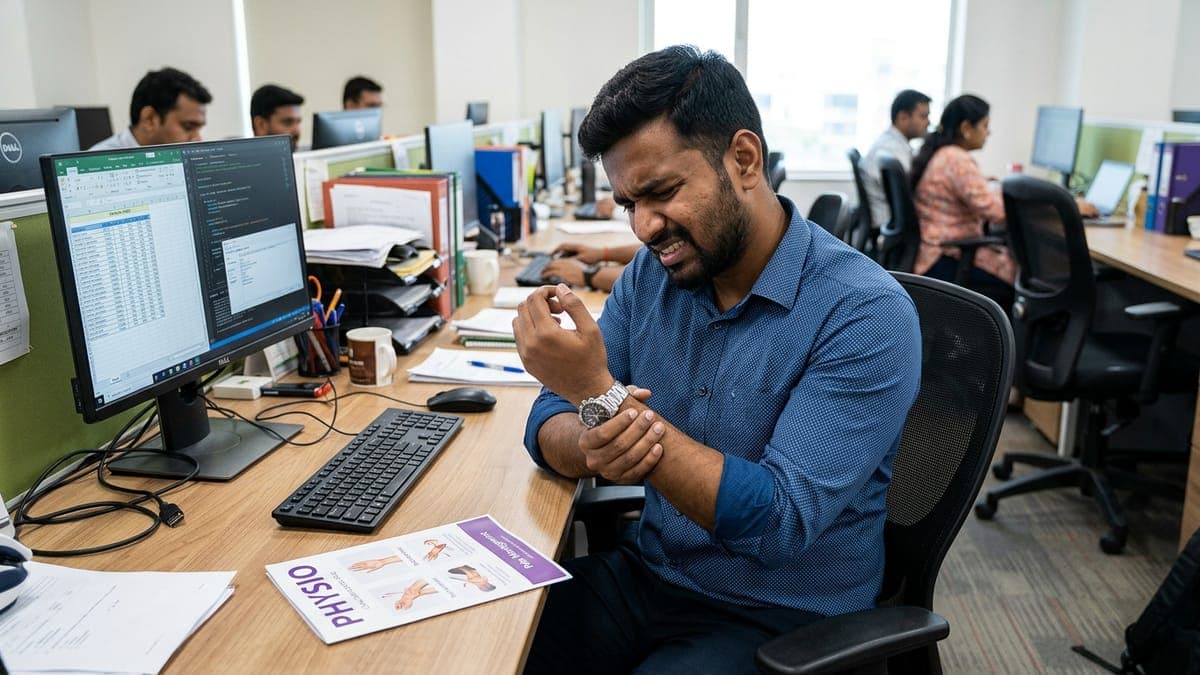
Office Repetitive Strain Injury (RSI): Physiotherapy in Faridabad
Office-related repetitive strain injury has reached epidemic proportions in Faridabad's growing white-collar workforce. Hours of keyboard use, mouse manipulation, and phone scrolling are creating a generation of workers with forearm, wrist, and hand pain that limits both professional output and daily life.
In-depth physiotherapy — addressing both the tissue damage and the ergonomic root cause — is the gold-standard treatment.
At Realign Rehab Clinic , NIT-5, Faridabad, our expert physiotherapist Dr. Vaishali Suri provides evidence-based treatment suited to your specific needs.
We serve patients from NIT, Sector 14, Old Faridabad, Green Field Colony, Ballabhgarh, Surajkund, and surrounding areas.
Causes and Risk Factors
- Keyboard and mouse use for 6+ hours daily without ergonomic support
- Smartphone use — 'text thumb', 'WhatsApp wrist', and neck strain
- Poor workstation setup — keyboard height, mouse position, screen distance
- Insufficient rest breaks during prolonged computer work
- Underlying anatomical risk factors — narrow carpal tunnel, tendon sheath inflammation
- Psychological stress from deadlines increasing muscle tension and reducing pain threshold
Signs and Symptoms
- Forearm aching or burning during or after computer work
- Wrist pain and stiffness, particularly in the morning
- Thumb pain from smartphone use — de Quervain's type pain at the wrist base
- Tingling or numbness in fingers — carpal tunnel or ulnar nerve involvement
- Weakness when gripping, opening jars, or lifting objects
- Symptom-free at rest or on weekends, returning with work activities
Physiotherapy Treatment at Realign Rehab, Faridabad
- Detailed ergonomic assessment — keyboard position, mouse type, wrist angles during work
- Soft tissue therapy for forearm flexor and extensor muscle overload
- Neural mobilisation for median, radial, and ulnar nerve tension
- Eccentric tendon loading exercises for tendinopathy components
- Activity modification plan and graduated return to full work capacity
- Ergonomic equipment recommendations — vertical mouse, split keyboard, wrist rest
Frequently Asked Questions
Should I use a wrist rest for keyboard work?
Wrist rests can reduce wrist extension during rest, but using them while typing can increase carpal tunnel pressure. The keyboard should be at elbow height — proper positioning eliminates the need for a wrist rest during active typing.
Is my pain RSI or carpal tunnel syndrome?
Carpal tunnel syndrome involves compression of the median nerve at the wrist, causing tingling and numbness in the thumb, index, and middle fingers. General RSI includes tendinopathies and multiple nerve irritations.
A physiotherapy assessment with nerve tension testing distinguishes the two.
Do I need to change jobs to recover from RSI?
Very rarely. Activity modification — ergonomic changes, micro-break strategies, task rotation — combined with physiotherapy allows most office workers to continue their careers. Complete job change is almost never necessary.
Can physiotherapy cure RSI or will it keep coming back?
With the right combination of physiotherapy and ergonomic correction, most patients achieve full resolution and maintain it long-term. Recurrence is common when ergonomic root causes are not addressed — which is why we always assess the workstation alongside treating the tissues.
Book Your Consultation
Ready to get back to pain-free living? Contact Realign Rehab Clinic today.
📍 NIT-5, Faridabad (near Green Field Colony, Sector 15)
📞 +91 9818185589
🕑 Monday–Saturday: 9 AM–7 PM
Related Articles: Repetitive Strain Injury (RSI) Treatment in Faridabad: Physiotherapy | Office Neck Pain in Faridabad: Physiotherapy for Tech and IT Professionals | Neck Stiffness and Pain in Office Workers Faridabad: Physiotherapy | Hip Flexor Strain Treatment in Faridabad: Physiotherapy for Iliopsoas
Related Conditions: Wrist Pain Treatment | Urinary Incontinence Treatment | Tennis Elbow Treatment
Related Services: Advanced Sports Physiotherapy | Pediatric Physio