 Dr. Vaishali Suri (P.T.)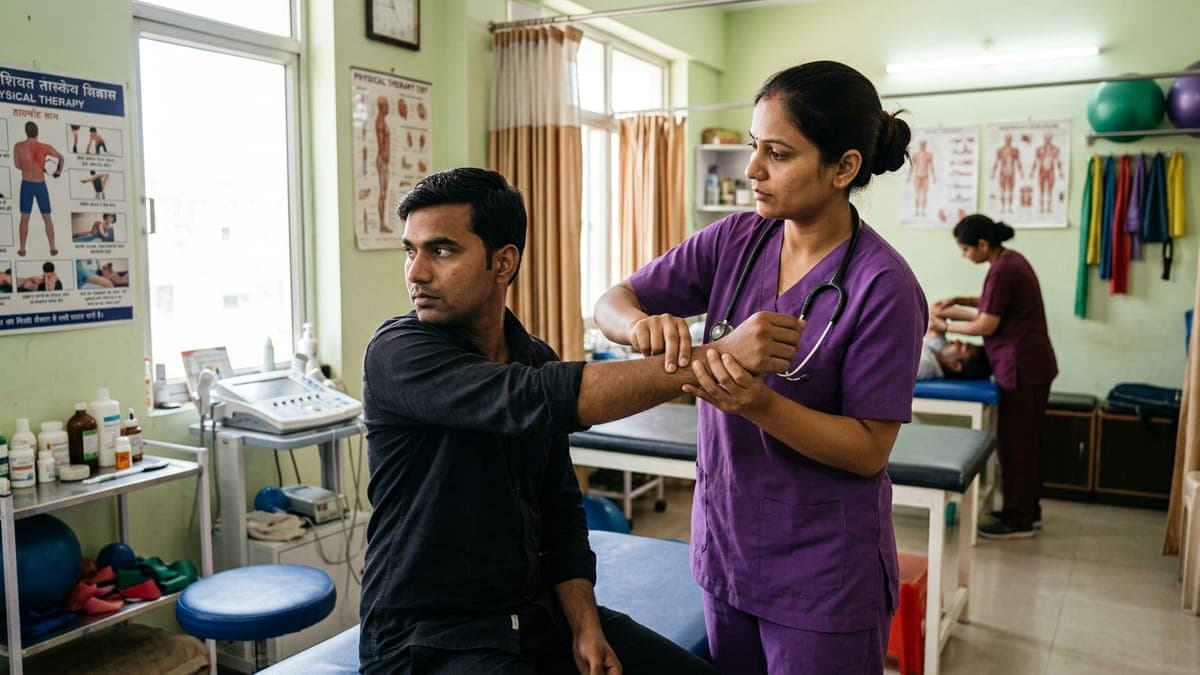
Thoracic Outlet Syndrome: Physiotherapy Treatment in Faridabad
Thoracic outlet syndrome (TOS) is caused by compression of the neurovascular structures (brachial plexus, subclavian artery or vein) in the space between the collarbone and first rib. It is frequently misdiagnosed — presenting as neck, shoulder, or arm pain with neurological symptoms that can mimic cervical disc disease, carpal tunnel syndrome, or rotator cuff pathology.
Physiotherapy is the primary treatment for neurogenic TOS (the most common form).
At Realign Rehab Clinic, NIT-5, Faridabad, our expert physiotherapists provide personalised, evidence-based care. Serving NIT, Green Field Colony, Ballabhgarh, Sector 21–82, and across Faridabad. Contact us: +91 9818185589.
Causes and Risk Factors
- Poor posture: rounded shoulders narrowing the thoracic outlet space
- Hypertrophy or tightness of the scalene and pectoralis minor muscles compressing neural structures
- Cervical rib (anatomical variant): extra rib from C7 creating additional compression
- Overhead work and repetitive shoulder elevation narrowing the costoclavicular space
- Whiplash injury causing scalene spasm
- First rib elevation from chronic upper trapezius tension
- Carrying heavy bags on one shoulder chronically
Signs and Symptoms
- Aching, heaviness, or pain in the arm, shoulder, and neck
- Numbness and tingling in the hand and fingers (often ulnar distribution)
- Symptoms worsened by overhead activities, driving, or carrying bags
- Cold hand or arm (vascular TOS — less common)
- Weakness of the intrinsic hand muscles in chronic cases
- Positive Roos test: arms raised to 90° and opening and closing the hands reproduces symptoms
Physiotherapy Treatment at Realign Rehab, Faridabad
- Scalene and pectoralis minor stretching and soft tissue release
- First rib mobilisation to increase the costoclavicular space
- Postural correction: shoulder retraction and depression, thoracic extension
- Thoracic outlet decompression exercises: specific shoulder girdle movements
- Neural mobilisation: brachial plexus mobilisation techniques
- Deep cervical flexor and scapular stabiliser strengthening
- Ergonomic assessment: workstation setup, bag carrying habits, sleeping position
- Breathing retraining: diaphragmatic breathing to reduce scalene overactivity
Frequently Asked Questions
What is thoracic outlet syndrome?
TOS is compression of the nerves (brachial plexus) and blood vessels (subclavian artery/vein) between the collarbone and first rib, causing arm pain, tingling, and weakness. Neurogenic TOS (nerve compression) is the most common type.
How is TOS diagnosed?
Clinical diagnosis is based on symptoms and specific provocative tests (Roos test, EAST test, Adson's test). Imaging (MRI, Doppler ultrasound) confirms vascular involvement.
A physiotherapy assessment can identify TOS and rule out cervical disc disease.
Can physiotherapy cure thoracic outlet syndrome?
Surgery (first rib resection) is reserved for severe cases or those failing 3–6 months of physiotherapy.
How long does TOS physiotherapy take?
A structured physiotherapy programme runs 8–12 weeks. Initial improvement is usually seen within 3–4 weeks of postural correction and stretching. Full resolution may take 3–6 months.
What aggravates thoracic outlet syndrome?
Overhead activities, carrying heavy bags, sustained computer work with rounded shoulders, and sleeping with the arm raised are the most common aggravators. Activity modification is a key part of physiotherapy management.
Book Your Consultation
Contact Realign Rehab Clinic today:
- 📍 NIT-5, Faridabad (near Green Field Colony, Ballabhgarh Road)
- 📞 +91 9818185589
- 🕑 Mon–Sat: 8 AM–8 PM