 Dr. Vaishali Suri (P.T.)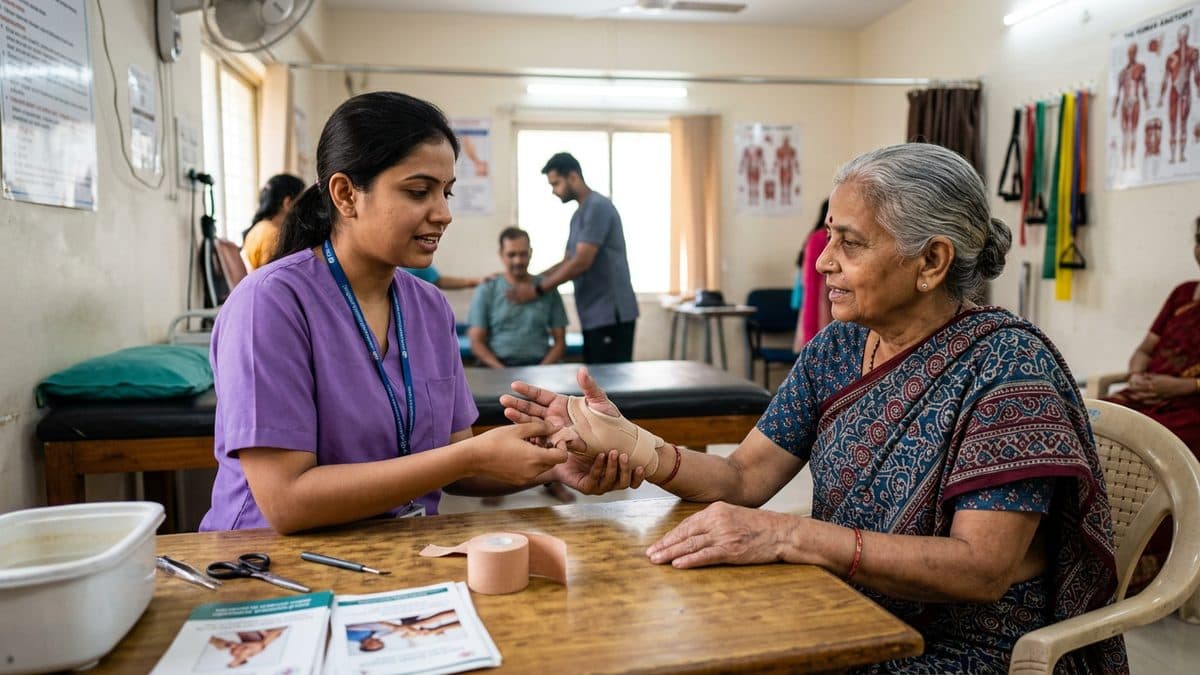
What Is Rheumatoid Arthritis?
Rheumatoid arthritis (RA) is a chronic autoimmune inflammatory disease primarily affecting the synovial joints. Unlike osteoarthritis treatment , which involves mechanical wear, RA is driven by the immune system attacking the joint lining (synovium) — causing inflammation, pain, swelling, and over time joint destruction.
RA typically affects small joints of the hands and feet first (MCPs, PIPs, wrists, MTPs), then progresses to larger joints. In Faridabad, RA is a common cause of hand and wrist pain in adults aged 30–60, and physiotherapy plays a central role in managing the condition and preserving function.
How RA Affects the Body
RA causes the synovial membrane to become inflamed and thickened, producing excess synovial fluid (causing swelling) and erosive cytokines that damage cartilage and bone over time. RA is systemic — it can also cause fatigue, anaemia, cardiovascular complications, osteoporosis, and lung involvement.
Joint protection and appropriate exercise are critical to maintaining quality of life and slowing joint destruction.
Symptoms of Rheumatoid Arthritis
- Symmetrical joint pain and swelling — both hands/wrists typically involved
- Morning stiffness lasting more than 30–60 minutes (key diagnostic feature distinguishing RA from OA)
- Warm, swollen joints
- Fatigue — often severe and underrecognised
- Low-grade fever during flares
- Rheumatoid nodules (subcutaneous lumps) at pressure points
- Positive RF (rheumatoid factor) and anti-CCP antibodies on blood tests
The Role of Physiotherapy in RA Management
Joint Protection Education
Joint protection principles help preserve joint integrity and reduce pain during daily activities. Key principles include: use larger joints for tasks where possible (elbow over wrist), avoid sustained grip positions, spread load over multiple joints, avoid positions that stress inflamed joints, use adaptive equipment to reduce joint loading.
These principles become second nature with proper guidance and transform daily function.
Hand and Wrist Exercise Programme
Specific hand exercises maintain and improve range of motion, tendon gliding, and grip strength. Programme adapted to disease activity — gentle active range of motion during flares, progressive resistance exercises during remission.
Wax bath therapy for pain relief and joint mobilisation in hands.
General Conditioning Programme
Aerobic conditioning (hydrotherapy, cycling, walking) improves cardiovascular health, reduces fatigue, and maintains muscle mass. Resistance training prevents the muscle wasting (sarcopenia) that accelerates functional decline in RA.
All exercise is adapted to current disease activity and joint status.
Splinting and Orthotic Support
Resting splints for acute wrist/hand flares. Working splints to support functional activities. Shoe orthotics for forefoot deformity. Custom splints fabricated in consultation with occupational therapy where indicated.
Home Exercises for RA
Warm Water Hand Exercises
Soak hands in warm water for 10 minutes, then perform: fist open/close, finger spread/close, wrist circles, prayer stretch. The warmth reduces stiffness and pain, making exercises more comfortable.
Daily — ideally morning to address morning stiffness.
Grip Strengthening (Between Flares)
Use a soft putty or stress ball. Squeeze gently. 3 sets of 15.
Progress resistance as tolerated. Performed during low disease activity only — stop if joint swelling increases.
Maintain grip strength is critical for independence in daily activities.
Frequently Asked Questions — Rheumatoid Arthritis
Q: Can physiotherapy help RA or should I just take my medications?
Both are essential. DMARD medications (methotrexate, biologics) control the autoimmune disease process.
Physiotherapy translates that disease control into functional improvement — maintaining strength, preventing deformity, teaching joint protection, and keeping you active. EULAR and ACR RA management guidelines both recommend physiotherapy as a core component of RA treatment alongside pharmacological management.
Q: Is it safe to exercise during an RA flare?
Gentle active range of motion exercises are safe and beneficial during mild-moderate flares. They prevent joint stiffening and maintain circulation.
Avoid resistance exercise and high-impact activity during significant flares. During severe flares affecting multiple joints, rest is appropriate, but gentle range of motion movements for non-acutely flaring joints should continue.
Your physiotherapist will guide specific exercise modifications based on current disease activity.
Q: Can physiotherapy help with RA fatigue?
RA fatigue is one of the most debilitating symptoms and often underaddressed. Aerobic exercise programmes consistently reduce RA-related fatigue in systematic reviews.
The mechanism involves improved cardiovascular conditioning, better sleep quality, reduced systemic inflammation, and improved psychological wellbeing. Graded exercise programmes starting from low intensity are appropriate even for significantly fatigued patients.
Q: Does Realign Clinic provide home physiotherapy for RA patients in Faridabad who cannot travel?
We provide home physiotherapy visits across Faridabad for RA patients whose disease activity or mobility limitations make clinic attendance difficult. Home sessions cover exercise instruction, joint protection education, splinting assessment, and functional task modification.
Call +91 9818185589 to arrange.
Book RA Physiotherapy in Faridabad
Call +91 9818185589. Realign Rehab Clinic, NIT-5, Faridabad. Also see: rheumatoid arthritis conditions page, arthritis management, hand function rehabilitation.
References
- Hurkmans E et al. (2009). Dynamic exercise programs for rheumatoid arthritis. Cochrane Database Syst Rev.
- Steultjens EM et al. (2004). Occupational therapy for rheumatoid arthritis. Cochrane Database Syst Rev.
- Smolen JS et al. (2020). EULAR recommendations for the management of RA. Ann Rheum Dis, 79(6):685–699.
Content author: Dr. Vaishali Suri (P.T.), MPT (Sports Medicine), BPT, MIAP, MIAP.