
 Dr. Vaishali Suri (P.T.)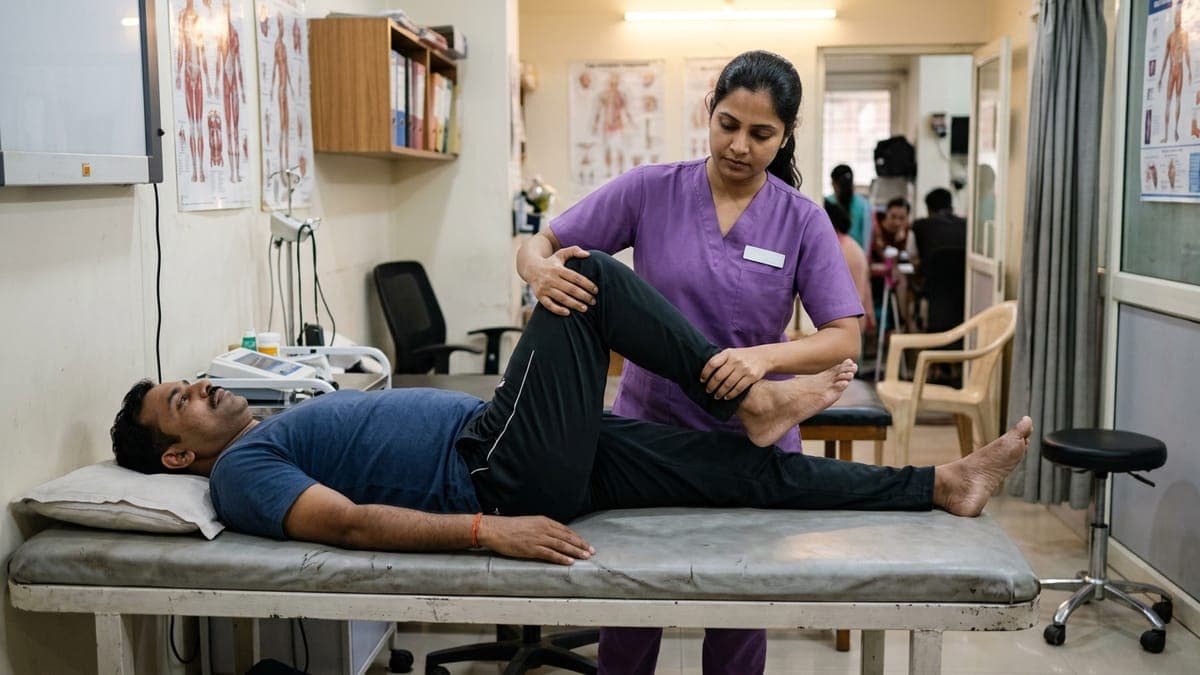
Sacroiliac Joint Pain: Physiotherapy Treatment in Faridabad
Sacroiliac joint (SIJ) dysfunction is a common but frequently misdiagnosed cause of lower back and buttock pain. The SIJ — the joint connecting the sacrum to the pelvis — is an extremely stable joint that transmits enormous forces between the spine and lower limbs.
When the SIJ becomes hypermobile, hypomobile, or inflamed, it produces a distinct pain pattern that physiotherapy is highly effective in addressing.
At Realign Rehab Clinic, NIT-5, Faridabad, our expert physiotherapists provide personalised, evidence-based care. Serving NIT, Green Field Colony, Ballabhgarh, Sector 21–82, and across Faridabad. Contact us: +91 9818185589.
Causes and Risk Factors
- Pregnancy and post-partum: hormonal laxity from relaxin causes SIJ hypermobility
- Leg length discrepancy: asymmetric SIJ loading
- Trauma: fall onto the buttock or single-leg landing
- Asymmetric loading: repetitive one-sided activities (cricket, javelin, asymmetric sport)
- Post-lumbar fusion: adjacent segment stress concentrating load at the SIJ
- Inflammatory conditions: ankylosing spondylitis, psoriatic arthritis affecting SIJ
- Hypermobility spectrum disorder: systemic ligamentous laxity causing SIJ instability
Signs and Symptoms
- Unilateral lower back pain at the level of the sacrum and SI region (not the lumbar spine)
- Buttock pain that does not radiate below the knee (usually stops at the thigh)
- Pain on prolonged sitting, standing on one leg, or transitioning from sitting to standing
- Positive provocation tests: FABER, THIGH THRUST, compression, distraction
- Pain rolling over in bed
- Post-partum pelvic girdle pain with difficulty walking
Physiotherapy Treatment at Realign Rehab, Faridabad
- SIJ joint mobilisation: restoring normal joint movement in hypomobile SIJ
- Pelvic stability programme: gluteus medius, multifidus, and pelvic floor co-activation
- SIJ belt/pelvic girdle support for hypermobile presentations
- Muscle energy techniques (MET) for SIJ positional dysfunction
- Lumbar-pelvic stability exercises: preventing abnormal SIJ loading
- Gait retraining: normalising asymmetric loading patterns
- Pregnancy-specific SIJ management: safe exercises and pelvic girdle belt
- Coordination with rheumatologist for inflammatory SIJ conditions
Frequently Asked Questions
How do I know if my lower back pain is from my SI joint?
SIJ pain is typically felt below L5, at the level of the posterior iliac spine (dimple of the back). It does not radiate below the knee in most cases.
Positive SIJ provocation tests confirm the diagnosis.
Can physiotherapy treat sacroiliac joint pain?
Yes — physiotherapy is the primary treatment for most SIJ dysfunction. Manual therapy, pelvic stability training, and gait correction resolve symptoms in the majority of cases.
Injections and surgery are reserved for refractory cases.
What exercises help SI joint pain?
Gluteus medius and multifidus co-activation exercises, pelvic floor activation, clamshells, and bridges are the most effective. A SIJ belt during early recovery can also help stabilise the joint during exercise.
Is SIJ pain the same as sciatica?
No — SIJ pain is felt in the lower back, buttock, and upper thigh but rarely radiates below the knee. Sciatica from disc herniation typically radiates in a dermatomal pattern below the knee into the foot.
Can SI joint pain occur during pregnancy?
Yes — SIJ dysfunction (pelvic girdle pain) is very common during pregnancy due to relaxin-induced ligamentous laxity. Physiotherapy including pelvic stability exercises and pelvic girdle belt measurably reduces symptoms.
Book Your Consultation
Contact Realign Rehab Clinic today:
- 📍 NIT-5, Faridabad (near Green Field Colony, Ballabhgarh Road)
- 📞 +91 9818185589
- 🕑 Mon–Sat: 8 AM–8 PM