
 Dr. Vaishali Suri (P.T.)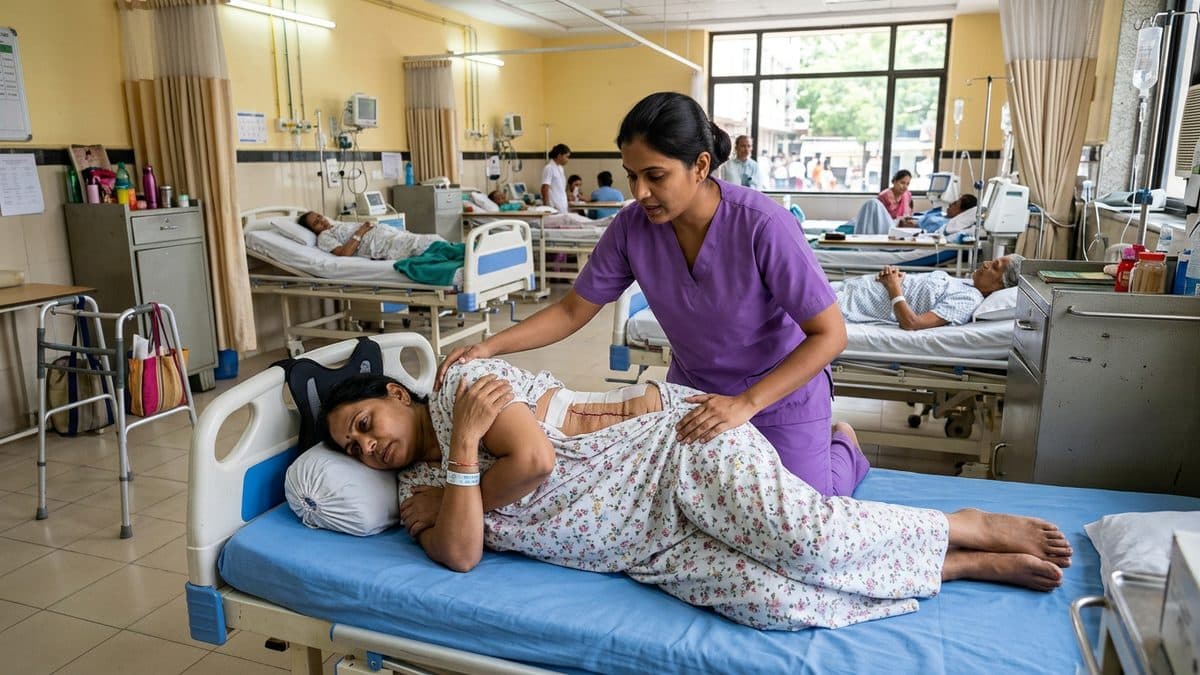
Physiotherapy After Spinal Surgery: Rehabilitation in Faridabad
Spinal surgery — whether discectomy, laminectomy, spinal fusion, or minimally invasive procedures. Addresses structural spinal pathology, but it does not restore muscle function, movement control, or neurological recovery on its own.
Post-operative physiotherapy is essential for achieving ideal surgical outcomes, preventing complications, and returning patients to a full, active life.
At Realign Rehab Clinic , NIT-5, Faridabad, our expert physiotherapists deliver personalised, evidence-based rehabilitation. We serve patients from NIT, Green Field Colony, Ballabhgarh, Sector 21–82, and across Faridabad.
Book your assessment: +91 9818185589 .
Causes and Risk Factors
- Lumbar discectomy for herniated disc with sciatica
- Laminectomy or laminotomy for spinal stenosis decompression
- Posterior lumbar interbody fusion (PLIF) or TLIF for instability or spondylolisthesis
- Anterior cervical discectomy and fusion (ACDF) for cervical radiculopathy
- Cervical laminoplasty for cervical myelopathy
- Minimally invasive spinal surgery (MISS) procedures
Signs and Symptoms
- Post-operative pain and swelling at the surgical site
- Weakness and reduced endurance of paraspinal and core muscles
- Residual nerve symptoms: tingling, weakness, or sensory changes in the limbs
- Movement fear and altered movement patterns protecting the operated segment
- Scar tissue formation at the surgical site
- Deconditioning from pre-operative inactivity and post-operative rest
Physiotherapy Treatment at Realign Rehab, Faridabad
- Week 1–4: wound monitoring, bed mobility, log-roll technique, and gentle walking
- Weeks 4–8: core activation (transversus abdominis, multifidus), postural correction
- Weeks 8–16: progressive strengthening, aquatic therapy, and functional retraining
- Weeks 16+: return-to-work and sport-specific conditioning
- Neural mobilisation for post-surgical nerve hypersensitivity
- Manual therapy: adjacent segment mobilisation to prevent stress transfer
- Education: spinal hygiene, safe lifting technique, and activity pacing
- Electrotherapy for residual pain management during recovery
Frequently Asked Questions
When should I start physiotherapy after spinal surgery?
Physiotherapy begins in hospital within 24–48 hours of most spinal surgeries. The physiotherapist will teach you bed mobility, log-roll technique, and how to get in and out of bed safely before discharge.
What exercises can I do after spinal fusion?
Initially: log-roll technique, ankle pumps, and gentle walking. From week 4–6: specific core activation exercises prescribed by your physiotherapist.
Never start exercises from the internet without clearance — the wrong exercises after fusion can damage the surgical repair.
How long is recovery after spinal surgery?
Discectomy: return to desk work at 4–6 weeks, full activity at 3–6 months. Spinal fusion: return to desk work at 8–12 weeks, full activity at 6–12 months depending on fusion levels and whether it was single or multi-level.
Do you offer post-surgical physiotherapy at home in Faridabad?
Yes — we provide home visit physiotherapy for patients recovering from spinal surgery who cannot travel to the clinic. We serve all areas of Faridabad. Contact us on +91 9818185589.
What should I avoid after spinal surgery?
Avoid bending, lifting, twisting (BLT) beyond prescribed limits in the first 6–12 weeks. Your physiotherapist will give you specific guidance based on your procedure and surgeon's instructions.
Book Your Consultation
Contact Realign Rehab Clinic, Faridabad today:
- 📍 NIT-5, Faridabad (near Green Field Colony, Ballabhgarh Road)
- 📞 +91 9818185589
- 🕑 Mon–Sat: 8 AM–8 PM