
 Dr. Vaishali Suri (P.T.)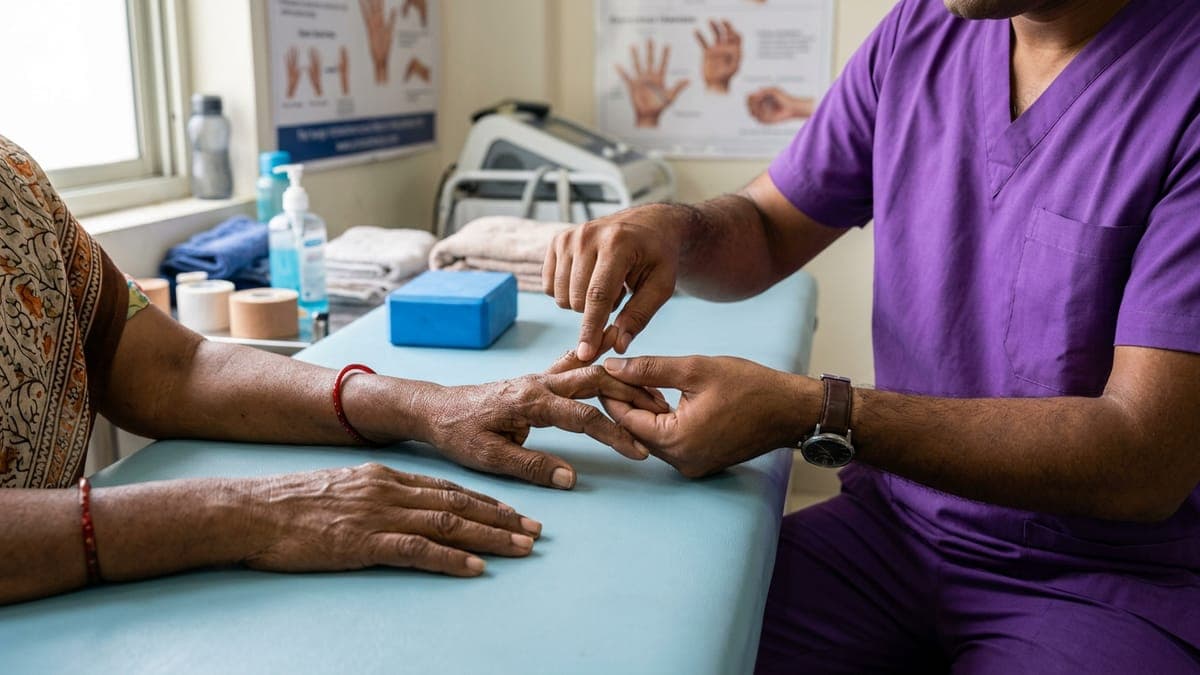
Trigger Finger: Physiotherapy Treatment in Faridabad
Trigger finger (stenosing tenosynovitis) occurs when inflammation of the flexor tendon sheath at the A1 pulley (base of the finger) causes the tendon to catch, click, or lock as the finger bends. At its most severe, the finger becomes locked in a bent position and must be straightened by the other hand — an unmistakable and often alarming symptom.
Physiotherapy is effective for mild to moderate trigger finger, and even for severe cases, it can reduce symptoms significantly before or alongside medical intervention.
At Realign Rehab Clinic, NIT-5, Faridabad, our expert physiotherapists provide personalised, evidence-based care. Serving NIT, Green Field Colony, Ballabhgarh, Sector 21–82, and across Faridabad. Contact us: +91 9818185589.
Causes and Risk Factors
- Repetitive gripping and pinching activities: gardening, hammering, tool use
- Diabetes mellitus — strongly associated with trigger finger (6× higher risk)
- Rheumatoid arthritis causing tendon sheath thickening
- Hypothyroidism and carpal tunnel syndrome (commonly coexist with trigger finger)
- Prolonged or repetitive smartphone and keyboard use
- Amyloidosis and other systemic conditions causing tendon pathology
- Idiopathic: no clear cause in a a considerable proportion of cases
Signs and Symptoms
- Clicking, catching, or locking sensation when bending the finger
- Tenderness and a palpable nodule at the base of the finger (A1 pulley)
- Morning stiffness that resolves with movement as the hand warms up
- Finger locked in a bent position that cannot straighten without assistance (Grade 3–4)
- Pain at the base of the finger or in the palm
- Swelling over the metacarpophalangeal (MCP) joint
Physiotherapy Treatment at Realign Rehab, Faridabad
- A1 pulley offloading: custom thermoplastic splint holding the MCP joint in extension
- Tendon gliding exercises to maintain full flexor tendon excursion
- Ultrasound therapy and iontophoresis to reduce tendon sheath inflammation
- Manual therapy: gentle transverse transverse friction therapy of the tendon sheath
- Activity modification: avoiding sustained gripping, modifying tool handles
- Intrinsic hand muscle strengthening to improve tendon mechanics
- Night splinting where morning locking is the primary complaint
- Liaison with hand surgeon for steroid injection or surgical release if physiotherapy insufficient
Frequently Asked Questions
Can trigger finger be treated without surgery?
Yes — Grade 1 and 2 trigger finger (clicking and catching without locking) responds well to physiotherapy with splinting, tendon gliding exercises, and activity modification. Steroid injection is used for Grade 3.
Surgery is reserved for Grade 4 or failed conservative treatment.
How long does trigger finger physiotherapy take?
Grade 1–2 cases typically resolve in 6–10 weeks with splinting and exercises. Moderate cases may take 3–4 months. Physiotherapy begins promptly after diagnosis to prevent progression.
What is the best splint for trigger finger?
A custom thermoplastic splint holding the MCP joint in 0–15° extension while allowing interphalangeal (IP) joint movement is the most evidence-based. This prevents the snapping movement without restricting daily hand function.
Is trigger finger related to diabetes?
Yes — diabetes is one of the strongest risk factors for trigger finger. Elevated blood glucose causes glycation of collagen in the tendon sheath, promoting thickening.
Good glycaemic control helps prevent and manage trigger finger.
What exercises help trigger finger?
Tendon gliding exercises — six specific positions that maximise flexor tendon excursion — are the most effective. These should be performed 3–5× daily under physiotherapy guidance.
Avoid excessive gripping during recovery.
Book Your Consultation
Contact Realign Rehab Clinic today:
- 📍 NIT-5, Faridabad (near Green Field Colony, Ballabhgarh Road)
- 📞 +91 9818185589
- 🕑 Mon–Sat: 8 AM–8 PM