 Dr. Vaishali Suri (P.T.)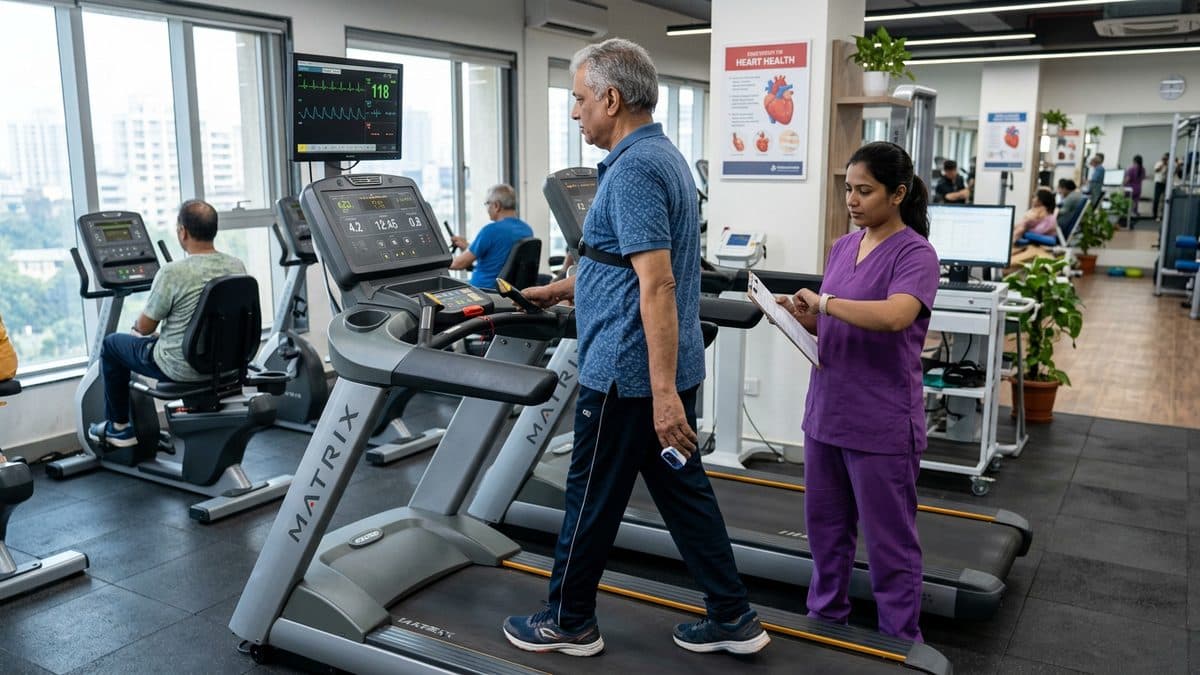
Cardiac Rehabilitation Physiotherapy in Faridabad
Cardiac rehabilitation (CR) is a medically supervised programme of exercise, education, and lifestyle modification designed to help patients recover from heart attacks, heart surgery, and other cardiovascular events. Physiotherapy is the cornerstone of cardiac rehabilitation — specifically, the structured exercise component that restores cardiovascular fitness, reduces symptoms, and dramatically lowers the risk of a second cardiac event.
At Realign Rehab Clinic, NIT-5, Faridabad, our expert physiotherapists provide personalised, evidence-based care. Serving NIT, Green Field Colony, Ballabhgarh, Sector 21–82, and across Faridabad. Contact us: +91 9818185589.
Causes and Risk Factors
- Myocardial infarction (heart attack): requiring cardiac rehabilitation to restore function
- Coronary artery bypass graft (CABG) surgery: post-surgical deconditioning and chest wall recovery
- Percutaneous coronary intervention (PCI/stent): requiring guided return to activity
- Heart failure: exercise tolerance limited by reduced cardiac output
- Stable angina: supervised exercise to improve symptoms and reduce event risk
- Cardiac valve surgery: post-operative rehabilitation including sternal precautions
Signs and Symptoms
- Breathlessness on exertion — reduced exercise tolerance after cardiac event
- Fatigue and deconditioning from bed rest and activity restriction post-event
- Chest wall stiffness and discomfort following sternotomy (CABG)
- Anxiety and depression, which are extremely common after cardiac events
- Fear of exercise ('cardiac neurosis') limiting activity and perpetuating deconditioning
- Risk factor burden: hypertension, obesity, and sedentary lifestyle requiring modification
Physiotherapy Treatment at Realign Rehab, Faridabad
- Phase 1 (inpatient): gentle mobilisation, breathing exercises, and sternal/chest precautions education
- Phase 2 (outpatient): supervised aerobic exercise with cardiac monitoring (HR, BP, SpO2)
- Graded walking programme: progressively increasing distance and intensity
- Resistance training: safe upper and lower body strengthening post-cardiac event
- Breathing exercises: diaphragmatic breathing, deep breathing for post-surgical lung recovery
- Sternal precaution management: activity modification post-CABG sternotomy
- Lifestyle modification: aerobic exercise habits, physical activity counselling
- Coordination with cardiologist and cardiac nurse for multidisciplinary management
Frequently Asked Questions
When can I start exercising after a heart attack?
Supervised exercise can begin within days of a stable heart attack, starting with gentle walking. Formal cardiac rehabilitation typically commences 2–4 weeks after the event under cardiologist clearance.
Never start exercise after a cardiac event without medical supervision.
What exercise is safe after heart surgery?
Walking and gentle aerobic exercise are the first-line activities. Upper limb activities and resistance training are added progressively after sternal healing (typically 6–8 weeks post-CABG).
Your physiotherapist will provide specific sternal precaution guidance.
Is physiotherapy necessary after a heart attack?
Yes — cardiac rehabilitation physiotherapy is essential.
Do you offer cardiac rehabilitation at home in Faridabad?
Yes — home-based cardiac rehabilitation is available and produces equivalent outcomes to clinic-based programmes. We serve patients across Faridabad. Contact us on +91 9818185589 for a home programme assessment.
How long does cardiac rehabilitation take?
Standard cardiac rehabilitation is 12–36 sessions over 3–6 months. Home programmes continue indefinitely as a lifestyle habit. Physical activity after cardiac rehabilitation should be maintained lifelong for sustained mortality reduction.
Book Your Consultation
Contact Realign Rehab Clinic today:
- 📍 NIT-5, Faridabad (near Green Field Colony, Ballabhgarh Road)
- 📞 +91 9818185589
- 🕑 Mon–Sat: 8 AM–8 PM