 Dr. Vaishali Suri (P.T.)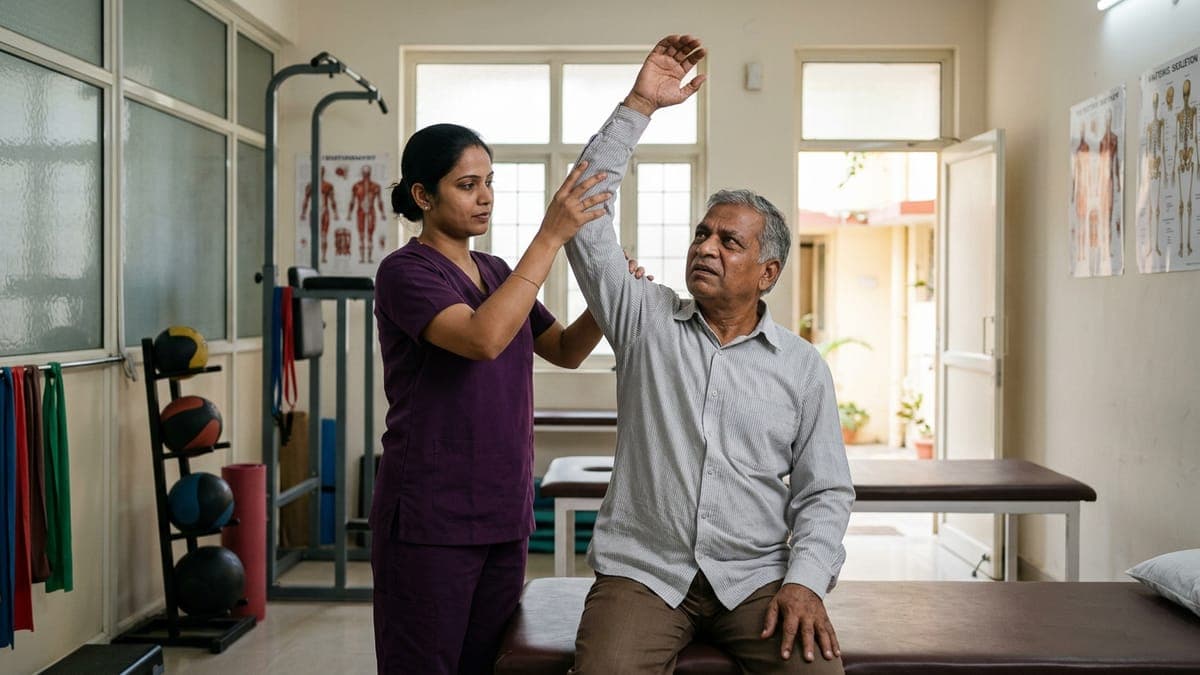
Frozen Shoulder: Thorough physiotherapy Guide for Faridabad Patients
While frozen shoulder is self-limiting over 1–3 years, physiotherapy dramatically accelerates recovery and reduces the severe functional limitation of the natural course.
At Realign Rehab Clinic, NIT-5, Faridabad, our expert physiotherapists provide personalised, evidence-based care. Serving NIT, Green Field Colony, Ballabhgarh, Sector 21–82, and across Faridabad. Contact us: +91 9818185589.
Causes and Risk Factors
- Idiopathic (primary): no identifiable cause — most common
- Thyroid disease (hypo and hyperthyroidism): significantly associated
- Post-surgical: shoulder immobilisation after rotator cuff repair, mastectomy, or cardiac surgery
- Secondary to other shoulder conditions: rotator cuff disease, shoulder impingement
- Autoimmune associations: rheumatoid arthritis, psoriasis
Signs and Symptoms
- Freezing phase (0–9 months): progressive shoulder pain and stiffness developing insidiously
- Frozen phase (9–15 months): pain somewhat improves but severe stiffness predominates
- Thawing phase (15–24 months): gradual recovery of movement
- Loss of passive external rotation is the hallmark — the most restricted movement in capsular pattern
- Night pain: often severe, disturbing sleep significantly
- Functional limitations: difficulty dressing, reaching behind the back, overhead activities
Physiotherapy Treatment at Realign Rehab, Faridabad
- Freezing phase: pain management priority — gentle mobilisation, TENS, heat/cold therapy
- Frozen phase: progressive capsular stretching, joint mobilisation, PNF stretching
- Thawing phase: strengthening, functional retraining, return to full activities
- Manual therapy: end-range glenohumeral mobilisation (Maitland Grade III–IV)
- Capsular stretching: sleeper stretch, posterior capsule mobilisation
- Hydrodilatation coordination: physiotherapy before and after hydrodilatation for optimised outcomes
- Diabetes management coordination: glycaemic control significantly affects frozen shoulder prognosis
- Shoulder blade strengthening to maintain function during the frozen phase
Frequently Asked Questions
How long does frozen shoulder last with physiotherapy?
With targeted physiotherapy, most patients achieve full or near-full recovery in 9–12 months, compared to 18–24 months without treatment. Starting physiotherapy early in the freezing phase produces the fastest recovery.
Can frozen shoulder be cured?
Yes — frozen shoulder is a self-limiting condition that fully resolves in the vast majority of patients. Physiotherapy accelerates the timeline and manages the severe pain and functional limitation during recovery.
Is frozen shoulder related to diabetes?
Most effective glycaemic control clearly improves physiotherapy outcomes.
What is the best exercise for frozen shoulder?
Exercises depend on the phase. In the freezing phase, gentle pendulum and assisted elevation exercises are appropriate.
In the frozen phase, progressive end-range stretching and mobilisation are introduced. Ask your physiotherapist for phase-specific exercises.
Should I push through the pain in frozen shoulder?
Physiotherapy involves working to the comfortable end range and progressively extending that range. Pain during physiotherapy should be tolerable (3–4/10) and should not persist beyond 24 hours.
Aggressive stretching beyond this can worsen inflammation.
Book Your Consultation
Contact Realign Rehab Clinic today:
- 📍 NIT-5, Faridabad (near Green Field Colony, Ballabhgarh Road)
- 📞 +91 9818185589
- 🕑 Mon–Sat: 8 AM–8 PM