
 Dr. Vaishali Suri (P.T.)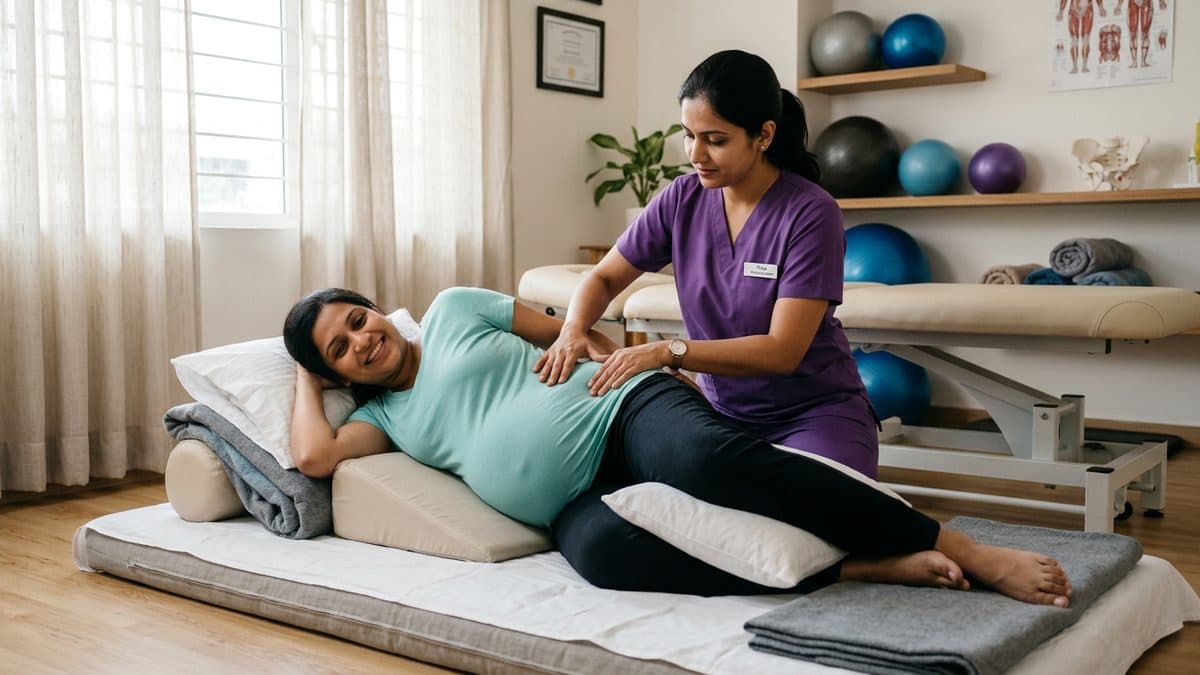
Physical Changes During Pregnancy
Pregnancy causes profound physical changes: weight gain of 10–15 kg, altered centre of gravity, ligamentous laxity from relaxin hormone, postural adaptations. Increased demand on the core and pelvic floor rehabilitation muscles.
Common Conditions Treated
Lower Back Pain: Increased lumbar lordosis and weight load cause back pain, particularly in the second and third trimesters. Pelvic Girdle Pain (PGP): Pain in the sacroiliac joints, pubic symphysis, or hip girdle.
Can range from mild discomfort to severe disability. carpal tunnel syndrome Syndrome: Fluid retention compresses the median nerve — very common in the third trimester. Diastasis Recti: Separation of the abdominal muscles along the midline.
Preparation for Labour: Best positioning, breathing techniques, and pelvic floor preparation.
Antenatal Physiotherapy Interventions
Pelvic Floor Exercises
Pelvic floor strengthening during pregnancy reduces the risk of urinary incontinence during pregnancy and postpartum. Correct technique is essential — many women perform Kegels incorrectly.
We maintain proper technique and progression.
Targeted exercise Programme
Regular physical activity during pregnancy is safe and beneficial for both mother and baby. We design pregnancy-appropriate exercise programmes maintaining cardiovascular fitness and musculoskeletal strength.
Pain Management
Manual therapy, postural correction, pregnancy pillows, maternity belts, and specific exercises address back and pelvic girdle pain safely during pregnancy.
Labour Preparation
Peak positions for labour and delivery, breathing techniques, and pelvic floor preparation can improve labour outcomes.
Antenatal Physiotherapy in Faridabad
At Realign Rehab Clinic, NIT-5, Faridabad, our physiotherapists are experienced in safe antenatal care. Book your pregnancy physiotherapy consultation.
Safe Exercise During Pregnancy: Evidence-Based Guidelines
Current guidelines from ACOG (American College of Obstetricians and Gynecologists) and RCOG (Royal College) recommend 150 minutes of moderate-intensity aerobic activity per week during pregnancy for women without contraindications. Exercise in pregnancy is safe for most women and produces significant benefits for both mother and baby.
Physiotherapy provides supervised, safe exercise programmes designed for each trimester.
Common Pregnancy Musculoskeletal Problems Treated at Realign Clinic
Pelvic Girdle Pain (PGP)
Physiotherapy with pelvic stability exercises, sacroiliac joint belt, manual therapy (gentle), and activity modification noticeably reduces PGP symptoms. Pain is worse with: walking, stairs, turning over in bed, prolonged standing.
Lumbar Back Pain in Pregnancy
Specific exercises (pelvic tilts, modified core stability, prenatal yoga adaptations) address these factors safely.
Diastasis Recti Prevention
Understanding which exercises to avoid during pregnancy (crunches, full sit-ups, heavy lifting with breath-holding) and performing safe core exercises prevents excessive diastasis recti separation. See our diastasis recti guide.
Pelvic Floor Exercise Programme
Antenatal pelvic floor training is the strongest intervention for preventing postpartum urinary incontinence. Starting pelvic floor exercises in the first trimester provides the greatest benefit.
We teach correct technique (many women perform Kegels incorrectly) and provide a progressive programme.
Frequently Asked Questions — Pregnancy Physiotherapy
Q: When should I start physiotherapy during pregnancy?
Ideally in the first trimester — to begin pelvic floor training early, establish safe exercise patterns, and address any musculoskeletal issues before they become significant. However, physiotherapy is beneficial at any stage of pregnancy.
Pelvic girdle pain and back pain are especially common in the second and third trimesters and respond well to physiotherapy even when starting late in pregnancy.
Q: Is physiotherapy safe throughout pregnancy?
Yes — physiotherapy specifically designed for pregnancy is safe in all trimesters for women with normal pregnancies. High-velocity spinal manipulation is avoided.
All exercises and manual therapy techniques are adapted to gestational age and individual presentation. We liaise with your obstetrician where appropriate.
Q: Can physiotherapy help prepare for labour?
Perineal preparation techniques from 34–36 weeks reduces perineal tears. Specific positions and movement patterns for labour ease pain and support progress.
Pelvic floor awareness training helps women relax the pelvic floor during delivery — reducing both duration and injury risk.
Book Pregnancy Physiotherapy in Faridabad
Call +91 9818185589 . Realign Rehab Clinic, NIT-5, Faridabad.
Professional, sensitive pregnancy physiotherapy by Dr. Also see: pregnancy physiotherapy conditions page , postpartum recovery , women's health services .
References
- Haakstad LA et al. (2016). Effect of regular exercise on pregnancy-related low back pain. BJOG, 115(1):56–60.
- Mørkved S et al. (2003). Pelvic floor muscle training during pregnancy to prevent urinary incontinence. Obstet Gynecol, 101(2):313–319.
Content author: Dr. Vaishali Suri (P.T.), MPT (Sports Medicine), BPT, MIAP, MIAP.