 Dr. Vaishali Suri (P.T.)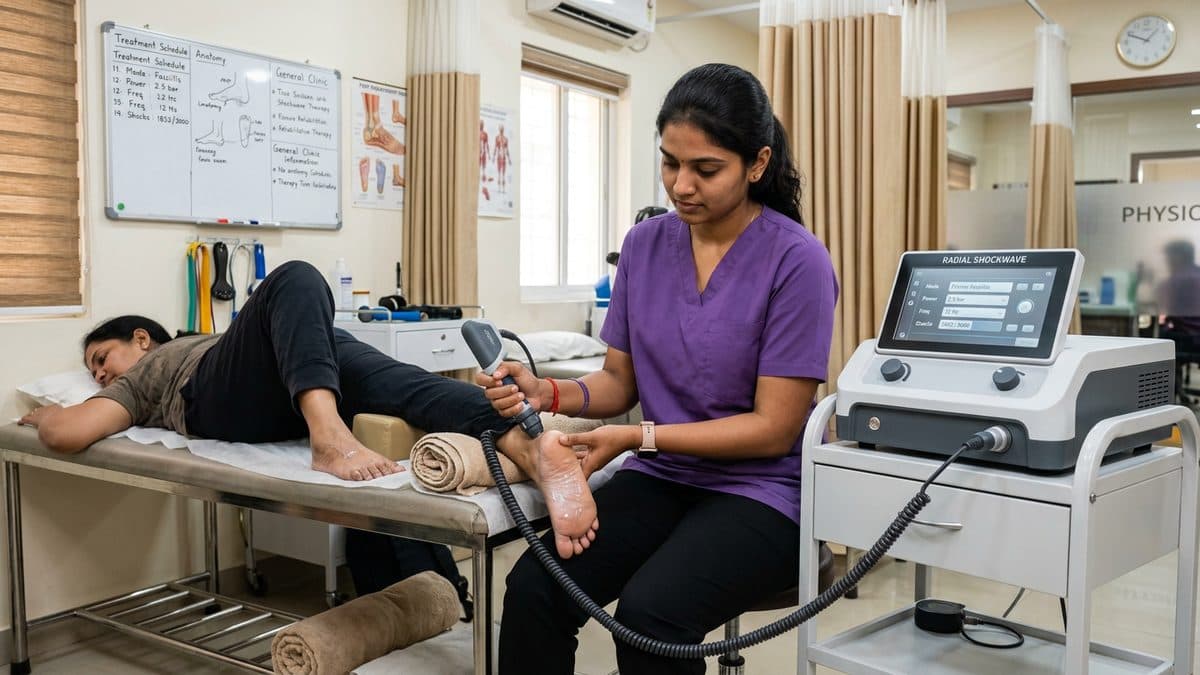
Shockwave Therapy for Plantar Fasciitis in Faridabad: The Non-Surgical Heel Pain Solution
Plantar fasciitis is the most common cause of heel pain globally and one of the most frustrating. If you have been suffering from that sharp, stabbing pain with your first morning steps, you are probably already aware that standard treatments can take months with inconsistent results.
At Realign Rehab Clinic , NIT-5, Faridabad, our expert physiotherapists use shockwave therapy as a targeted, evidence-based intervention. Serving patients from NIT, Green Field Colony, Ballabhgarh, Sector 21 to 82, and across Faridabad.
Book: +91 9818185589 .
Why Plantar Fasciitis Becomes Chronic
The plantar fascia does not behave like a muscle. When overloaded, it undergoes a degenerative process (fasciosis), not just inflammation.
This is why anti-inflammatories and rest provide temporary relief but do not resolve the underlying pathology. The collagen becomes disorganised, micro-tears accumulate, and normal healing stalls.
Shockwave therapy directly addresses this degenerative process, triggering the biological cascade that restores collagen organisation and tissue quality.
How ESWT Heals Plantar Fasciitis
- Breaks down scar tissue — disrupts the disorganised collagen matrix that perpetuates pain
- Stimulates neovascularisation — new blood vessel growth restores nutrient supply to the degenerated fascia
- Reduces substance P — the pain neuropeptide that sustains chronic pain signalling
- Triggers collagen remodelling — promotes production of organised, load-bearing collagen fibres
- Dissolves micro-calcifications — breaks down calcium deposits at the fascial insertion
What to Expect at Realign Rehab for Plantar Fasciitis Shockwave
Session 1 Assessment and first treatment (45 min): Full biomechanical assessment including foot posture, ankle dorsiflexion, calf flexibility, and gait analysis. Shockwave parameters are set based on chronicity and pain level.
First treatment applied to the fascial insertion and proximal plantar fascia.
Sessions 2 to 5 (20 to 30 min each, weekly): Progressive shockwave treatment targeting the degenerated tissue zone. Between sessions, prescribed calf and plantar stretches and gradual loading exercises support tissue remodelling.
Post-treatment: Mild heel soreness for 24 to 48 hours is normal and indicates healing activity. Avoid NSAIDs for 72 hours post-session.
Results continue improving for 6 to 12 weeks after the final session.
Is Shockwave Therapy Right for Your Plantar Fasciitis?
Shockwave therapy is most appropriate when:
- Heel pain has persisted for more than 3 months
- Stretching, orthotics, and physiotherapy exercises have provided incomplete relief
- You want to avoid corticosteroid injections or surgery
- You have failed one or more steroid injections
- You are a runner, teacher, or retail worker who cannot afford further time off activity
Frequently Asked Questions
How many sessions of shockwave therapy are needed for plantar fasciitis?
The standard course is 3 to 5 sessions, one week apart. Most patients with plantar fasciitis notice meaningful improvement by session 2 or 3. A second course is rarely needed.
Will shockwave therapy cure my plantar fasciitis permanently?
It does not simply mask pain, it stimulates genuine tissue healing and remodelling.
Is shockwave therapy for plantar fasciitis painful?
You will feel a pulsing, tapping sensation and some discomfort over the most inflamed point. Treatment intensity is calibrated to your tolerance.
Post-treatment heel soreness for 1 to 2 days is expected and is a positive sign of healing activity.
How is ESWT different from a steroid injection for plantar fasciitis?
A steroid injection suppresses inflammation and provides short-term relief but does not repair the tissue. Studies show steroid injections have superior outcomes at 6 weeks but inferior outcomes at 12 months compared to ESWT.
ESWT produces slower initial relief but better long-term tissue quality.
Book Your Shockwave Therapy Session in Faridabad
Contact Realign Rehab Clinic today to book your shockwave therapy assessment:
- 📍 Ground Floor, 5E/9, B.P. Railway Rd, NIT-5, Faridabad, Haryana 121001
- 📞 +91 9818185589 (Call / WhatsApp)
- 🕑 Monday to Saturday: 8:00 AM to 8:00 PM
- 🏠 Home visits available for mobility-limited patients