 Dr. Vaishali Suri (P.T.)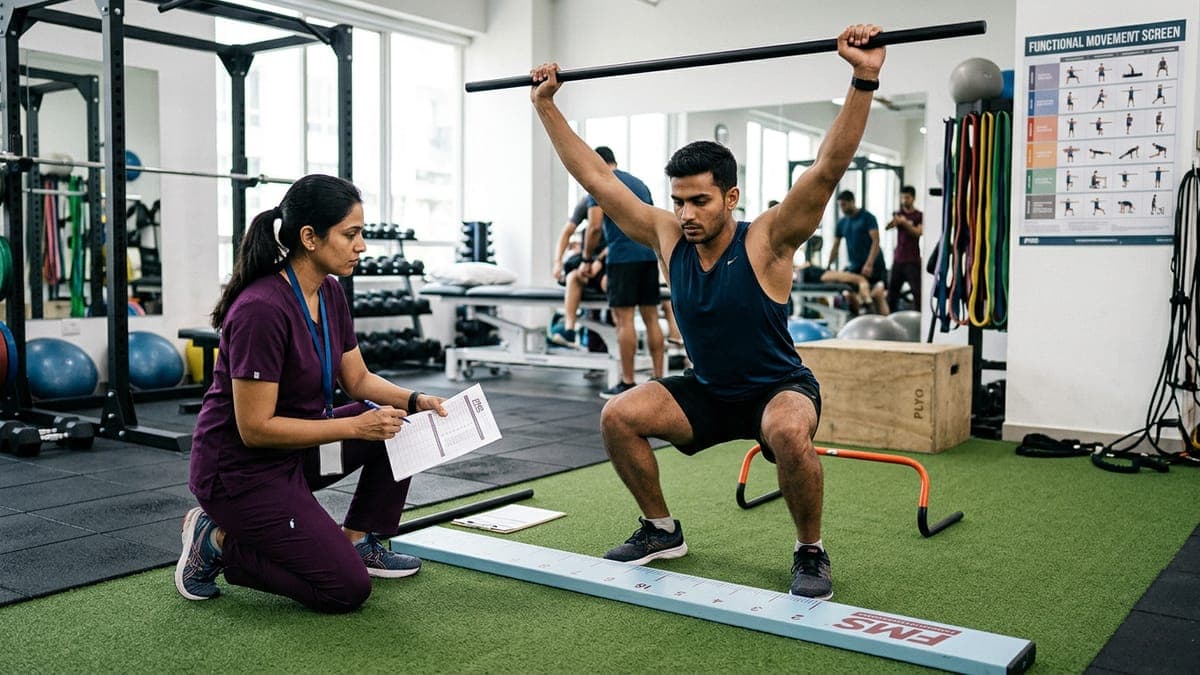
Sports physiotherapy is a specialised branch of physiotherapy focused on the assessment, treatment, and prevention of injuries that occur in sport and physical activity. At Realign Rehab Clinic in NIT-5, Faridabad, we work with athletes across every level — from competitive district and state players to weekend recreational athletes and gym-goers. This guide covers what sports physiotherapy actually involves, which sports carry which injury risks, how we handle cases at the clinic, and common mistakes athletes make that prolong their recovery.
What sports physiotherapy actually covers
Sports physiotherapy is not simply massage or hot pack treatment. It spans four distinct areas:
- Assessment and diagnosis: Identifying the structure responsible for a player's pain or dysfunction — whether that's a ligament, muscle, tendon, joint, or nerve — and understanding the mechanism that caused it. Accurate diagnosis determines whether physiotherapy alone is appropriate or whether imaging or specialist referral is needed.
- Treatment: Manual therapy (joint mobilisation, soft tissue techniques), exercise prescription, taping and bracing, electrotherapy modalities, and dry needling where indicated. Treatment is specific to the structure injured and the stage of tissue healing.
- Rehabilitation: The structured process of restoring strength, range of motion, balance, and sport-specific movement patterns after injury. This is the phase most athletes rush — and where most re-injuries occur.
- Prevention and performance: Screening for movement asymmetries and strength imbalances before injury occurs, injury prevention programmes, and load management advice for athletes in heavy training cycles.
Sport-by-sport injury summary
The table below covers the most common injuries we see for each sport at our clinic and the typical physiotherapy management timeline.
| Sport | Most common injuries | Typical recovery |
|---|---|---|
| Cricket | Lumbar stress fracture (fast bowlers), rotator cuff strain, hamstring strain, side strain | 4 weeks – 6 months |
| Football | Ankle sprain, ACL tear, hamstring strain, groin strain, shin splints | 1 week – 9 months |
| Basketball | Ankle sprain, patellar tendinopathy, ACL tear, finger sprain | 1 week – 9 months |
| Running | Runner's knee (PFPS), IT band syndrome, plantar fasciitis, shin splints, Achilles tendinopathy | 3 – 12 weeks |
| Gym / weightlifting | Lower back pain, shoulder impingement, rotator cuff tear, biceps tendinopathy, knee pain | 2 weeks – 4 months |
| Badminton | Ankle sprain, rotator cuff strain, lateral epicondylalgia (elbow), Achilles tendinopathy, patellar tendinopathy | 2 – 10 weeks |
| Swimming | Swimmer's shoulder (rotator cuff impingement), knee pain from breaststroke kick | 3 – 8 weeks |
| Kabaddi / wrestling | Shoulder dislocation, knee ligament sprain, neck strain, rib contusion | 2 weeks – 6 months |
When to see a physiotherapist versus waiting it out
Not every sports injury needs immediate physiotherapy. Some minor muscle soreness and small Grade I sprains can resolve with relative rest, ice, and gradual return to activity over a few days. The question is how to distinguish these from injuries that need professional assessment.
See a physiotherapist within 48 hours if any of these apply:
- You heard or felt a pop at the time of injury
- The joint swelled significantly within two hours
- You cannot bear weight on the injured limb
- The joint feels unstable or gives way
- Pain is severe and not settling with rest and ice
- You have numbness, tingling, or referred pain down a limb
- You have had the same injury before and it keeps recurring
You may monitor for 3–5 days if:
- It is mild muscle soreness after a hard training session
- There is no swelling or instability
- You can walk and bear weight without significant pain
- Symptoms are improving day by day
The cost of waiting too long for a genuine injury is almost always a longer total recovery. We consistently see patients who waited four to six weeks with a Grade II ankle sprain and now have chronic instability and proprioceptive deficits that take months to correct — when early intervention would have had them back on the field in three weeks.
How we handle sports cases at Realign Rehab Clinic
Every sports case at our clinic follows a structured pathway:
- Initial assessment (session 1): Full subjective history — sport, position, mechanism of injury, previous injuries, training load, goals. Objective assessment — joint range of motion, strength testing, special orthopaedic tests, movement screening. Dr. Vaishali Suri forms a clinical diagnosis and explains the findings to the patient clearly before any treatment begins.
- Diagnosis and plan: We explain what structure is injured, how it heals, what we are going to do about it, and a realistic timeline. We refer for imaging when indicated — we do not order scans reflexively, but we do not avoid them when they are clinically necessary.
- Treatment phase: A combination of hands-on treatment and exercise prescription. We do not rely on passive modalities alone. The research is clear that active rehabilitation — where the patient is doing prescribed exercises — produces better long-term outcomes than treatment where the patient simply lies on a table and receives treatment.
- Rehabilitation phase: Progressive exercise programme advancing through strength, endurance, power, and sport-specific movement. This phase is individually programmed based on the sport's demands and the player's position and training schedule.
- Return-to-sport testing: Objective criteria must be met before clearance for full match play. This is not a formality — it is the gate that determines whether a player is physically ready to handle match intensity without breaking down again.
Common mistakes athletes make that prolong recovery
After years of treating sports injuries in Faridabad, we see the same patterns repeatedly. These are the mistakes that turn a four-week injury into a four-month one:
- Playing through significant pain: Mild discomfort during activity is sometimes acceptable during rehabilitation under clinical guidance. Significant pain — anything above a 3–4 out of 10 that does not settle within 24 hours — is a signal that you are exceeding what the tissue can currently handle. Playing through it causes further damage and prolongs healing.
- Stopping at "pain gone": The pain from an ACL sprain, hamstring strain, or ankle sprain may resolve in two to three weeks. The underlying tissue healing and strength restoration takes months. Returning to full training the moment pain disappears — without completing the strength and neuromuscular rehab — is the leading cause of re-injury.
- Using heat too early: In the first 48–72 hours after an acute injury, heat increases blood flow and worsens swelling. Ice (or cold therapy), compression, and elevation are appropriate in the acute phase. Heat has a role later in rehabilitation, not immediately after injury.
- Skipping physiotherapy because the injury "seems minor": Grade II ankle sprains, partial hamstring tears, and patellar tendinopathy in its early stages all feel minor enough to ignore. Left without proper management, all three become chronic problems that take far longer to resolve.
- Self-diagnosing from the internet: The clinical examination findings that distinguish an ACL tear from an MCL sprain, or a meniscal tear from patellar tendinopathy, require hands-on assessment. Treating yourself for the wrong injury based on a search result delays correct management.
Dr. Vaishali Suri's approach to sports rehabilitation
"Every athlete I see has a different sport, a different training history, and a different set of physical demands. Cookie-cutter rehabilitation programmes don't work in sports physiotherapy. The exercise I prescribe for a fast bowler's lumbar stress fracture looks nothing like what I prescribe for a runner's IT band syndrome — even though both patients might describe 'back pain near my side'. The diagnostic work is what drives the treatment."
— Dr. Vaishali Suri (P.T.), Realign Rehab Clinic, Faridabad
Dr. Vaishali Suri (BPT, MIAP) has built her sports rehabilitation practice on the principle that diagnosis drives treatment, not the other way around. The clinic does not default to a standard modality package. Each patient receives an assessment, an explained diagnosis, and an individually designed programme. Rated 4.9/5 on Google by patients from NIT Faridabad, Sector 14, 15, 16, Old Faridabad, Ballabhgarh, and Surajkund, the clinic has a strong track record across cricket, football, basketball, running, and gym-related injuries.
Frequently asked questions
How many sessions of physiotherapy will I need for a sports injury?
The number of sessions depends on the injury, its severity, and how consistently you do your home exercise programme. A mild Grade I ankle sprain may need two to three sessions. A post-surgical ACL rehabilitation may need 20–30 sessions over six to nine months. At your first appointment, Dr. Vaishali Suri will give you a realistic estimate of what to expect for your specific injury after completing the assessment.
Can I continue training while receiving physiotherapy?
In most cases, yes — but with modifications. We almost never recommend complete rest for sports injuries except in specific acute situations (stress fractures, immediate post-surgical phase). We work with you to identify what training you can maintain, what needs to be reduced, and what must be avoided. Keeping as much activity going as is safe maintains your fitness, reduces deconditioning, and improves psychological readiness for return to sport.
Do I need a doctor's referral to see a physiotherapist?
No. You can book directly with Dr. Vaishali Suri at Realign Rehab Clinic without a referral. If we determine during your assessment that you need imaging (X-ray or MRI), or specialist orthopaedic input, we will refer you at that point. Coming to physiotherapy first often saves time — we can assess, begin treatment, and refer for imaging in parallel rather than waiting weeks for a specialist appointment before starting rehabilitation.
What should I bring to my first sports physiotherapy appointment?
Wear or bring clothing that allows access to the injured area — shorts for knee or ankle injuries, a sleeveless top for shoulder injuries. If you have any recent imaging (X-rays, MRI reports), bring those. If you have been prescribed medication for the injury, bring a list. Come prepared to describe exactly how the injury happened, what movements are painful, and what your training and competition schedule looks like — this helps us plan rehabilitation around your sport's demands.
Athletes across Faridabad — from NIT, Sector 14, 15, 16, Old Faridabad, Ballabhgarh, Surajkund, and Greater Faridabad — trust Realign Rehab Clinic for sports injury assessment and rehabilitation. To book an appointment with Dr. Vaishali Suri (P.T.), visit realign.clinic or call +91 9818185589. Whether you are dealing with a fresh injury or a recurring problem that has not responded to treatment elsewhere, we will assess it properly and give you a clear plan.