
Post-surgical rehabilitation · Faridabad
Knee Replacement Physiotherapy in Faridabad
Physiotherapy after a total knee replacement (TKR), partial knee replacement or revision helps you practise movement, rebuild strength and return to daily tasks. Your surgeon's instructions and hospital discharge plan come first; rehabilitation is then tailored to your examination, symptoms and goals.
Clinic: NIT-5, Faridabad. Selected home visits are confirmed by address, clinical need and availability.
Who this service is for
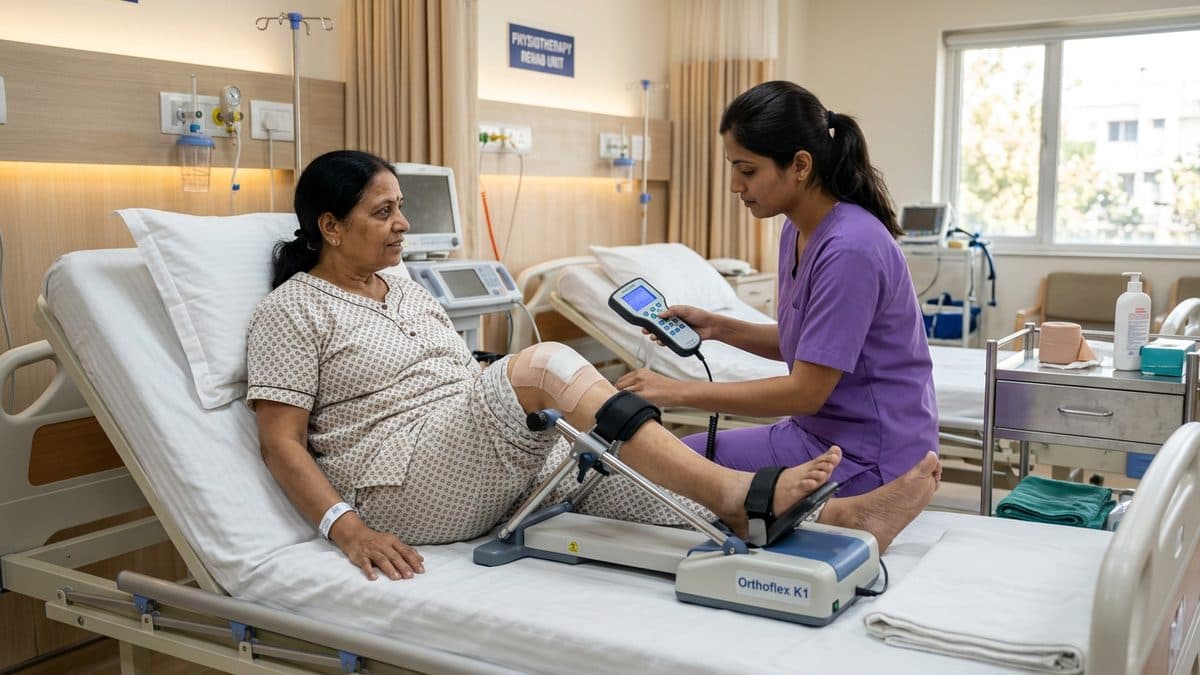
This page is for people planning or recovering from knee arthroplasty who need help with walking, knee movement, swelling management, strength, stairs or confidence at home. It also helps family members understand what to ask after discharge. A new or worsening symptom must be assessed medically before it is treated as a routine rehabilitation problem.
A first appointment reviews the operation and discharge instructions, current medicines and precautions, wound status as reported by your surgical team, pain and swelling, knee movement, walking aid use, transfers, stairs and the activities that matter to you. The physiotherapist then explains which goals are appropriate now and when to recheck progress.
How a TKR physiotherapy plan progresses
These are decision stages, not fixed deadlines. A bilateral or revision operation, other health conditions or a complication may change the plan.
Before surgery, if time allows
Discuss the planned operation, expected discharge needs, walking aid, stairs at home and current strength with your surgical team. A pre-operative physiotherapy visit can help you practise safe transfers and understand the exercise plan; it cannot guarantee a faster recovery.
Hospital and early discharge
The hospital team usually starts supported movement and walking soon after surgery when medically safe. Follow their instructions for weight bearing, wound care, medicines and use of a walker or crutches. Realign does not replace hospital discharge clearance.
Early home or clinic rehabilitation
Your physiotherapist can review swelling, knee movement, quadriceps control, walking aid fit, transfers and the home exercise plan. Progression depends on the operation, symptoms and surgeon guidance—not a universal angle or calendar target.
Strength and everyday function
As the wound and movement permit, the plan may progress to sit-to-stand practice, walking quality, balance, stairs and strength. Return to work, driving, kneeling, floor sitting and sport require individual clearance and functional readiness.
What we monitor instead of promising a date
- Whether pain and swelling settle after activity and whether the wound needs surgical review.
- Knee straightening and bending in the context of your surgeon's plan, without forcing a universal degree target.
- Quadriceps control, sit-to-stand ability and safe use of a walker, crutches or cane.
- Walking quality, balance and stair safety in your actual home environment.
- Progress toward personal goals such as shopping, work, travel or household tasks.
Home visit or clinic physiotherapy?
A home visit may be useful when travelling is difficult or the main questions concern bed transfers, toilet height, steps and walking paths at home. Clinic appointments may suit later strength and functional progression. Neither setting is automatically better; the right choice depends on safety, clinical need, access and the exercises you can practise between visits. Ask us to confirm your Faridabad location and current home-visit availability.
Read the focused home physiotherapy after knee replacement guide.
When physiotherapy should pause for medical advice
Contact your surgeon or treating medical team promptly for fever, increasing wound redness or drainage, a marked change in pain or function, or new calf pain and swelling. Chest pain, sudden breathlessness or collapse requires emergency care. Do not try to exercise through these symptoms.
Common questions
When should I begin physiotherapy after TKR?
The hospital team usually helps patients move and walk soon after surgery when medically safe. Continue only the discharge exercises and precautions you were given until your treating team confirms progression.
How many sessions will I need?
There is no safe standard number. The plan depends on your operation, function, complications, home support and response to exercise. Ask for review points and measurable goals rather than a package promise.
Is knee replacement physiotherapy painful?
Some discomfort is common, but severe or worsening pain is not a target. Your physiotherapist should adjust load and coordinate with the surgical team when symptoms are unexpected.
Does this also cover partial or revision knee replacement?
An assessment can address those operations, but their surgical restrictions and progression may differ from a routine primary TKR. Bring the operation notes and specific instructions.
Related rehabilitation information
Clinical background and scope
This general information is informed by the APTA 2026 TKA physiotherapy guideline, NHS knee-replacement recovery guidance and AAOS post-joint-replacement warning signs. It is not a personal exercise prescription or a substitute for your surgeon's instructions. See our editorial policy.