 Dr. Vaishali Suri (P.T.)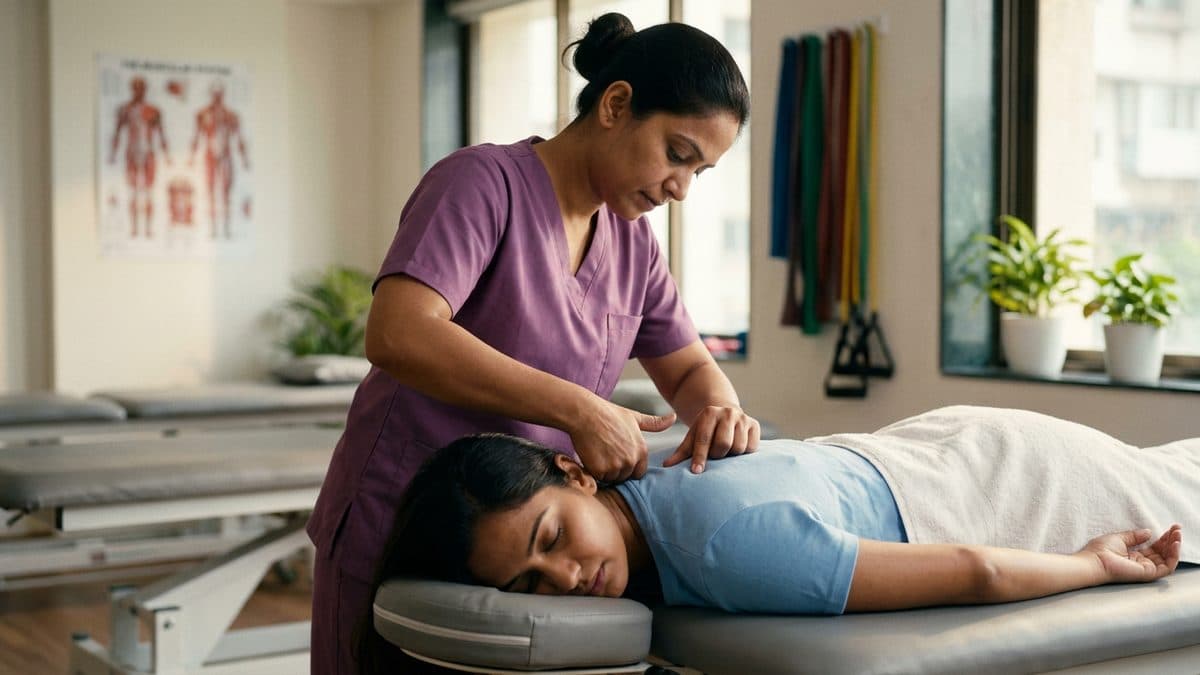
Are Your Headaches Coming from Your Neck?
Not all headaches are the same. While migraines have neurological origins, many chronic headaches — particularly tension-type headaches and cervicogenic headaches — arise from musculoskeletal dysfunction in the cervical spine and suboccipital muscles.
These headaches respond dramatically to physiotherapy, often eliminating or noticeably reducing headache frequency without medication.
Types of Headache Treated by Physiotherapy
Tension-Type Headache (TTH): The most common headache type. Typically bilateral, pressing/squeezing, associated with pericranial muscle tenderness.
Strong evidence for physiotherapy. Cervicogenic Headache: Pain originating from the upper cervical spine and referred to the head.
Diagnostic features: unilateral head pain, provoked by neck movement or sustained posture, restricted upper cervical range of motion. Migraine with Cervical Involvement: Many migraine patients have cervical dysfunction that reduces their threshold for migraine attacks.
Physiotherapy does not cure migraine but can reduce attack frequency and duration.
Physiotherapy Assessment
We assess: upper cervical joint mobility and pain (C0-C1-C2), suboccipital muscle tenderness and trigger points, deep cervical flexor strength, posture (forward head posture is almost universal in chronic headache), and the impact of sustained positions on headache provocation.
Treatment
Upper Cervical Manual Therapy
Joint mobilisation of the upper cervical spine — particularly the C1-C2 segment — provides significant headache relief in cervicogenic headache. Multiple RCTs support this intervention.
Dry Needling
Suboccipital trigger point dry needling provides immediate tension relief and headache reduction for both TTH and cervicogenic headache.
Deep Cervical Flexor Training
The deep neck flexors (longus colli, longus capitis) are consistently weak in headache patients. Progressive strengthening using the craniocervical flexion test (CCFT) protocol reduces headache frequency.
Headache Treatment in Faridabad
At Realign Rehab Clinic, NIT-5, Faridabad, we help headache sufferers find lasting relief without medication dependence. Book your headache assessment today.
Types of Headache: Why the Diagnosis Matters for Treatment
Not all headaches respond to physiotherapy — but a substantial proportion do. Understanding headache classification is essential:
- Tension-type headache (TTH): Bilateral, band-like pressure headache. Associated with neck and shoulder muscle tension. Upper cervical manual therapy, trigger point release, and posture correction sharply reduces TTH frequency and intensity.
- Migraine: Complex neurovascular headache with specific features (throbbing, nausea, light/sound sensitivity, aura). Physiotherapy helps with associated cervical dysfunction and neck-triggered migraine, but medical management (triptans, preventive medications) is the primary treatment.
- Post-traumatic headache: Following whiplash or head injury. Cervical physiotherapy and graded return to activity are primary treatments.
Physiotherapy Treatment for Headache at Realign Clinic Faridabad
Upper Cervical Manual Therapy
Mobilisation and manipulation of the upper cervical joints (C0–C2) is the most evidence-based treatment for cervicogenic headache. We use gentle, specific mobilisation techniques — not high-velocity manipulation of the upper cervical spine, which carries a small risk of vertebral artery injury.
Evidence shows multiple sessions of C1–C2 mobilisation produce significant, lasting reduction in headache frequency and intensity.
Deep Cervical Flexor Strengthening
Strengthening the longus colli and longus capitis — the deep cervical stabilisers — reduces the strain on the upper cervical joints that drives cervicogenic headache and tension headache. Specific low-load craniocervical flexion exercises performed daily produce lasting reduction in headache frequency.
Trigger Point Release
Suboccipital, upper trapezius, SCM, and levator scapulae trigger points are primary contributors to tension and cervicogenic headache. Manual trigger point release combined with self-stretching education provides immediate relief and prevents recurrence.
Frequently Asked Questions — Headache Physiotherapy
Q: How do I know if my headaches are coming from my neck?
Cervicogenic headache characteristics: pain starts at the base of the skull or upper neck. One-sided (same side each time); provoked by neck movements, sustained postures, or pressing on the upper neck; associated with reduced neck mobility.
Your physiotherapist performs the cervical flexion-rotation test — the most specific clinical test for CGH — to confirm cervical origin.
Q: Can physiotherapy help with chronic daily headaches?
Yes, for headaches with cervicogenic or tension-type components. Chronic daily headache (more than 15 headache days/month) often has a significant cervical component even if the headaches started as migraines.
Addressing cervical dysfunction reduces overall headache burden even in patients with multiple headache types.
Book Headache Physiotherapy in Faridabad
Call +91 9818185589. Realign Rehab Clinic, NIT-5, Faridabad. Expert cervical assessment and headache physiotherapy. Also see: tech neck guide, office neck pain.
References
- Jull G et al. (2002). A randomized controlled trial of exercise and manipulative therapy for cervicogenic headache. Spine, 27(17):1835–1843.
Content author: Dr. Vaishali Suri (P.T.), MPT (Sports Medicine), BPT, MIAP, MIAP.
Related Articles: Neck Pain with Headache and Dizziness in Faridabad: Physiotherapy Assessment | Types of Headache and Physiotherapy Treatment in Faridabad: A Complete Guide | Wrist Pain from Keyboard and Mouse Use in Faridabad: Physiotherapy Solutions | Physiotherapy and Exercise for Weight Loss in Faridabad
Related Conditions: Wrist Pain Treatment | Urinary Incontinence Treatment | Tennis Elbow Treatment
Related Services: Advanced Sports Physiotherapy | Pediatric Physio