 Dr. Vaishali Suri (P.T.)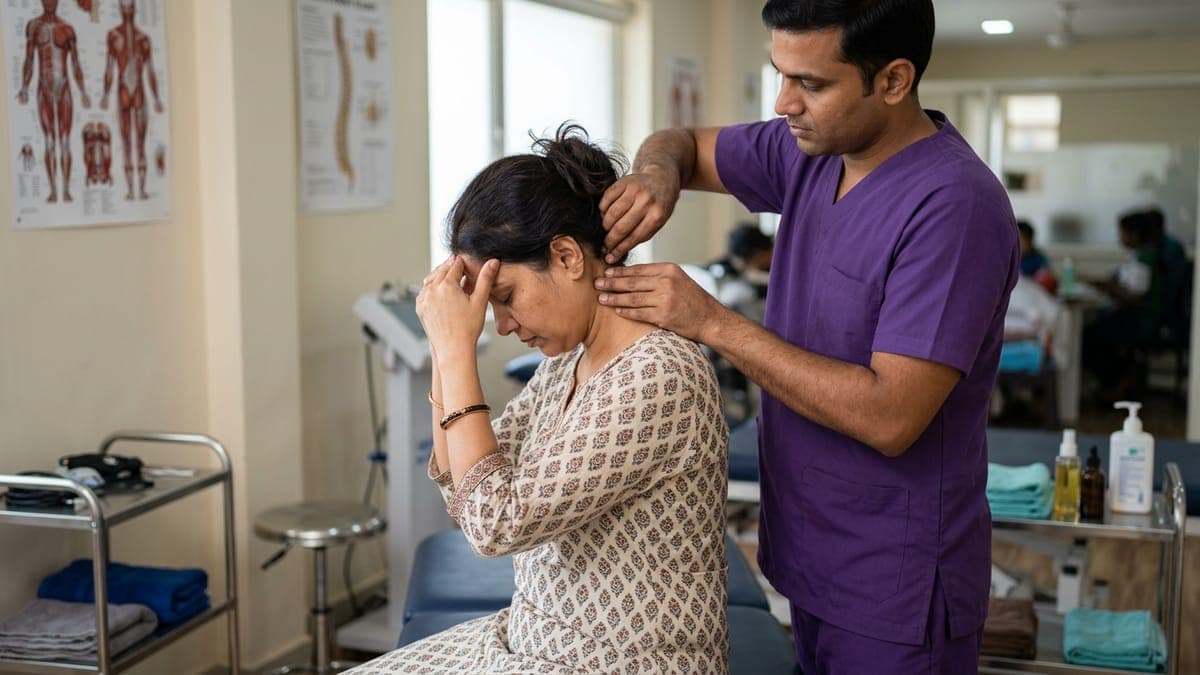
Different Types of Headaches: Which Ones Physiotherapy Can Treat
Not all headaches are the same, and not all respond to physiotherapy. Understanding the type of headache you have is critical for selecting the appropriate treatment.
Physiotherapy is highly effective for cervicogenic headaches, tension-type headaches, and post-traumatic headaches — conditions that have a musculoskeletal component involving the neck, suboccipital muscles, and jaw. Migraine management also benefits from physiotherapy, particularly for reducing trigger frequency.
At Realign Rehab Clinic, NIT-5, Faridabad, our expert physiotherapists provide personalised, evidence-based care. Serving NIT, Green Field Colony, Ballabhgarh, Sector 21–82, and across Faridabad. Contact us: +91 9818185589.
Causes and Risk Factors
- Cervicogenic headache: referred pain from dysfunctional upper cervical joints (C0–C3)
- Tension-type headache: muscular tension in suboccipital, trapezius, and temporal muscles
- Post-traumatic headache: following whiplash, concussion, or head injury
- Migraine: complex neurovascular condition often triggered by cervical and musculoskeletal factors
- Temporomandibular joint dysfunction (TMJ) contributing to jaw-related headache
- Medication overuse headache: from chronic NSAID or triptan use in headache management
Signs and Symptoms
- Cervicogenic headache: one-sided head pain originating at the neck base, worsened by neck movements
- Tension headache: band-like pressure around the forehead and temples, often bilateral
- Migraine: pulsating, usually one-sided headache with nausea, light, and sound sensitivity
- Post-traumatic headache: new or changed headache following head or neck injury
- TMJ headache: pain in the temple and jaw, worsened by chewing
Physiotherapy Treatment at Realign Rehab, Faridabad
- Cervicogenic headache: upper cervical manual therapy (most evidence-based treatment)
- Tension headache: suboccipital and upper trapezius soft tissue release and trigger point therapy
- Deep cervical flexor strengthening: reducing the sustained load on C0–C2 joints
- Postural correction: addressing forward head posture perpetuating cervicogenic headache
- Migraine management: physiotherapy to reduce cervical triggers and improve musculoskeletal factors
- TMJ physiotherapy: jaw exercises, manual therapy, and grinding night-guard advice
- Lifestyle trigger analysis: sleep, stress, screen time, and caffeine patterns
- Ergonomic assessment for screen workers with chronic headache
Frequently Asked Questions
Can physiotherapy cure headaches?
Physiotherapy can achieve complete or near-complete resolution of cervicogenic headaches and tension-type headaches. For migraine, physiotherapy reduces trigger frequency and intensity but does not cure the underlying neurovascular condition.
How do I know if my headache is from my neck?
Cervicogenic headaches typically: start at the base of the skull, spread to the forehead or eye, are triggered by neck movements or sustained postures, are one-sided, and are accompanied by neck stiffness. A physiotherapy assessment confirms the diagnosis.
How many sessions of physiotherapy do I need for headaches?
Most patients with cervicogenic or tension headaches see real improvement in 4–8 sessions. Long-standing chronic daily headache may require 12–16 sessions plus ongoing home exercise maintenance.
Can stress cause the headaches physiotherapy treats?
Yes — stress causes upper trapezius and suboccipital muscle tension that directly contributes to tension-type and cervicogenic headaches. Physiotherapy addresses the musculoskeletal component; stress management addresses the psychological component.
Both are needed.
Is physiotherapy better than medication for headaches?
For cervicogenic headaches, upper cervical manual therapy is markedly more effective than medication. For tension headaches, physiotherapy combined with medication produces better outcomes than either alone.
For migraine, physiotherapy is adjunctive to medical management.
Book Your Consultation
Contact Realign Rehab Clinic today:
- 📍 NIT-5, Faridabad (near Green Field Colony, Ballabhgarh Road)
- 📞 +91 9818185589
- 🕑 Mon–Sat: 8 AM–8 PM