
 Dr. Vaishali Suri (P.T.)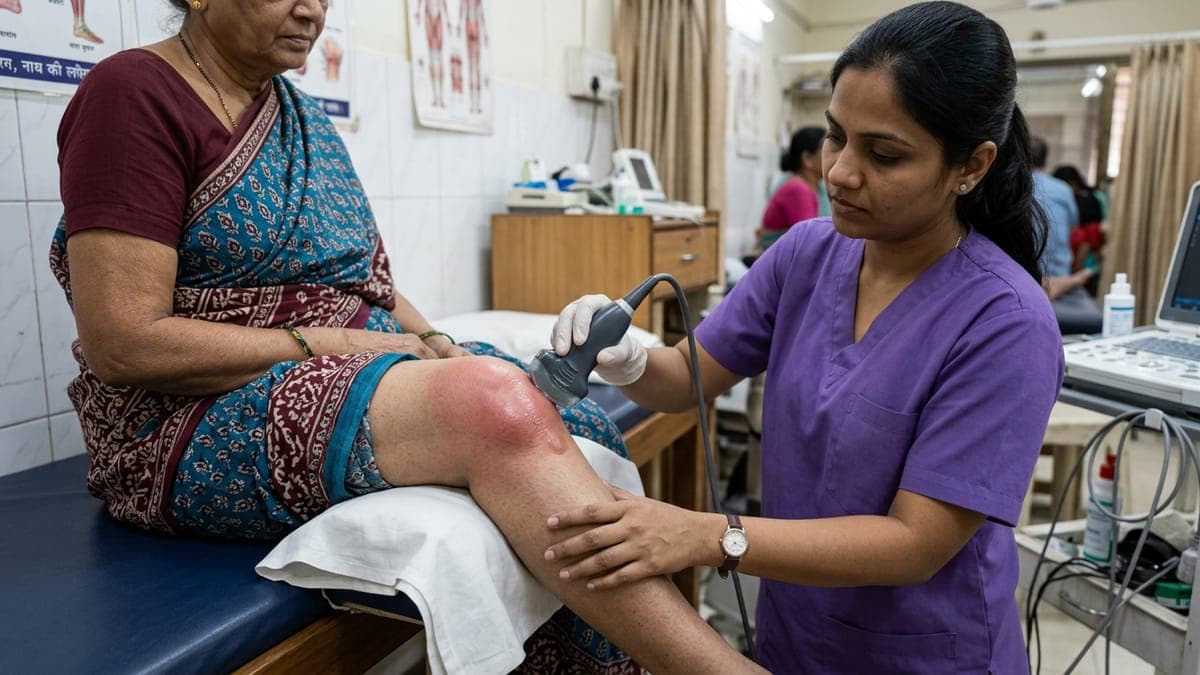
Knee Bursitis: Physiotherapy Treatment in Faridabad
Knee bursitis is inflammation of one of the small fluid-filled sacs (bursae) that reduce friction around the knee joint. The prepatellar bursa (housemaid's knee), infrapatellar bursa (clergyman's knee), and pes anserinus bursa (inner knee) are most commonly affected.
It causes pain, swelling, and stiffness that can severely limit walking and physical activity.
At Realign Rehab Clinic , NIT-5, Faridabad, our expert physiotherapist Dr. Vaishali Suri provides evidence-based treatment built around your specific needs.
We serve patients from NIT, Sector 14, Old Faridabad, Green Field Colony, Ballabhgarh, Surajkund, and surrounding areas.
Causes and Risk Factors
- Prolonged kneeling — flooring workers, gardeners, clergy, cleaners
- Direct trauma to the knee — fall or impact compressing the bursa
- Overuse from repetitive knee flexion activities — cycling, squatting
- Infection (septic bursitis) — less common but requires urgent treatment
- Inflammatory arthritis (rheumatoid, gout) causing secondary bursitis
- Running with poor biomechanics increasing friction at the knee joint
Signs and Symptoms
- Swelling directly over the kneecap (prepatellar) or below it (infrapatellar)
- Pain when kneeling, crouching, or descending stairs
- Warmth and redness over the swollen bursa
- Pain on direct pressure over the bursa
- Reduced ability to fully straighten or bend the knee due to swelling
- Aching with prolonged walking or activity
Physiotherapy Treatment at Realign Rehab, Faridabad
- Ice therapy and activity modification in the acute phase to reduce inflammation
- Knee joint mobilisation to maintain range of motion
- Strengthening of quadriceps, hamstrings, and hip muscles to reduce load on the bursa
- Patella mobilisation and taping to optimise patellar mechanics
- Gait analysis and footwear assessment to correct biomechanical contributing factors
- Progressive return to kneeling, sport, or work activities with appropriate knee protection
Frequently Asked Questions
How do I know if I have knee bursitis or arthritis?
Bursitis causes localised swelling directly over the bursa (usually front or inner knee), while arthritis causes joint-line pain and diffuse swelling within the joint. A physiotherapy assessment — and ultrasound if needed — can definitively diagnose which you have.
Do I need to drain the bursa?
Aspiration (draining) is sometimes performed by a doctor for large or recurrent prepatellar bursitis. Physiotherapy addresses the underlying cause to prevent recurrence after drainage.
Can I walk with knee bursitis?
Yes — walking is generally fine and actually helpful. Avoid prolonged kneeling or high-impact activities. Physiotherapy will guide you on safe activity levels during recovery.
How long does knee bursitis last?
Acute traumatic bursitis: 2–6 weeks with physiotherapy. Chronic overuse bursitis: 6–12 weeks depending on the duration and severity. Addressing the mechanical cause prevents recurrence.
Book Your Consultation
Ready to get back to pain-free living? Contact Realign Rehab Clinic today.
📍 NIT-5, Faridabad (near Green Field Colony, Sector 15)
📞 +91 9818185589
🕑 Monday–Saturday: 9 AM–7 PM
Related Articles: Knee Replacement Home Physiotherapy in Faridabad: Recovery at Home | Knee Pain in Elderly Adults in Faridabad: Physiotherapy Without Surgery | Knee Pain When Climbing Stairs in Faridabad: Physiotherapy Solutions | Knee Pain After Sitting: Why It Happens and How Physiotherapy Helps
Related Conditions: Wrist Pain Treatment | Urinary Incontinence Treatment | Tennis Elbow Treatment
Related Services: Advanced Sports Physiotherapy | Pediatric Physio