 Dr. Vaishali Suri (P.T.)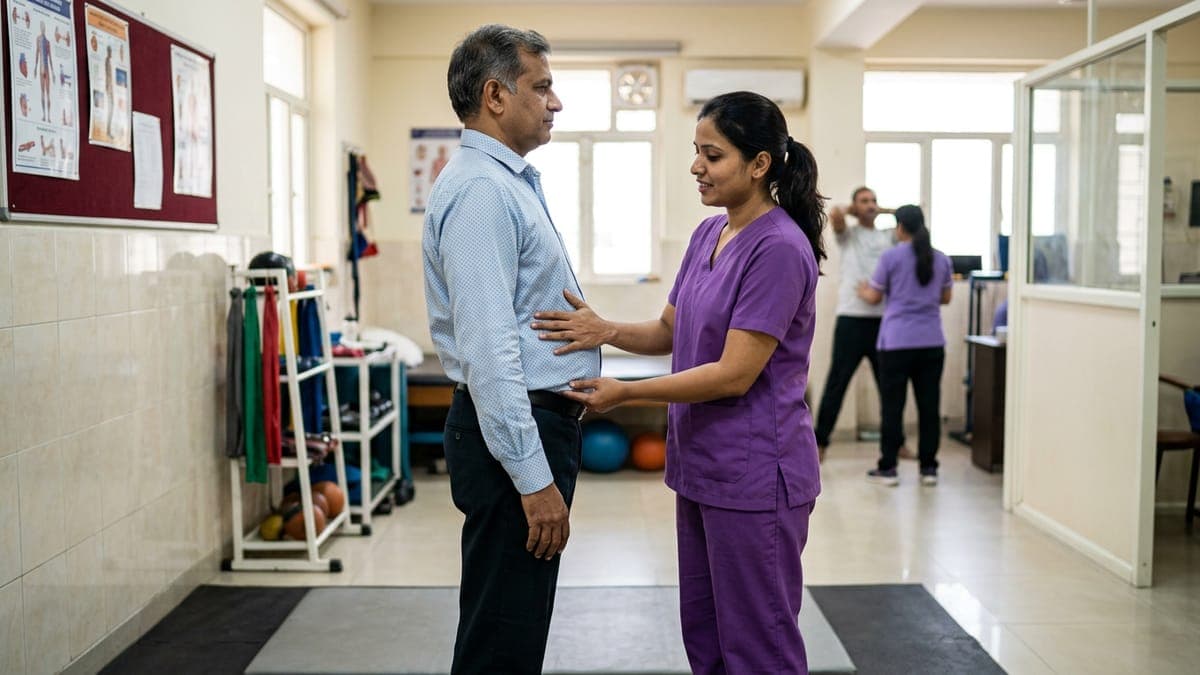
Lordosis (Swayback): Physiotherapy Correction in Faridabad
Lumbar lordosis refers to the normal inward curve of the lower back. Excessive lumbar lordosis — often called 'swayback' — occurs when this curve is exaggerated, causing the pelvis to tilt forward (anterior pelvic tilt), the abdomen to protrude.
The buttocks to appear more prominent. This postural pattern strains the lumbar facet joints, tightens the hip flexors, and inhibits the gluteal muscles, leading to chronic lower back pain and hip problems in many patients.
At Realign Rehab Clinic, NIT-5, Faridabad, our expert physiotherapists provide personalised, evidence-based care. Serving NIT, Green Field Colony, Ballabhgarh, Sector 21–82, and across Faridabad. Contact us: +91 9818185589.
Causes and Risk Factors
- Weak core muscles (transversus abdominis, multifidus) failing to support lumbar alignment
- Tight hip flexors (iliopsoas) pulling the pelvis into anterior tilt
- Weak gluteal muscles failing to posteriorly tilt the pelvis
- Pregnancy: hormonal laxity and growing abdomen shifting the centre of gravity forward
- Obesity with central adiposity pulling the lumbar spine into extension
- Sedentary lifestyle with prolonged hip flexion (sitting) shortening the hip flexors
- High heels placing the pelvis in anterior tilt by elevating the heel
Signs and Symptoms
- Exaggerated inward lower back curve visible from the side
- Chronic aching lower back pain worsened by prolonged standing
- Hip flexor tightness and anterior hip pain
- Gluteal weakness — difficulty activating the glutes during exercise
- Apparent protruding abdomen and posterior buttock prominence
- Facet joint pain and stiffness after sitting-to-standing transitions
Physiotherapy Treatment at Realign Rehab, Faridabad
- Core stability training: transversus abdominis and multifidus activation as priority
- Hip flexor stretching: iliopsoas, rectus femoris, and TFL flexibility
- Gluteal strengthening: bridges, hip thrusts, clamshells, and single-leg squats
- Pelvic tilt correction: posterior pelvic tilt exercises and proprioceptive retraining
- Lumbar facet joint mobilisation for established facet irritation
- Postural retraining: body awareness exercises and movement pattern correction
- Ergonomic advice: standing desk modifications, footwear, and chair setup
- Pregnancy-specific programme for lordosis-related back pain during pregnancy
Frequently Asked Questions
What is the difference between lordosis and scoliosis?
Lordosis is an exaggerated forward (inward) curve of the lumbar spine in the sagittal (front-to-back) plane. Scoliosis is a lateral (sideways) curvature of the spine in the coronal plane.
Both can be treated with physiotherapy.
Can physiotherapy fix swayback posture?
Yes — excessive lumbar lordosis from muscle imbalance responds very well to physiotherapy. Most patients see measurable postural improvement within 6–8 weeks of consistent targeted exercise.
What exercises help lordosis?
Hip flexor stretching, glute bridges, clamshells, dead bugs, and pelvic tilt exercises are the foundation of lordosis correction. These should be prescribed and progressed by a physiotherapist for best results.
Can wearing high heels cause lordosis?
Yes — high heels shift body weight forward, causing compensatory anterior pelvic tilt and increased lumbar lordosis. Reducing high heel use and stretching the calf muscles and hip flexors are important components of management.
Is lordosis serious?
Mild lordosis is a normal part of spinal anatomy. Excessive lordosis causes chronic lower back pain and hip problems but is rarely a serious structural threat.
With physiotherapy, it is very manageable.
Book Your Consultation
Contact Realign Rehab Clinic today:
- 📍 NIT-5, Faridabad (near Green Field Colony, Ballabhgarh Road)
- 📞 +91 9818185589
- 🕑 Mon–Sat: 8 AM–8 PM