 Dr. Vaishali Suri (P.T.)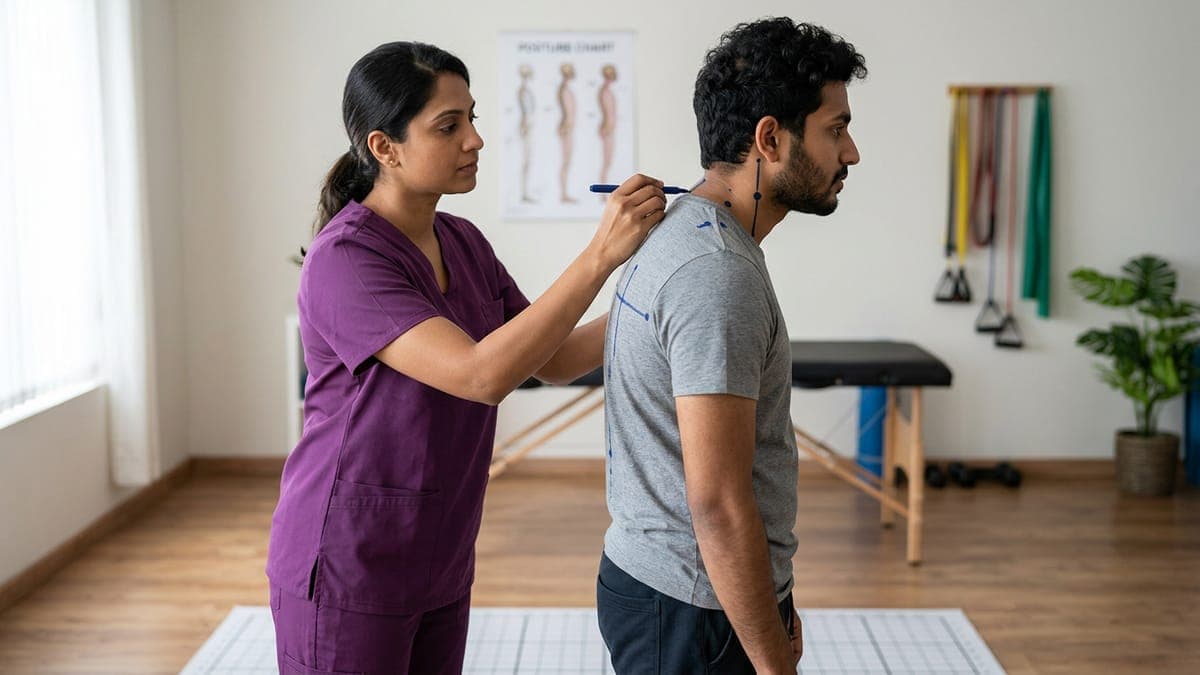
Upper Crossed Syndrome: Physiotherapy Correction in Faridabad
Upper crossed syndrome (UCS) describes a specific pattern of muscle imbalance in the neck, shoulders, and upper chest — first described by Vladimír Janda. Tight, overactive muscles (upper trapezius, levator scapulae, pectorals) cross with weak, inhibited muscles (deep cervical flexors, middle and lower trapezius, serratus anterior) to create a characteristic posture: forward head, rounded shoulders, and increased thoracic kyphosis.
UCS is responsible for a large proportion of chronic neck pain, headache, and shoulder impingement seen in office workers.
At Realign Rehab Clinic, NIT-5, Faridabad, our expert physiotherapists provide personalised, evidence-based care. Serving NIT, Green Field Colony, Ballabhgarh, Sector 21–82, and across Faridabad. Contact us: +91 9818185589.
Causes and Risk Factors
- Sustained desk work with forward head posture and rounded shoulders
- Smartphone and tablet use in a head-down, arms-forward position
- Poorly designed workstation with monitor too low or keyboard too far forward
- Overemphasis on chest and anterior shoulder exercises without posterior chain balance
- Stress-related tension causing habitual upper trapezius and levator elevation
- Sedentary lifestyle with minimal thoracic extension and shoulder retraction
Signs and Symptoms
- Chronic neck pain and stiffness, especially mid-afternoon and after desk work
- Upper back and inter-scapular aching from mid/lower trapezius fatigue
- Cervicogenic headaches originating at the base of the skull
- Shoulder impingement from forward shoulder posture narrowing the subacromial space
- Winging of the scapula due to serratus anterior weakness
- Jaw tension and temporomandibular dysfunction from neck hyperextension compensation
Physiotherapy Treatment at Realign Rehab, Faridabad
- Deep cervical flexor strengthening: chin tuck exercises (longus colli activation)
- Middle and lower trapezius activation: prone Y-W-T raises, seated rows
- Serratus anterior retraining: wall push-up with plus, protraction drills
- Upper trapezius and levator scapulae inhibition: soft tissue release, dry needling, stretching
- Pectoral minor and major stretching for chest opening
- Thoracic mobilisation: extension over foam roller, seated thoracic rotation
- Postural taping to provide feedback and support muscle retraining
- Ergonomic workstation correction: monitor height, keyboard distance, and lumbar support
Frequently Asked Questions
What is upper crossed syndrome?
Upper crossed syndrome is a pattern of muscle imbalance where tight chest and upper neck muscles combine with weak deep neck flexors and mid-scapular muscles, causing forward head posture, rounded shoulders, and chronic neck pain.
How long does it take to fix upper crossed syndrome?
Measurable improvement in postural alignment typically occurs within 6–8 weeks of targeted physiotherapy. Sustainable correction requires 3–6 months of consistent exercise and workstation modification.
What exercises help upper crossed syndrome?
Chin tucks, prone Y-W-T raises, rows, serratus anterior activation, pectoral stretching, and thoracic extension over a foam roller are the core exercises. These should be performed daily for best results.
Does upper crossed syndrome cause headaches?
Yes — tight suboccipital and upper trapezius muscles from UCS are a primary cause of cervicogenic headaches. Treating the muscle imbalance measurably reduces headache frequency in most patients.
Is upper crossed syndrome the same as poor posture?
UCS is a specific clinically-defined pattern of poor posture with predictable muscle imbalances. It is more precise than 'poor posture' in that it identifies exactly which muscles are tight and weak, allowing targeted treatment.
Book Your Consultation
Contact Realign Rehab Clinic today:
- 📍 NIT-5, Faridabad (near Green Field Colony, Ballabhgarh Road)
- 📞 +91 9818185589
- 🕑 Mon–Sat: 8 AM–8 PM