 Dr. Vaishali Suri (P.T.)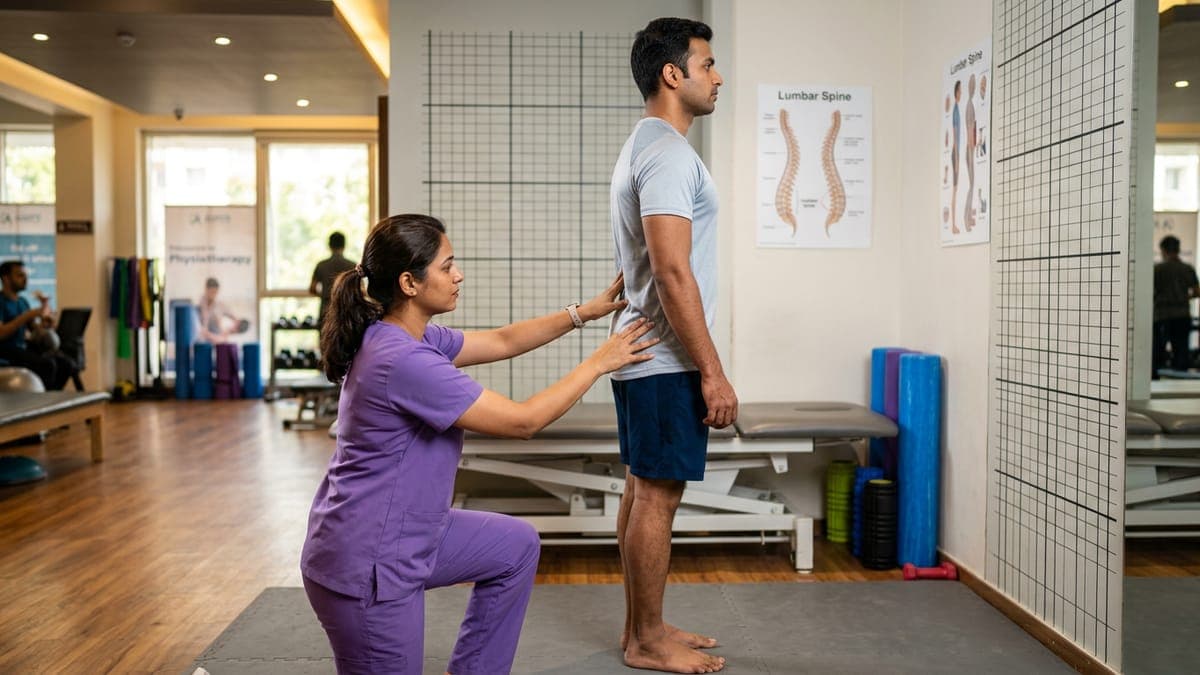
Lower Crossed Syndrome: Physiotherapy Correction in Faridabad
Lower crossed syndrome (LCS) is a specific pattern of muscle imbalance in the lumbopelvic region, described by Vladimír Janda. Tight hip flexors and lumbar extensors cross with weak abdominals and gluteal muscles to create a characteristic posture: anterior pelvic tilt, increased lumbar lordosis, and hip flexion bias.
LCS is one of the most common underlying causes of chronic lower back pain and hip dysfunction in adults.
At Realign Rehab Clinic, NIT-5, Faridabad, our expert physiotherapists provide personalised, evidence-based care. Serving NIT, Green Field Colony, Ballabhgarh, Sector 21–82, and across Faridabad. Contact us: +91 9818185589.
Causes and Risk Factors
- Prolonged sitting shortening and tightening the hip flexors (iliopsoas, rectus femoris)
- Sedentary lifestyle inhibiting gluteus maximus and medius function
- Overemphasis on spinal extension exercises without corresponding flexor and core work
- Obesity shifting the centre of gravity forward and increasing anterior pelvic tilt
- Pregnancy hormones causing ligamentous laxity and pelvic changes
- High-heeled footwear creating sustained ankle plantarflexion and hip flexor shortening
Signs and Symptoms
- Anterior pelvic tilt: the front of the pelvis tilts down, the back tilts up
- Increased lumbar lordosis — exaggerated inward curve of the lower back
- Chronic lower back pain and lumbar facet joint irritation
- Hip flexor tightness limiting hip extension during walking
- Gluteal weakness causing Trendelenburg gait and hip instability
- Knee hyperextension as a compensatory pattern
Physiotherapy Treatment at Realign Rehab, Faridabad
- Hip flexor stretching: iliopsoas, rectus femoris, and TFL flexibility work
- Gluteal activation: bridges, clamshells, hip thrusts — priority muscles in LCS
- Core stabilisation: transversus abdominis and oblique activation
- Lumbar extensor inhibition: avoiding exercises that further shorten lumbar extensors
- Pelvic tilt correction: posterior pelvic tilt exercises and proprioceptive retraining
- Thoracolumbar fascia release: soft tissue techniques for the lumbodorsal fascia
- Gait retraining: restoring full hip extension in the push-off phase of walking
- Ergonomic and footwear advice: addressing environmental drivers of hip flexor tightness
Frequently Asked Questions
What is lower crossed syndrome?
LCS is a predictable pattern of muscle imbalance in the pelvis and lower back: tight hip flexors and lumbar extensors combined with weak abdominals and gluteals, causing anterior pelvic tilt and increased lumbar lordosis.
How do I know if I have lower crossed syndrome?
Common signs include anterior pelvic tilt visible from the side, exaggerated lumbar lordosis, tight hip flexors on Thomas test, and weak gluteals on single-leg assessment. A physiotherapy assessment confirms the diagnosis.
What exercises fix lower crossed syndrome?
Hip flexor stretching (couch stretch, lunges), glute activation (bridges, clamshells, hip thrusts), and core stabilisation (dead bugs, bird-dog) are the foundation. Consistency over 8–12 weeks is required for lasting postural change.
Does sitting cause lower crossed syndrome?
Yes — prolonged sitting is the primary driver. Hip flexors shorten, glutes are not loaded, and the pattern progressively worsens with years of desk work.
Regular movement breaks and targeted exercise are essential.
How long does it take to correct lower crossed syndrome?
Measurable improvement in hip flexor flexibility and gluteal strength typically occurs within 6–8 weeks. Sustainable postural change requires 3–6 months of consistent exercise and environmental modification.
Book Your Consultation
Contact Realign Rehab Clinic today:
- 📍 NIT-5, Faridabad (near Green Field Colony, Ballabhgarh Road)
- 📞 +91 9818185589
- 🕑 Mon–Sat: 8 AM–8 PM