
 Dr. Vaishali Suri (P.T.)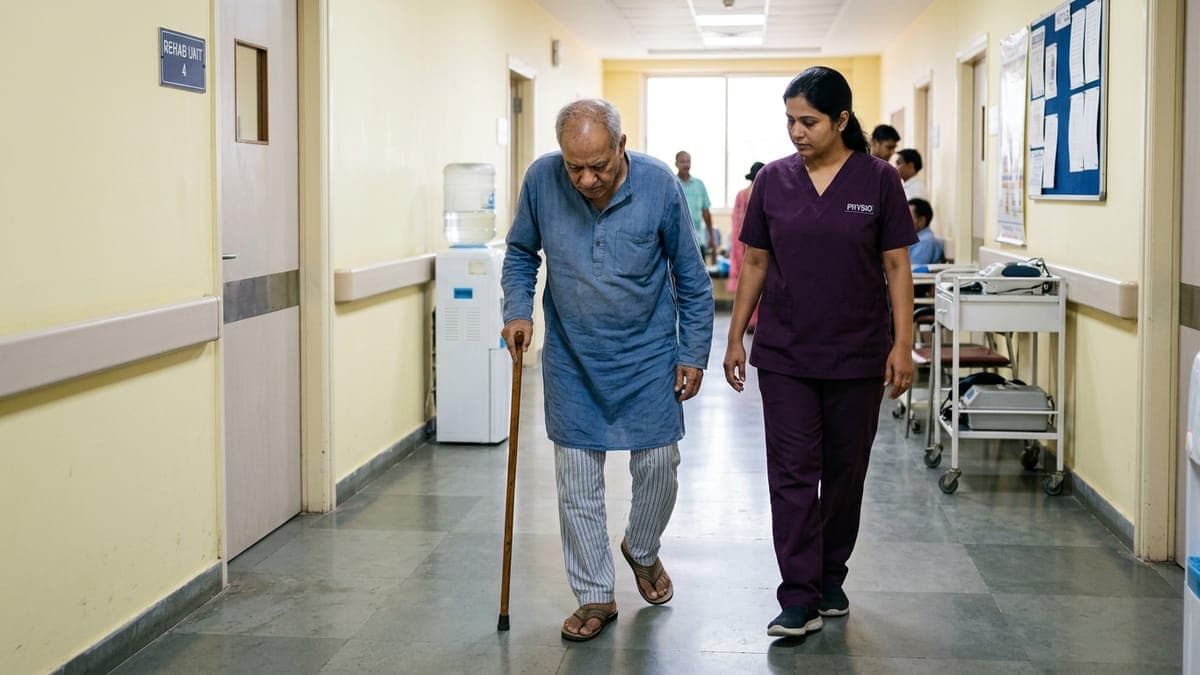
Lumbar Spinal Stenosis: Physiotherapy Treatment in Faridabad
Lumbar spinal stenosis (LSS) is narrowing of the spinal canal or neural foramina in the lower back, causing compression of the spinal cord and nerve roots. It is the most common spinal condition requiring surgery in adults over 65, but physiotherapy and conservative management are effective in the majority of mild-to-moderate cases.
The hallmark symptom — neurogenic claudication (leg pain and weakness on walking that improves with sitting or bending forward) — is highly characteristic.
At Realign Rehab Clinic, NIT-5, Faridabad, our expert physiotherapists provide personalised, evidence-based care. Serving NIT, Green Field Colony, Ballabhgarh, Sector 21–82, and across Faridabad. Contact us: +91 9818185589.
Causes and Risk Factors
- Age-related degeneration: disc collapse, facet joint hypertrophy, and ligamentum flavum thickening
- Spondylolisthesis: forward vertebral slippage narrowing the spinal canal
- Congenital narrow spinal canal: some individuals have a constitutionally small canal
- Disc herniation contributing to lateral recess stenosis
- Post-surgical scarring following previous spinal procedures
Signs and Symptoms
- Neurogenic claudication: leg pain, heaviness, and weakness on walking that builds progressively
- Relief of symptoms by sitting, crouching, or leaning forward (flexed posture opens the canal)
- Ability to walk further uphill (flexed) than downhill (extended) — opposite of vascular claudication
- Lower back pain and bilateral leg symptoms
- Numbness and tingling in the legs and feet
- In severe cases: cauda equina symptoms requiring urgent surgical review
Physiotherapy Treatment at Realign Rehab, Faridabad
- Flexion-based exercise programme: the spine tolerates flexion better than extension in stenosis
- Core stabilisation: reducing dynamic canal narrowing through trunk muscle control
- Aquatic physiotherapy: buoyancy-assisted movement in the flexed position
- Manual therapy: lumbar mobilisation in flexion-biased directions
- Neural mobilisation: gentle nerve gliding to reduce perineural inflammation
- Walking programme: starting within comfortable distance and progressively increasing
- Hydrotherapy walking for patients with severely limited land walking tolerance
- Posture and activity modification: leaning on a shopping trolley, cycling preferred over walking
Frequently Asked Questions
What is the difference between lumbar stenosis and a disc herniation?
Disc herniation is acute compression from bulging disc material, usually in younger adults. Lumbar stenosis is chronic narrowing from bone and ligament overgrowth, typically in adults over 60.
Stenosis causes walking-related leg pain (neurogenic claudication); disc herniation causes positional leg pain (sciatica).
Do I need surgery for lumbar stenosis?
Most mild-to-moderate stenosis is managed successfully with physiotherapy. Surgery produces faster initial relief but equivalent 2-year outcomes.
It is recommended for severe neurological deficit, failed conservative management, or cauda equina involvement.
What exercises help lumbar stenosis?
Flexion-based exercises (cycling, forward-bending positions) are best tolerated. Core stabilisation and aquatic walking are highly effective. Extension exercises and backbends typically worsen stenosis symptoms.
Can I walk with lumbar stenosis?
Yes — pacing is important. Start with a comfortable walking distance, use a shopping trolley or walking frame for support (the forward lean opens the canal), and rest sitting before symptoms become severe.
A physiotherapy-guided walking programme gradually increases your walking tolerance.
How long does lumbar stenosis physiotherapy last?
Physiotherapy for stenosis is an ongoing management strategy rather than a time-limited programme. An initial intensive course of 8–16 sessions establishes the exercise programme, followed by self-management with periodic physiotherapy reviews.
Book Your Consultation
Contact Realign Rehab Clinic today:
- 📍 NIT-5, Faridabad (near Green Field Colony, Ballabhgarh Road)
- 📞 +91 9818185589
- 🕑 Mon–Sat: 8 AM–8 PM