 Dr. Vaishali Suri (P.T.)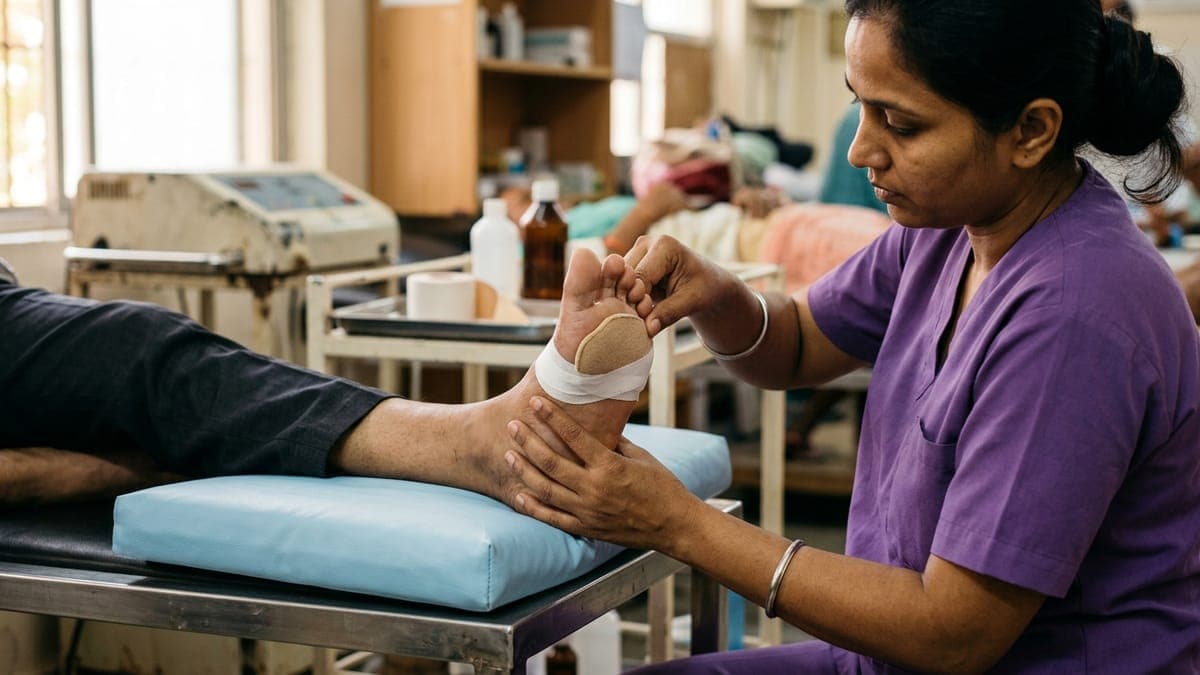
Metatarsalgia (Forefoot Pain): Physiotherapy Treatment in Faridabad
Metatarsalgia refers to pain and inflammation in the ball of the foot — specifically over the metatarsal heads where the long bones of the foot meet the toes. It is often described as a burning, aching, or sharp pain that feels like walking on pebbles.
Common in runners, athletes, and people who stand for long hours, metatarsalgia is highly responsive to physiotherapy.
At Realign Rehab Clinic , NIT-5, Faridabad, our team of expert physiotherapists provides evidence-based, personalised rehabilitation. We serve patients from NIT, Green Field Colony, Ballabhgarh, Sector 21–82, and surrounding areas.
Call +91 9818185589 to book your assessment.
Causes and Risk Factors
- High-impact sports (running, jumping) overloading the forefoot
- Ill-fitting footwear — high heels shift weight onto the metatarsal heads
- Foot deformities: high arches, hammertoes, or bunions altering load distribution
- Stress fractures of the metatarsals (especially in runners)
- Morton's neuroma compressing the interdigital nerve
- Sesamoiditis: inflammation of the sesamoid bones under the first metatarsal
- Rheumatoid arthritis and inflammatory joint disease
- Overweight/obesity increasing forefoot loading
Signs and Symptoms
- Aching or burning pain in the ball of the foot, worse when walking or standing
- Feeling like there is a pebble inside your shoe
- Sharp pain under one or more metatarsal heads
- Tingling or numbness extending into the toes (suggests Morton's neuroma)
- Pain relieved by rest and worsened by activity
- Callus formation under the metatarsal heads from chronic overloading
Physiotherapy Treatment at Realign Rehab, Faridabad
- Offloading: metatarsal pads, customised orthotics to redistribute pressure
- Ultrasound therapy and TENS for pain and inflammation
- Manual therapy: joint mobilisation of the metatarsophalangeal joints
- Intrinsic foot muscle strengthening: toe curls, spread exercises, towel pickups
- Calf and plantar fascia stretching to improve forefoot mechanics
- Footwear assessment and modification advice
- Gait and running technique analysis to identify contributing factors
- Taping and padding techniques for immediate symptom relief
Frequently Asked Questions
What does metatarsalgia feel like?
It typically feels like aching or burning pain in the ball of the foot, often described as walking on pebbles. The pain is usually worse after standing or walking for extended periods and improves with rest.
How long does metatarsalgia take to heal?
Most cases resolve within 6–12 weeks with appropriate physiotherapy, footwear changes, and orthotics. Chronic cases or those associated with Morton's neuroma may take 3–6 months.
Do I need orthotics for metatarsalgia?
Orthotics with metatarsal pads are one of the most effective treatments. They redistribute pressure away from the painful metatarsal heads.
Our physiotherapist can assess your foot and recommend the right type.
Can I exercise with metatarsalgia?
Low-impact exercise (cycling, swimming) is usually fine. High-impact activities like running should be modified or temporarily stopped until symptoms improve. We will guide you on safe training modifications.
Is metatarsalgia the same as Morton's neuroma?
No, though they can coexist. Metatarsalgia refers to inflammation of the metatarsal heads, while Morton's neuroma is a thickening of the nerve between the toes.
Morton's neuroma typically causes burning and tingling into the toes, while metatarsalgia is more of a diffuse ache under the ball of the foot.
Book Your Consultation
Ready to recover? Contact Realign Rehab Clinic today:
- 📍 NIT-5, Faridabad (near Green Field Colony, Ballabhgarh Road)
- 📞 +91 9818185589
- 🕑 Mon–Sat: 8 AM–8 PM