
 Dr. Vaishali Suri (P.T.)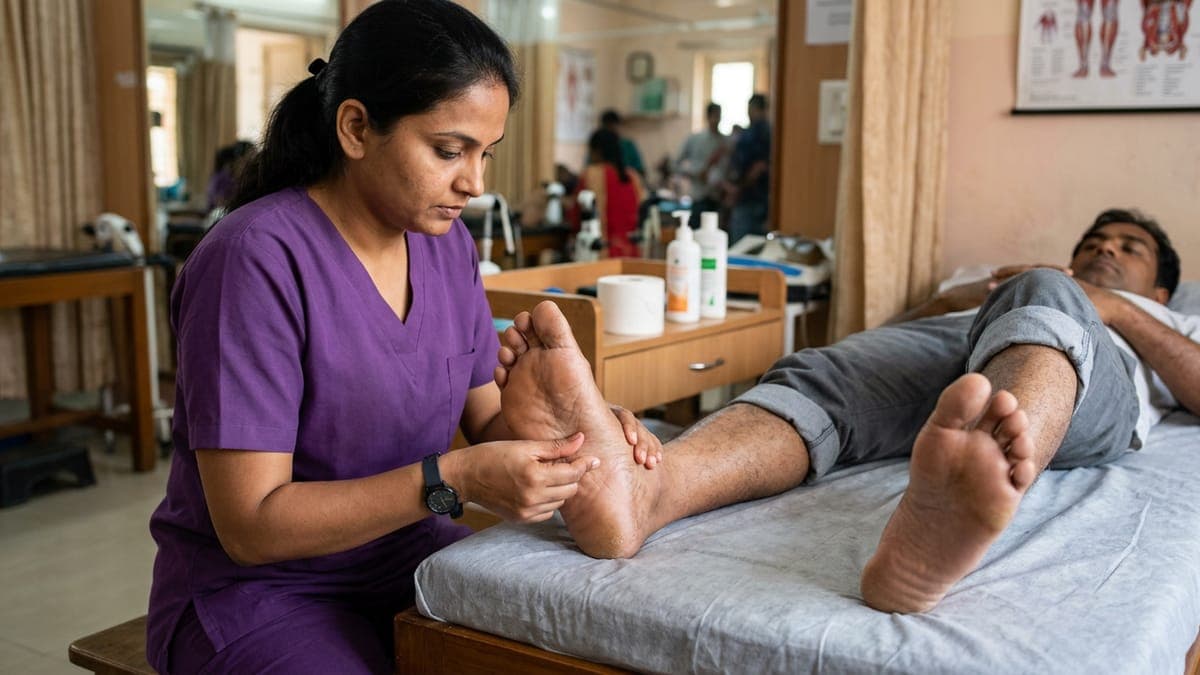
Plantar Fasciitis: Expert Physiotherapy in Faridabad
Plantar fasciitis is the most common cause of heel pain, caused by micro-tears and degeneration of the plantar fascia. The thick band of tissue connecting your heel to your toes.
At Realign Rehab Clinic , NIT-5, Faridabad, our team of expert physiotherapists provides evidence-based, personalised rehabilitation. We serve patients from NIT, Green Field Colony, Ballabhgarh, Sector 21–82, and surrounding areas.
Call +91 9818185589 to book your assessment.
Causes and Risk Factors
- Prolonged standing or walking on hard floors (teachers, factory workers, retail staff)
- Sudden increase in running mileage or intensity
- Tight calf muscles and Achilles tendon reducing ankle dorsiflexion
- Flat feet (pes planus) or high arches that alter load distribution
- Obesity or rapid weight gain increasing fascial stress
- Poorly cushioned or worn footwear
- Age-related collagen degeneration (most common in adults 40–60)
Signs and Symptoms
- Sharp, stabbing heel pain worst with the first steps after sleep or rest
- Gradual improvement with movement that returns after prolonged activity
- Tenderness on pressing the inner heel or arch
- Stiffness and limited ankle dorsiflexion
- Pain that worsens after long periods of standing
Physiotherapy Treatment at Realign Rehab, Faridabad
- Shockwave therapy — clinically proven to stimulate healing in chronic cases
- Deep soft tissue mobilisation and myofascial release of the fascia and calf
- Dry needling to deactivate trigger points in the plantar intrinsic muscles
- Stretching protocols: plantar fascia, calf (gastrocnemius and soleus), and intrinsic foot muscles
- Foot orthotic assessment and taping techniques to offload the fascia
- Strengthening: toe curls, heel raises, and arch-loading progressions
- Night splints guidance to maintain dorsiflexion overnight
- Gait retraining and footwear advice to address biomechanical causes
Frequently Asked Questions
What is the fastest way to cure plantar fasciitis?
A combination of shockwave therapy, targeted stretching (plantar fascia and calf), and orthotic support provides the fastest and most durable recovery. Most patients see clear improvement within 6–8 weeks of consistent physiotherapy.
Can I walk with plantar fasciitis?
Gentle walking is fine once the acute pain settles, but walking through severe pain worsens the micro-damage. Our physiotherapist will guide you on safe activity levels, footwear, and taping to support recovery while staying mobile.
How long does plantar fasciitis take to heal?
Mild to moderate cases typically resolve in 6–10 weeks with physiotherapy. Chronic cases (over 6 months) may take 3–6 months, especially if shockwave therapy is needed.
Does physiotherapy help plantar fasciitis better than steroid injections?
Yes, research consistently shows that physiotherapy produces better long-term outcomes than steroid injections. Injections provide short-term pain relief but do not address the biomechanical causes, and repeated injections can weaken the fascia.
Do I need orthotics for plantar fasciitis?
Custom or semi-custom orthotics are very helpful, particularly for patients with flat feet or high arches. Our physiotherapist can assess your foot biomechanics and recommend the most appropriate support.
Book Your Consultation
Ready to recover? Contact Realign Rehab Clinic today:
- 📍 NIT-5, Faridabad (near Green Field Colony, Ballabhgarh Road)
- 📞 +91 9818185589
- 🕑 Mon–Sat: 8 AM–8 PM