 Dr. Vaishali Suri (P.T.)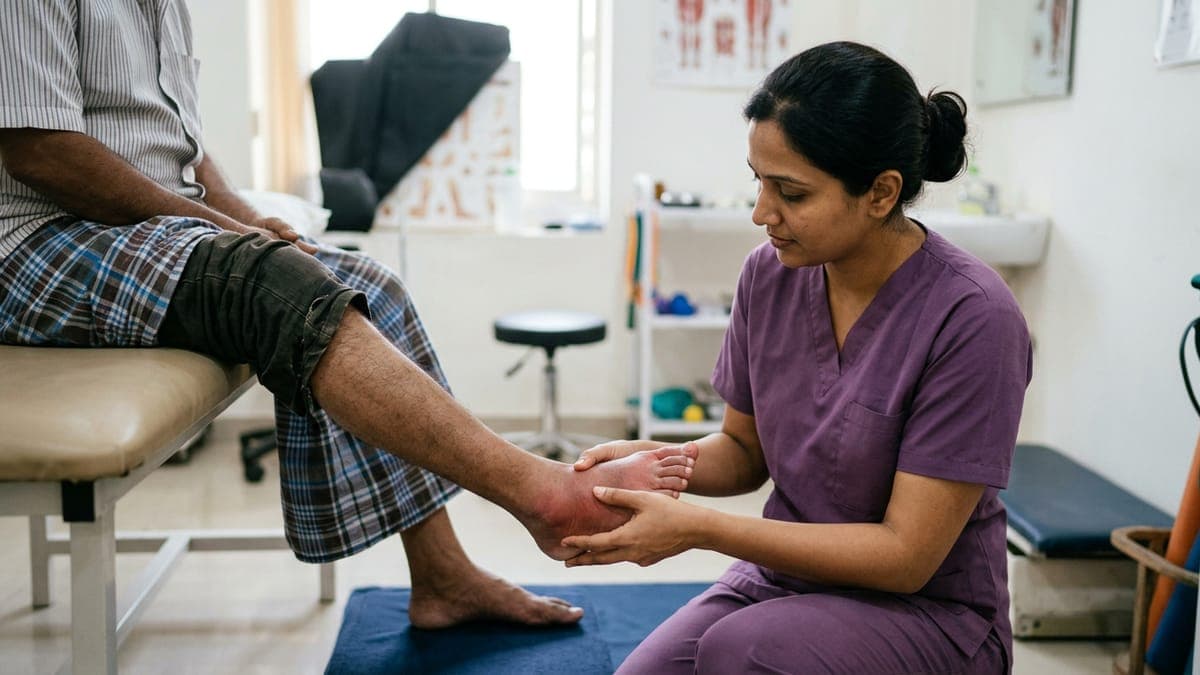
Gout and Joint Pain: Physiotherapy Management in Faridabad
Gout is a form of inflammatory arthritis caused by the deposition of monosodium urate crystals in joints and surrounding tissues, resulting from elevated serum uric acid levels (hyperuricaemia). While the acute gout attack — characterised by sudden, severe joint pain, typically in the big toe.
Is managed medically, physiotherapy plays a critical role in the inter-attack period: managing joint damage, preventing functional decline, and reducing the risk and severity of future attacks through lifestyle modification.
At Realign Rehab Clinic , NIT-5, Faridabad, our expert physiotherapists deliver personalised, evidence-based rehabilitation. We serve patients from NIT, Green Field Colony, Ballabhgarh, Sector 21–82, and across Faridabad.
Book your assessment: +91 9818185589 .
Causes and Risk Factors
- Hyperuricaemia from excessive dietary purines (red meat, organ meat, shellfish, alcohol)
- Inadequate renal uric acid excretion (genetic or medication-related)
- Diuretic medications (commonly used for hypertension and heart failure) raising uric acid
- Obesity and metabolic syndrome
- Chronic kidney disease impairing uric acid clearance
- Joint trauma or surgery triggering crystal deposition
- Dehydration concentrating uric acid in the blood
Signs and Symptoms
- Acute gout attack: sudden severe joint pain, redness, warmth, and swelling (typically first metatarsophalangeal joint)
- Chronic tophaceous gout: firm deposits of urate crystals (tophi) under the skin
- Joint stiffness and restricted movement between attacks
- Progressive joint damage in recurrent or untreated gout
- Reduced walking ability and functional limitation
Physiotherapy Treatment at Realign Rehab, Faridabad
- Acute phase: gentle elevation, ice therapy, and joint protection during attacks
- Inter-attack phase: joint mobilisation to restore range of motion
- Progressive lower limb strengthening and gait retraining
- Footwear assessment and orthotics for affected foot joints
- Exercise prescription: low-impact cardiovascular exercise (cycling, swimming) for weight management
- Diet and lifestyle education: purine-rich food avoidance, hydration strategies
- Hydrotherapy for gentle exercise during subacute phases
- Management of secondary complications: plantar fasciitis, hammer toe, or ankle instability from joint damage
Frequently Asked Questions
Should I exercise during a gout attack?
During an acute attack, rest the affected joint, apply ice, and elevate the limb. Gentle range-of-motion exercise of unaffected joints is fine. Between attacks, regular low-impact exercise is strongly recommended.
What foods should I avoid with gout?
Red meat, organ meat (liver, kidneys), shellfish, alcohol (especially beer), and foods/drinks high in fructose are the main dietary triggers. Your physiotherapist can provide detailed dietary guidance as part of your management plan.
Can physiotherapy prevent gout attacks?
Indirectly, yes — weight loss, regular exercise, and dietary modification (all areas where physiotherapy can help) reduce serum uric acid levels and significantly decrease attack frequency.
How does gout affect my joints long-term?
Repeated gout attacks without treatment cause progressive joint damage, leading to chronic gout arthropathy. This can cause permanent restriction in the big toe, ankle, and other affected joints, requiring specific physiotherapy rehabilitation.
Is there physiotherapy for gout in Faridabad?
Yes — Realign Rehab Clinic offers thorough management of gout-related joint dysfunction. We address the acute and chronic phases, including exercise prescription, joint rehabilitation, and lifestyle education. Call +91 9818185589.
Book Your Consultation
Contact Realign Rehab Clinic, Faridabad today:
- 📍 NIT-5, Faridabad (near Green Field Colony, Ballabhgarh Road)
- 📞 +91 9818185589
- 🕑 Mon–Sat: 8 AM–8 PM