
 Dr. Vaishali Suri (P.T.)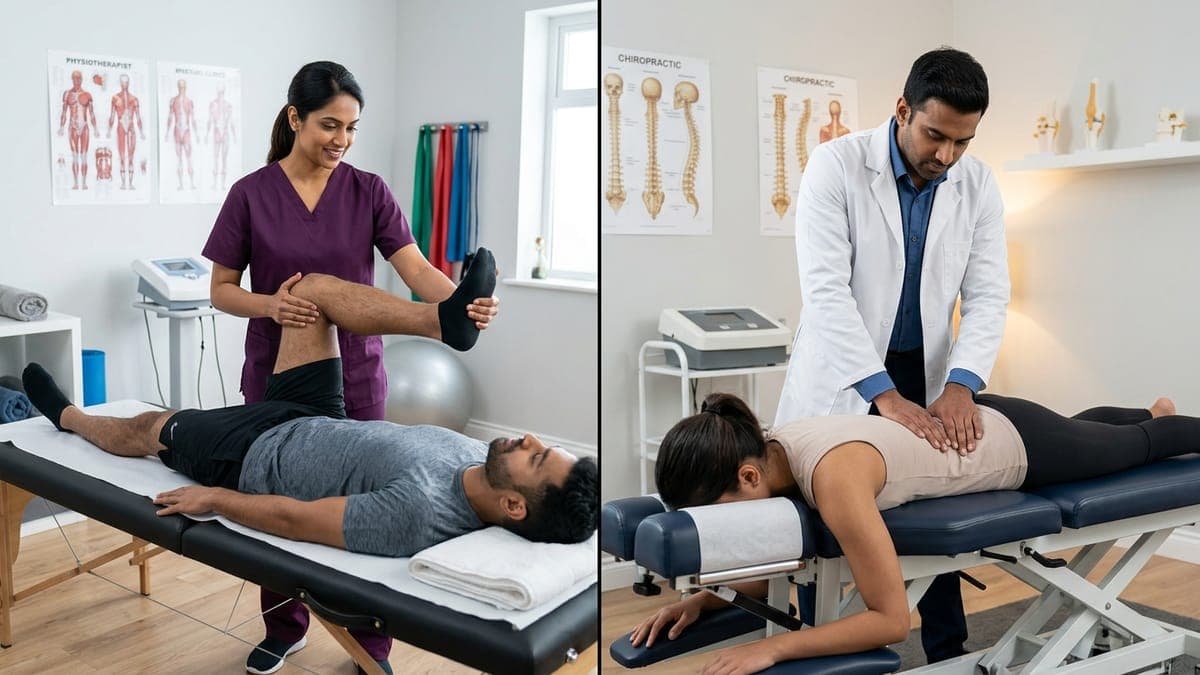
Two Approaches to Musculoskeletal Health
Both physiotherapy and chiropractic care address musculoskeletal pain, but through different philosophies, training, and methods. Understanding the difference helps you make an informed choice.
Physiotherapy vs Chiropractic Comparison
| Factor | Physiotherapy | Chiropractic |
|---|---|---|
| Primary focus | Movement, strength, rehabilitation | Spinal alignment, manipulation |
| Techniques | Exercises, manual therapy, electrotherapy | Spinal manipulation (adjustments) |
| Neurological conditions | Yes (stroke, Parkinson’s, CP) | Limited |
| Post-surgical rehab | Yes (speciality area) | Not typically |
| Women’s health | Yes (pelvic floor rehabilitation, postpartum) | Not typically |
| Long-term exercise plan | Always included | Varies by practitioner |
Physiotherapy: A Structured approach
Physiotherapists are trained in the full spectrum of musculoskeletal, neurological, cardiorespiratory, and paediatric conditions. Treatment includes manual therapy, therapeutic exercise, electrotherapy, patient education, and rehabilitation.
The goal is not just pain relief but restoring full function and preventing recurrence through active participation.
Chiropractic: Spinal Manipulation Focus
Chiropractors specialise primarily in spinal manipulation (adjustments) based on the theory that spinal alignment affects overall health. While effective for certain acute spinal conditions, the evidence base is narrower than physiotherapy.
Which Is Better for Your Condition?
- Physiotherapy is generally preferred for: Sports injuries, post-surgical rehab, neurological conditions, paediatric conditions, exercise prescription, long-term rehabilitation, and complex multi-system presentations.
- Chiropractic may be useful for: Acute spinal pain where manipulation provides rapid short-term relief.
In Faridabad
Realign Clinic provides evidence-based physiotherapy covering the full range of conditions. If you are unsure which approach is right for you, contact us for an honest assessment and recommendation.
Sources & References
- Hurwitz EL et al. (2002). A randomized trial of chiropractic manipulation and mobilization for patients with neck pain. Spine, 27(11):1185–1196.
- NICE Guidelines NG59 (2021 update). Low back pain and sciatica treatment: assessment and management.
Content author: Dr. Vaishali Suri (P.T.), MPT (Sports Medicine), BPT, MIAP, MIAP.
When to Choose Physiotherapy Over Chiropractic Care
- Post-surgical rehabilitation (physiotherapy is the standard of care)
- Neurological conditions: stroke, Parkinson's disease, cerebral palsy, MS
- Women's health: pregnancy, pelvic floor rehabilitation, postpartum care
- Paediatric physiotherapy
- Complex musculoskeletal conditions requiring progressive exercise protocols (ACL, rotator cuff treatment, etc.)
- Conditions where differential diagnosis is important (excluding serious pathology)
- Long-term chronic pain management with self-management education
Frequently Asked Questions — Physiotherapy vs Chiropractic
Q: Is there a registered and qualified physiotherapist in Faridabad?
Vaishali Suri (P.T.) at Realign Rehab Clinic is a registered physiotherapist with BPT (Bachelor of Physiotherapy) and Bachelor of Physiotherapy qualification from accredited Indian universities. She is a member of the Indian Association of Physiotherapists (MIAP).
Qualifications and registrations should be verified when choosing any healthcare practitioner.
Q: Can physiotherapy and chiropractic care be combined?
Yes — they can be complementary, particularly if a chiropractor is providing spinal manipulation and a physiotherapist is providing rehabilitation exercise. Communication between practitioners ensures coordinated care.
At Realign Clinic, we welcome patients who are also receiving chiropractic care and design our programme to complement rather than duplicate their other treatments.
Book Physiotherapy in Faridabad
Call +91 9818185589 . Realign Rehab Clinic, NIT-5, Faridabad.
Qualified, experienced physiotherapy for all conditions. Vaishali Suri (P.T.), BPT, MIAP — 10+ years of clinical practice in Faridabad.
References
- Rubinstein SM et al. (2011). Spinal manipulative therapy for chronic low-back pain. Cochrane Database Syst Rev.
- Gross A et al. (2015). Manipulation and mobilisation for neck pain contrasted against an inactive control. Cochrane Database Syst Rev.
Content author: Dr. Vaishali Suri (P.T.), MPT (Sports Medicine), BPT, MIAP, MIAP.