 Dr. Vaishali Suri (P.T.)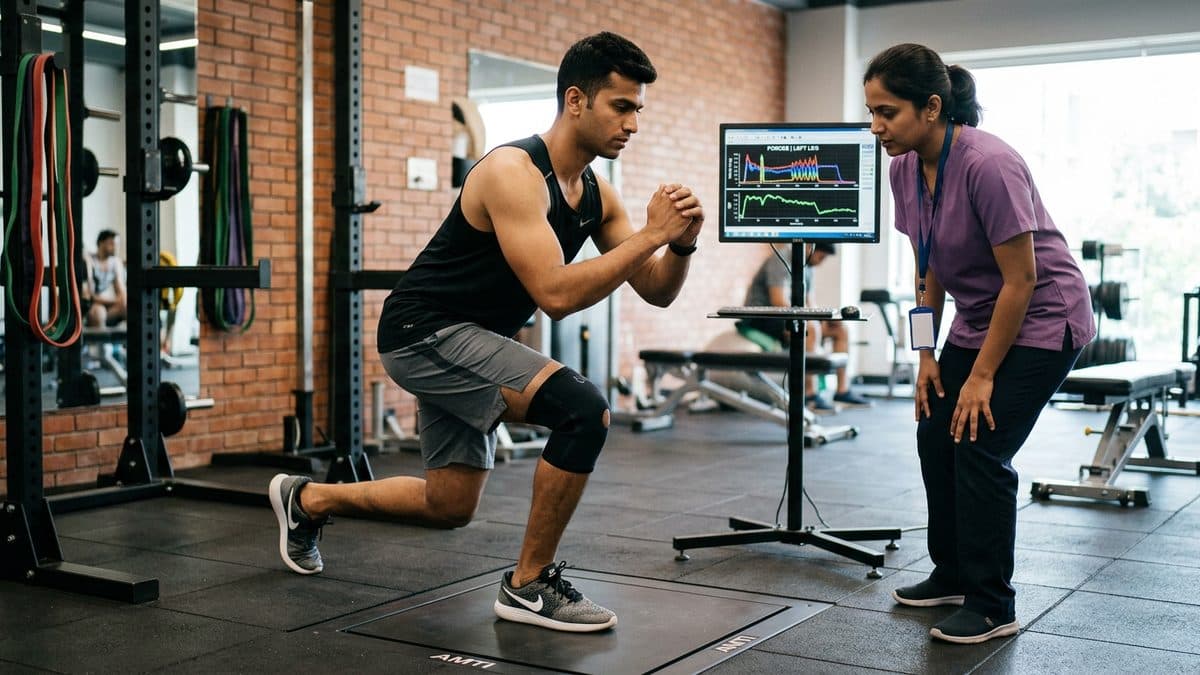
What Is an ACL Injury?
The anterior cruciate ligament (ACL) is the primary stabiliser of the knee, controlling rotational stability and anterior tibial translation. ACL tears are among the most serious sports injuries, common in football, cricket, kabaddi, basketball, and badminton — sports widely played across Faridabad and the Delhi NCR region.
An ACL tear can feel like a "pop" in the knee, followed by rapid swelling and instability.
ACL Reconstruction vs. Conservative Physiotherapy: What Does the Evidence Say?
Not all ACL tears require surgery. Research now supports that many patients — particularly recreational athletes and those over 30 — achieve excellent outcomes with physiotherapy alone.
The key factor is whether the patient can achieve "copers" status: stable, confident knee function through neuromuscular training. At Realign Rehab Clinic in Faridabad, we assess each patient individually to guide the surgery-vs-physio decision.
- ACL reconstruction candidates: Young competitive athletes in pivoting sports, patients with combined ligament injuries (ACL + meniscus), patients with significant instability episodes
- Conservative physio candidates: Patients over 30 who participate in non-pivoting activity, recreational athletes, partial ACL tears, patients who achieve copers status in pre-hab testing
ACL Injury Grading
- Grade 1 (Sprain): Ligament fibres stretched but intact. Mild swelling, knee stable. Recovery 2–4 weeks with physiotherapy.
- Grade 2 (Partial tear): Some fibres torn. Moderate instability. Recovery 6–12 weeks with intensive physiotherapy. Surgery sometimes needed.
- Grade 3 (Complete rupture): Full thickness tear. Significant instability. Surgery usually recommended for athletes in pivoting sports.
Symptoms of ACL Injury
- A sudden "pop" sensation in the knee at time of injury
- Immediate swelling (haemarthrosis) within 2–4 hours
- Knee instability — feeling that the knee "gives way"
- Loss of full range of motion
- Pain with weight-bearing, especially pivoting movements
- Positive Lachman test and anterior drawer test on clinical assessment
ACL Rehabilitation Phases at Realign Clinic Faridabad
Phase 1: Acute Management (Weeks 0–2)
The immediate goal is reducing swelling, restoring range of motion, and establishing muscle activation. We use manual lymphatic drainage, ice, compression, gentle mobilisation, and quadriceps activation (quad sets, straight leg raises).
This phase sets the foundation — poor early management leads to persistent swelling and delayed muscle activation.
Phase 2: Neuromuscular Control (Weeks 2–6)
Once swelling is controlled and range of motion returns, we begin closed kinetic chain exercises: mini squats, leg press, step-ups, and single-leg balance. Proprioceptive training on unstable surfaces begins here.
The goal is regaining dynamic stability and confidence in the knee.
Phase 3: Strength Building (Weeks 6–16)
Progressive loaded strengthening targeting quadriceps (the key ACL protector), hamstrings, glutes, and hip abductors. We use resistance machines and free weights with progressive overload.
Phase 4: Sport-Specific Training and Return to Sport (Months 4–9+)
We work closely with cricket coaches and badminton coaches in Faridabad to make sure safe return.
ACL Rehabilitation Exercises to Start at Home
Quadriceps Sets
Lie on your back with the injured leg straight. Press the back of your knee into the floor, tightening your quadriceps.
Hold 10 seconds, 3 sets of 20. This maintains quad activation when loading is not possible and is safe from day 1 post-injury.
Straight Leg Raises
Lying on your back, tighten the quad of the injured leg and lift it to 45°. Hold 5 seconds, lower slowly. 3 sets of 15.
Builds quad strength without knee joint loading. Safe in early phase 1.
Terminal Knee Extension (TKE)
Stand with a resistance band behind the injured knee. Step back slightly to create tension.
Straighten the knee fully against the band resistance. 3 sets of 15. Excellent for VMO activation and improving extension deficit common after ACL injury.
Single-Leg Squat (Later Phase)
Stand on the injured leg, hands on hips. Lower slowly into a single-leg squat to 60° knee flexion, keeping knee aligned over second toe. 3 sets of 10.
A fundamental test of returning neuromuscular control — only perform when cleared by your physiotherapist.
Frequently Asked Questions — ACL Injury in Faridabad
Q: Can I play cricket or badminton again after an ACL tear?
Yes — with full rehabilitation, the majority of athletes return to their sport at the same or higher level. For cricket, return to fielding typically occurs at 6–8 months, and return to fast bowling or batting at 9–12 months after reconstruction.
Badminton players typically return to competition at 8–10 months. Success depends on passing objective criteria, not calendar time alone.
Q: How long does ACL rehabilitation take at Realign Clinic Faridabad?
Post-reconstruction ACL rehab typically takes 9–12 months before return to pivoting sport. Conservative rehabilitation (without surgery) follows a similar timeline for athletes, or 4–6 months for recreational patients.
We guide you through every phase with objective milestones and regular strength testing.
Q: Is ACL surgery always necessary?
Vaishali Suri provides an honest assessment of whether conservative management is appropriate for your specific situation.
Q: Can the ACL heal on its own without physiotherapy?
The ACL has poor intrinsic healing capacity due to its intra-articular location. Without rehabilitation, a torn ACL rarely heals, and the knee remains unstable.
Physiotherapy builds the compensatory neuromuscular control around the knee that replaces the mechanical function of the ligament in patients who choose conservative management.
Q: What is the re-injury risk after ACL rehabilitation?
At Realign Clinic, we use criterion-based rather than time-based progression to protect every patient from re-injury.
Q: Does Realign Clinic provide ACL rehabilitation home visits in Faridabad?
Yes — for patients who have recently had surgery or cannot easily travel, we offer home physiotherapy visits across Faridabad including NIT, Sector 14, Ballabhgarh, Green Field Colony, and Old Faridabad. Home visits cover phases 1 and 2 of ACL rehab.
Call +91 9818185589 to arrange.
When to See a Physiotherapist for ACL Injury in Faridabad
See a physiotherapist immediately if you:
- Heard or felt a "pop" in your knee during sport
- Have considerable swelling within hours of a knee injury
- Experience your knee giving way during normal activities
- Were told you have a suspected or confirmed ACL tear on MRI
- Have just had ACL reconstruction surgery and need a rehabilitation programme
Early physiotherapy intervention — within the first week of injury — clearly improves outcomes whether you choose surgery or conservative management.
Book ACL Rehabilitation at Realign Clinic Faridabad
Call +91 9818185589 or visit realign.clinic/contact . Realign Rehab Clinic, Ground Floor, 5E/9, NIT-5, Faridabad, Haryana 121001.
Monday–Saturday 8 AM–8 PM. Home visits available across Faridabad.
Vaishali Suri (P.T.), BPT, MIAP — 10+ years of sports rehabilitation experience in Faridabad.
References
- Frobell RB et al. (2013). A randomized trial of treatment for acute anterior cruciate ligament tears. NEJM, 368(13):1188–1197.
- van Melick N et al. (2016). Evidence-based clinical practice update on ACL rehabilitation. BJSM, 50(24):1506–1515.
- Kyritsis P et al. (2016). Likelihood of ACL graft rupture: not meeting six clinical discharge criteria before return to sport. BJSM, 50(15):946–951.
Content author: Dr. Vaishali Suri (P.T.), MPT (Sports Medicine), BPT, MIAP, MIAP.
Related Articles: Yoga Injury Treatment in Faridabad: Physiotherapy for Yoga-Related Pain | Whiplash Injury Treatment in Faridabad: Physiotherapy for Road Accident Neck Pain | Stroke Rehabilitation in Faridabad: Physiotherapy for Recovery | Sports Physiotherapy for Faster Recovery
Related Conditions: Sports Injury Rehab | Wrist Pain Treatment | Work Injury Rehab
Related Services: Advanced Sports Physiotherapy | Orthopedic Physio