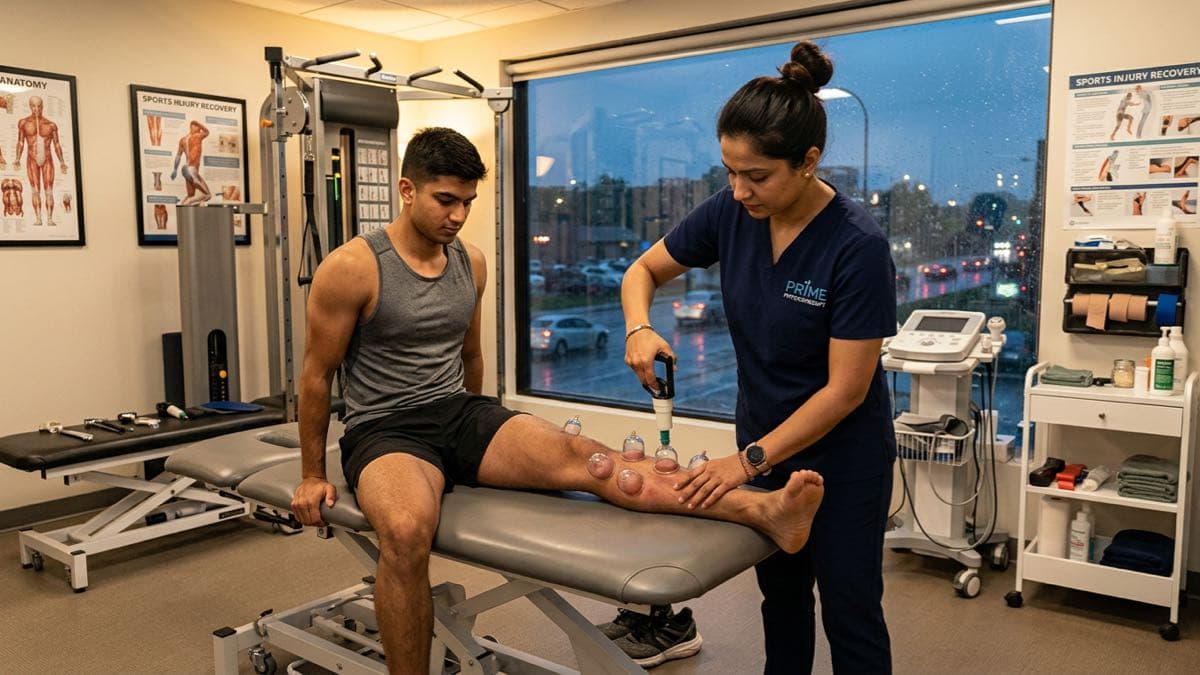
Dry cupping uses suction on the skin without piercing it. Realign Rehab Clinic discusses it only after physiotherapy assessment as a possible adjunct for selected patients. It is not a stand-alone cure, and a mark on the skin is not proof that a treatment worked. This article answers informational questions; the cupping service page explains clinic availability in Faridabad.
What is the difference between dry and wet cupping?
Dry cupping does not break the skin. Wet cupping involves piercing the skin and has different infection and blood-exposure risks. The Realign service page describes assessment-led dry cupping; this article does not claim wet cupping is offered. Confirm the exact technique and consent details before any treatment.
Can cupping treat back pain, sports injury or muscle tightness?
Cupping may help some people with pain, but the research is generally low quality and benefit is uncertain. A person with back pain or an injury still needs an appropriate assessment to understand the likely problem and treatment options. The US National Center for Complementary and Integrative Health (NCCIH) explains the current evidence and safety concerns. Claims that cupping removes toxins or guarantees tissue healing are not established.
Why does cupping leave round marks?
Suction can cause temporary skin discoloration. The size or darkness of a mark does not measure toxins, disease severity or treatment success. Tell your clinician if your skin has reacted badly to a previous treatment or if you have a condition that affects the skin.
What are the possible risks?
Temporary marks and discomfort can occur. Burns, persistent discoloration, scarring and infection are possible, and cupping may aggravate some skin conditions. Discuss medical history, medicines, bleeding problems, pregnancy, implants, skin changes and personal concerns before treatment. Do not stop prescribed medicines for a cupping appointment. The NCCIH safety overview describes these risks in more detail.
What should I ask at the appointment?
- What is the working diagnosis and why is cupping being considered?
- What benefit is realistic, and what uncertainty remains?
- What alternatives, exercise or activity changes might be more useful?
- What reactions should prompt a call or medical review?
- What is the current fee and what does it include?
Is cupping available near me in Faridabad?
Realign Rehab Clinic is at Ground Floor, 5E/9, B.P. Railway Road, NIT-5, Faridabad. Dry cupping is a clinic-based option when appropriate after assessment. A home physiotherapy visit does not imply cupping equipment or this treatment will be provided at home. Check availability and fees before travelling.
Should cupping replace physiotherapy exercises?
No. The decision should be based on your diagnosis and functional goals. A plan might involve exercise and movement advice without cupping at all. If cupping is used, agree how you will measure whether it is helping with a meaningful task rather than relying on the appearance of a skin mark.
Continue to the cupping therapy service page, explore orthopedic physiotherapy, or ask about an assessment.
General education only. Editorially updated on 2 October 2026; individual clinical review is not asserted.