 Dr. Vaishali Suri (P.T.)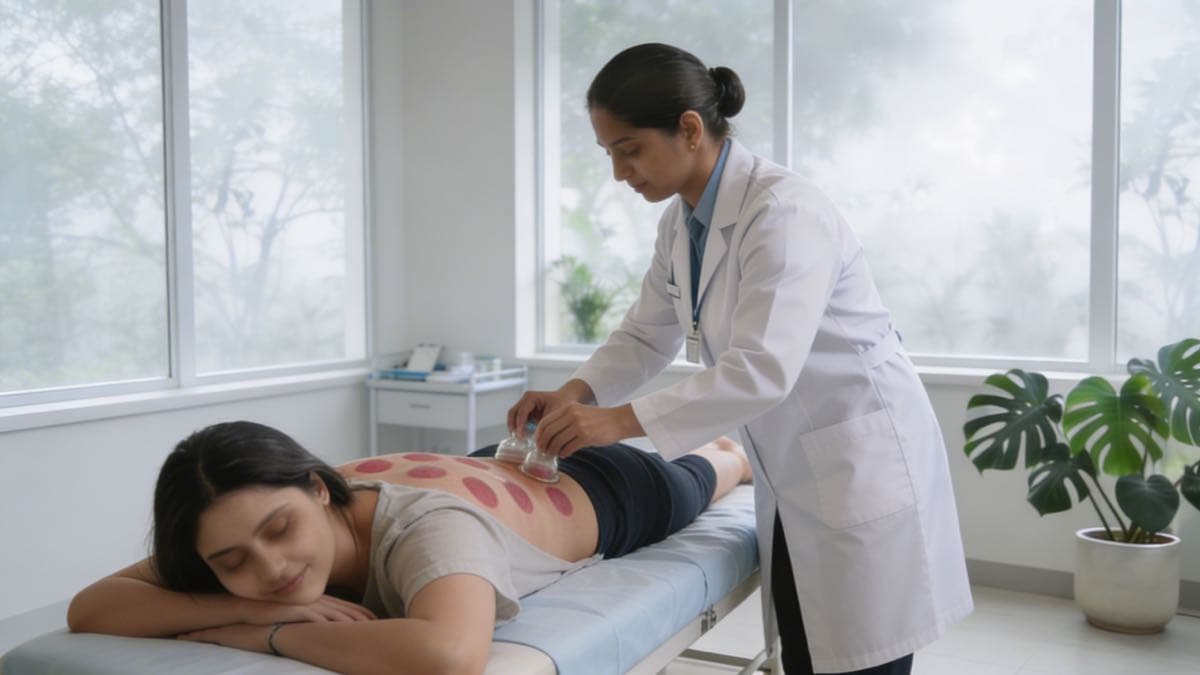
Does Cupping Therapy Really Help back pain treatment?
Yes — cupping therapy has been shown in multiple clinical studies to measurably reduces chronic low back pain. A 2012 randomized controlled trial found that cupping combined with usual care was markedly more effective than usual care alone for chronic non-specific low back pain.
At Realign Rehab Clinic in Faridabad, cupping is one of our most effective tools for patients who have not responded to conventional treatments alone.
Written and reviewed by Dr. Vaishali Suri (MPT (Sports Medicine), BPT, MIAP), Founder, Realign Rehab Clinic, NIT-5 Faridabad.
Why Back Pain Is So Common in Faridabad
- Prolonged sitting in desk jobs in IT and corporate sectors
- Long commutes involving driving or riding two-wheelers
- Poor ergonomics in home and office setups
- Physical labor with improper lifting mechanics
- Stress and insufficient sleep, which lower pain thresholds
These factors cause chronic contraction of the lumbar erector spinae, quadratus lumborum, and psoas muscles — creating a cycle of muscle tightness, reduced blood flow, trigger point formation, and increasing pain.
How Cupping Targets Back Pain at Its Source
Decompression of Muscle Tissue
The suction created by cupping cups creates negative pressure within the tissue — the opposite of compression-based manual therapy. This decompression separates the layers of muscle and fascia, releasing chronic tension that drives persistent back pain.
It also creates space for fresh blood and lymph to flow into areas of stagnation.
Trigger Point Release
Trigger points — hyperirritable spots within taut bands of muscle — are a leading cause of both local back pain and referred pain patterns. Trigger points in the quadratus lumborum, for example, can refer pain to the hip and gluteal region.
Cupping is particularly effective at releasing these points because the suction addresses the entire volume of the affected area, not just a single spot.
Improved Circulation and Tissue Oxygenation
Chronic back pain is often associated with areas of reduced blood flow within tense muscles. Cupping dramatically increases local microcirculation — confirmed by laser Doppler flowmetry studies — delivering oxygen and nutrients while removing lactic acid, prostaglandins, and other pain-causing metabolites.
Thoracolumbar Fascial Release
The thoracolumbar fascia — a dense connective tissue sheet covering the lower back — can become thickened and restricted in patients with chronic back pain. Cupping, especially gliding cupping with oil, effectively releases these fascial restrictions that contribute to pain and movement limitation.
Research Evidence: Cupping for Low Back Pain
- A randomized controlled trial published in Complementary Therapies in Clinical Practice found that cupping therapy combined with medication was noticeably more effective than medication alone for treating chronic low back pain.
- A systematic review by Lauche et al. in Evidence-Based Complementary and Alternative Medicine found moderate evidence for cupping in reducing pain and improving function in non-specific low back pain.
- A 2019 RCT demonstrated that wet cupping noticeably reduced pain and disability scores at 2, 4, and 8-week follow-up in patients with chronic non-specific low back pain.
Cupping Protocol for Back Pain at Realign Rehab Clinic
Our physiotherapists do not use cupping in isolation. For back pain patients, we typically combine cupping with:
- Assessment: Identifying the exact pain source — disc, muscle, joint, or nerve-related
- Cupping (dry or gliding): Targeting the lumbar, thoracic, and gluteal regions
- Manual therapy: Spinal mobilization or manipulation where indicated
- Therapeutic exercise: Core stabilization, hip mobility, and movement pattern correction
- Education: Ergonomics, posture correction, and activity modification
Who Benefits Most from Cupping for Back Pain?
Cupping therapy is most effective for patients with:
- Chronic non-specific low back pain (not from a known structural cause)
- Muscle-dominant back pain with significant tightness and trigger points
- Poor response to traditional physiotherapy or pain medications alone
- Athletes and active individuals with training-related back stiffness
- Office workers with postural back pain from prolonged sitting
Understanding the Cupping Marks
The circular discolorations left by cupping — ranging from pink to deep purple — are not true bruises from trauma. They represent extravasation of red blood cells from capillaries into the tissue, intentionally induced by the suction.
Darker marks generally indicate greater tissue stagnation. These marks are painless and fade within 3-7 days.
Each successive session typically produces lighter marks as tissue health improves.
Frequently Asked Questions
How many sessions do I need for back pain relief?
Most patients with chronic back pain see meaningful improvement within 4-6 sessions. A full course typically involves 6-10 sessions over 4-8 weeks, combined with exercise therapy.
Acute back pain may respond in fewer sessions.
Is cupping therapy safe for herniated discs?
Cupping over the affected area is generally safe for herniated disc patients and can help reduce muscle spasm that worsens disc-related pain. It should always be part of a in-depth physiotherapy program supervised by a trained professional.
Always inform your therapist about your diagnosis.
Can cupping cure back pain permanently?
Cupping provides excellent relief and is most effective as part of a thorough program including exercise, posture correction, and lifestyle changes. For chronic back pain, the goal is long-term management and prevention of recurrence alongside cupping therapy.
Book Cupping for Back Pain in Faridabad
Stop suffering from chronic back pain. At Realign Rehab Clinic in Faridabad, our expert physiotherapists combine cupping therapy with evidence-based treatment to provide lasting relief.
We serve patients from NIT Faridabad, Sector 15, Sector 21, Ballabhgarh, and all surrounding areas. Call +91 9818185589 or book online for your consultation.
References
- Lauche R, et al. A systematic review and meta-analysis of cupping therapy for musculoskeletal pain. European Journal of Integrative Medicine. 2012;4(3):e265-e276.
- Cramer H, et al. A systematic review and meta-analysis of cupping therapy as a treatment for pain. Complement Ther Clin Pract. 2020;38:101074.
- Cao H, et al. Acupoint stimulation for treating acute ankle sprain. Medicine (Baltimore). 2014;93(25):e282.
- Kim TH, et al. Cupping for treating neck pain in video display terminal users: a randomized controlled pilot trial. Journal of Occupational Health. 2012;54(6):416-426.
Related Articles: Back Pain When Standing in Faridabad: Physiotherapy for Prolonged Standing Pain | Can't Sleep Because of Pain? Physiotherapy for Sleep-Disrupting Pain in Faridabad | Back Pain When Sitting in Faridabad: Physiotherapy for Desk Workers | Chronic Pain Management in Faridabad: Physiotherapy and Pain Neuroscience
Related Conditions: Postpartum Back Pain Relief | Chronic Pain Relief | Back Pain Treatment
Related Services: Manual Therapy | Neck Pain Therapy