 Dr. Vaishali Suri (P.T.)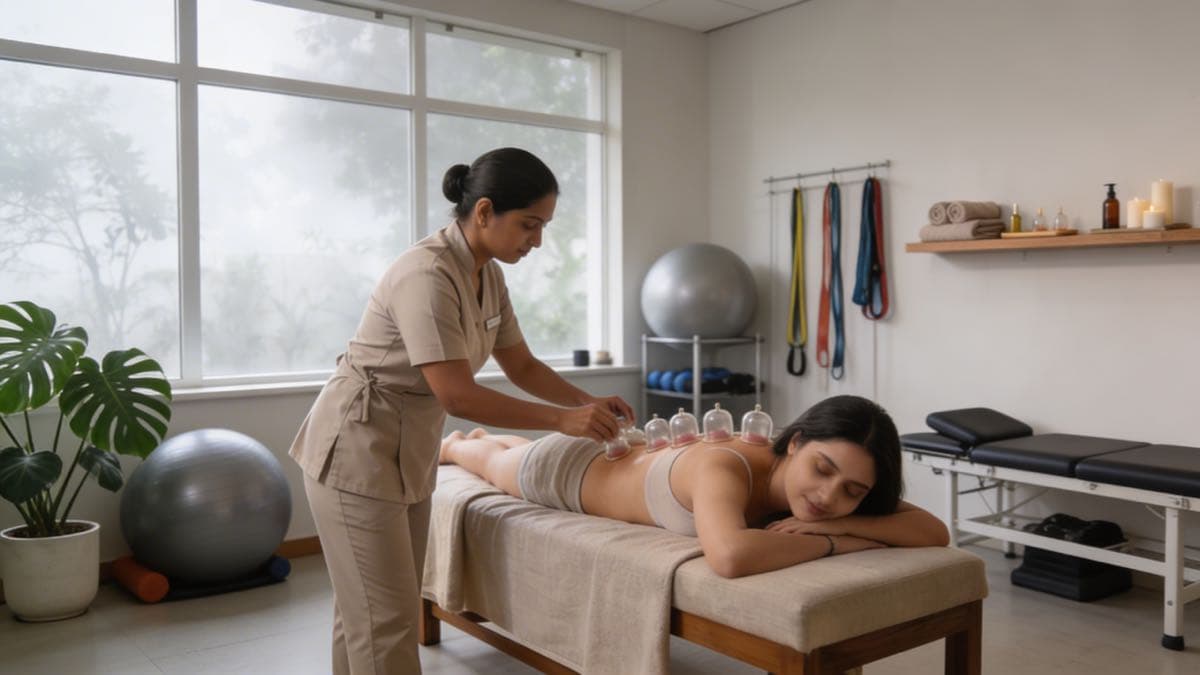
What Is Cupping Therapy?
Cupping therapy is an ancient healing technique that has been integrated into modern physiotherapy practice worldwide. It involves placing specialized cups on the skin to create suction, which promotes blood flow, releases myofascial tension, and accelerates tissue healing.
Originally used in traditional Chinese, Egyptian, and Middle Eastern medicine, cupping is now backed by growing scientific evidence and offered at leading physiotherapy clinics across India. Including Realign Rehab Clinic in Faridabad.
At our clinic, cupping therapy is performed by certified physiotherapists as part of a thorough treatment plan. It is most commonly used to treat chronic back pain, neck pain, muscle tightness, sports injuries, and stress-related conditions.
Types of Cupping Therapy
1. Dry Cupping (Static Cupping)
The most common form used in physiotherapy. Cups are placed on the skin and suction is created using a pump or by heating and cooling (fire cupping).
The cups remain in place for 5-15 minutes. Ideal for releasing deep muscle tension, improving circulation, and treating chronic pain.
2. Gliding / Dynamic Cupping
Oil is applied to the skin and cups are moved along muscle groups — similar to a deep soft tissue mobilisation in reverse. Particularly effective for large muscle groups like the back, hamstrings, and quadriceps.
Athletes frequently use this method for muscle recovery.
3. Flash Cupping
Cups are applied and immediately removed in rapid succession. This technique stimulates circulation and is often used over the upper back and respiratory areas.
4. Silicone Cupping
Flexible silicone cups that allow the therapist to control suction strength precisely. Ideal for sensitive areas and patients new to cupping.
How Does Cupping Therapy Work?
The suction created by the cups causes the underlying tissue to be drawn upward into the cup. This produces several therapeutic effects:
- Increased blood circulation: Suction increases local blood flow, delivering oxygen and nutrients to damaged tissues while removing metabolic waste products.
- Myofascial release: The negative pressure separates layers of fascia, breaks up adhesions, and releases trigger points — knots of contracted muscle fibers that cause referred pain.
- Nervous system effects: Cupping stimulates mechanoreceptors in the skin, which can modulate pain signals through the gate control mechanism.
- Anti-inflammatory effects: Research suggests cupping reduces pro-inflammatory cytokines and activates the body's natural healing response.
Scientific Evidence for Cupping Therapy
A 2018 systematic review published in PLOS ONE analyzing 16 randomized controlled trials found that cupping measurably reduced pain intensity compared to controls for musculoskeletal conditions. A 2019 review in the Journal of Traditional and Complementary Medicine concluded that cupping therapy may be effective for neck pain, low back pain.
Shoulder pain when combined with other physiotherapy interventions.
Cupping gained worldwide attention during the 2016 Rio Olympics when swimmer Michael Phelps and other elite athletes were seen with circular marks on their skin — a testament to its growing acceptance in elite sports recovery.
What Conditions Does Cupping Treat?
At Realign Rehab Clinic in Faridabad, cupping therapy is used as part of treatment for:
- Chronic low back pain and lumbar muscle tightness
- Neck pain and cervical spondylosis
- Shoulder pain — rotator cuff treatment issues, frozen shoulder treatment
- Headaches and migraines (via upper trapezius release)
- Fibromyalgia and widespread muscle pain
- Sports injuries — hamstring strains, IT band syndrome
- knee pain treatment and osteoarthritis
- Stress and fatigue-related muscle tension
What to Expect in Your First Cupping Session
- Assessment: Your physiotherapist takes a full history and assesses your condition before recommending cupping as part of your treatment.
- Positioning: You are comfortably positioned (usually lying face down) with the treatment area exposed.
- Cup placement: Cups are placed on specific areas — most commonly along the back, shoulders, or legs — and suction is created. You will feel a pulling or tight sensation, which is generally comfortable.
- Duration: Cups are typically left in place for 5-15 minutes. The entire session is usually 20-45 minutes including assessment and other treatments.
- After treatment: Circular marks ranging from light pink to deep purple are common and normal. These are not bruises but represent the release of stagnant blood and metabolic waste from the tissue. They typically fade within 3-7 days.
Is Cupping Therapy Safe?
When performed by a trained physiotherapist, cupping therapy is very safe. Side effects are generally mild and temporary, including the characteristic circular marks, mild soreness, and occasional lightheadedness.
Cupping should be avoided over inflamed skin, open wounds, bony prominences, or in patients with bleeding disorders or those on blood thinners.
Frequently Asked Questions About Cupping Therapy
Does cupping therapy hurt?
Most patients describe the sensation as a strong pulling or tight feeling — not painful. Cupping is generally well-tolerated.
If you feel sharp pain, inform your therapist immediately so the suction level can be adjusted.
How many cupping sessions do I need?
For acute conditions, 3-5 sessions may be sufficient. Chronic conditions typically respond to 6-10 sessions over 4-6 weeks.
Your physiotherapist will recommend a treatment plan based on your specific condition and response to treatment.
Will the circular marks go away?
The marks from cupping are not true bruises from trauma. They indicate the degree of stagnation in the underlying tissue and typically fade within 3-7 days.
Each successive session usually produces lighter marks as tissue health improves.
How is cupping different from other soft tissue techniques?
Traditional manual therapy uses compression (pressing down on tissue). Cupping uses decompression (pulling tissue upward).
This allows cupping to reach deeper tissue layers and separate fascial adhesions in a way that conventional manual techniques cannot. They are often used together for the best results.
Book Cupping Therapy in Faridabad
Realign Rehab Clinic offers professional cupping therapy in Faridabad, delivered by experienced physiotherapists as part of a in-depth pain management or rehabilitation plan. We serve patients from NIT Faridabad, Ballabhgarh, Sector 15, Sector 21, and surrounding areas.
Call +91 9818185589 or book a consultation online.
References
- Cao H, et al. An updated systematic review of the evidence for wet cupping therapy. PLOS ONE. 2018;13(8):e0200433.
- Al-Bedah AMN, et al. The medical perspective of cupping therapy: Effects and mechanisms of action. Journal of Traditional and Complementary Medicine. 2019;9(2):90-97.
- Rozenfeld E, Kalichman L. New is the well-forgotten old: The use of dry cupping in musculoskeletal medicine. Journal of Bodywork and Movement Therapies. 2016;20(1):173-178.
- Kim JI, et al. Cupping for treating neck pain in video display terminal users: a randomized controlled pilot trial. Journal of Occupational Health. 2012;54(6):416-426.
Sources & References
- Lauche R et al. (2011). Cupping therapy in patients with the fibromyalgia syndrome. European Journal of Integrative Medicine, 3(4):e215–e223.
- Kim JI et al. (2011). Cupping for treating pain: a systematic review. Evidence-Based Complementary and Alternative Medicine, 2011:467014.
- Al-Bedah AMN et al. (2019). The medical perspective of cupping therapy. Journal of Traditional Chinese Medical Sciences, 6(3):204–213.
Content author: Dr. Vaishali Suri (P.T.), MPT (Sports Medicine), BPT, MIAP, MIAP.