
 Dr. Vaishali Suri (P.T.)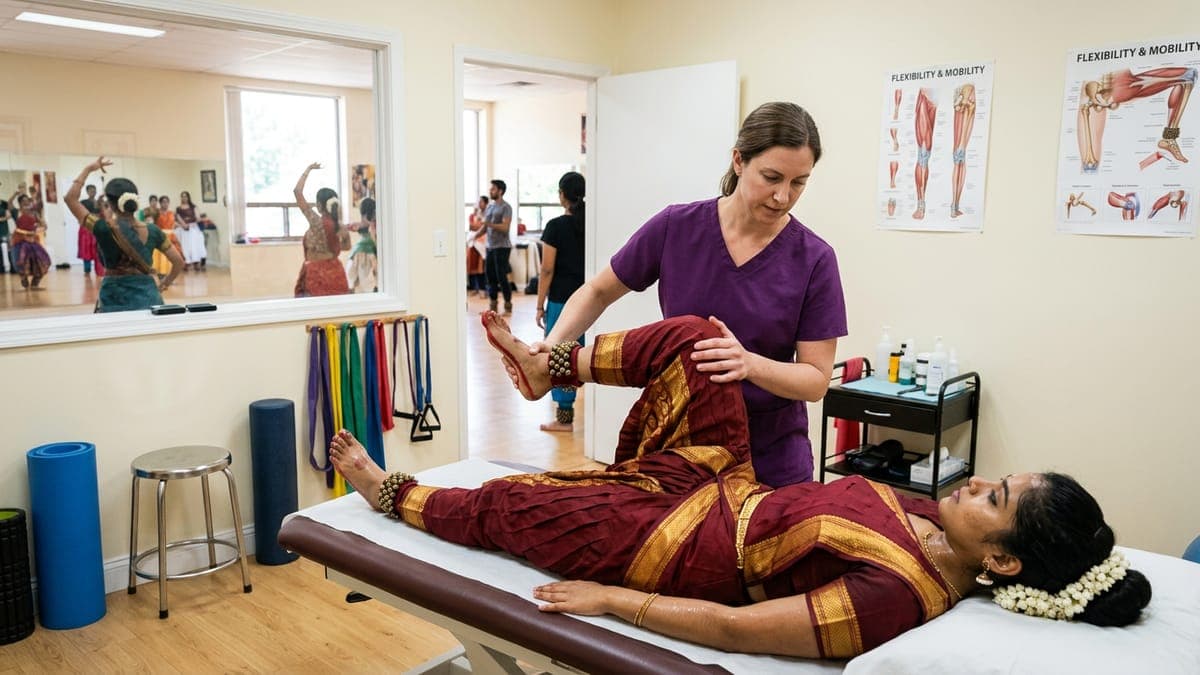
Physiotherapy for Dancers in Faridabad: Injury Treatment and Prevention
Dancers — whether classical Indian (Bharatanatyam, Kathak, Odissi), Bollywood-style, contemporary, or hip-hop — place extreme physical demands on their bodies. The combination of hypermobility, turnout positions, pointe work, floor work, and repetitive impact makes dancers one of the highest-risk populations for musculoskeletal injury.
Specialist dance physiotherapy understands these unique demands and provides treatment that preserves artistry while managing injury.
At Realign Rehab Clinic , NIT-5, Faridabad, our expert physiotherapist Dr. Vaishali Suri provides evidence-based treatment designed for your specific needs.
We serve patients from NIT, Sector 14, Old Faridabad, Green Field Colony, Ballabhgarh, Surajkund, and surrounding areas.
Causes and Risk Factors
- Repetitive impact from jumps and floor work on hard studio floors
- Extreme range-of-motion demands — full splits, backbends, extreme turnout — beyond normal joint tolerance
- Hypermobility syndromes — dancers often have generalised joint hypermobility increasing injury risk
- Poor nutrition and low energy availability (RED-S) weakening bone density and healing capacity
- Overtraining during performance season without adequate recovery
- Technique faults — forced turnout from the knee rather than the hip, rolling in of the ankles
Signs and Symptoms
- Ankle pain — anterior impingement from extreme plantarflexion in pointe
- Hip pain — snapping hip, labral tears from extreme turnout demands
- Knee pain from deep plié positions and impact landing
- Stress fractures in the foot and lower leg from repetitive impact
- Low back pain from repeated spinal hyperextension in backbends and arabesques
- Muscle strains — hamstring, hip flexor, and groin from extreme flexibility demands
Physiotherapy Treatment at Realign Rehab, Faridabad
- Dance-specific injury assessment — understanding the demands of your genre
- Hip joint and labral management for turnout-related impingement
- Ankle strength and proprioception for pointe work safety
- Core and lumbopelvic stability — essential for safe spinal extension
- Hypermobility management — building neuromuscular control around hypermobile joints
- Return-to-dance protocol with technique coaching integration
Frequently Asked Questions
Is it safe for dancers to continue training while injured?
It depends entirely on the injury. Minor soft tissue issues with appropriate modification: often yes.
Stress fractures, labral tears, or acute sprains: rest from aggravating activities is essential. We work with dance teachers to design safe modified training during recovery.
How is dance physiotherapy different from regular physio?
Dance physiotherapy requires understanding of dance technique, the demands of your specific genre, the aesthetics required (e.g., extreme turnout, pointe work), and how to rehabilitate within these constraints. We don't just treat the injury — we address the dance-specific mechanics contributing to it.
Do you treat Bharatanatyam and Kathak dancers?
Yes — we understand the specific demands of Indian classical dance forms, including the extreme knee flexion and turnout of Bharatanatyam, and the spinning and footwork demands of Kathak. We are experienced in treating the typical injury patterns of both.
When should a dancer seek physiotherapy?
Early — do not wait until injury prevents you dancing. Persistent pain, recurring injuries, or concerns about your physical capacity for your role all warrant physiotherapy assessment.
Prevention is far more effective than treatment in dance.
Book Your Consultation
📍 NIT-5, Faridabad | 📞 +91 9818185589 | Mon–Sat: 8 AM–8 PM
Related Articles: Wrist Pain from Keyboard and Mouse Use in Faridabad: Physiotherapy Solutions | Physiotherapy and Exercise for Weight Loss in Faridabad | Volleyball Injury Physiotherapy in Faridabad: Shoulder, Knee, and Ankle | Upper Crossed Syndrome Treatment in Faridabad: Fix Rounded Shoulders and Neck
Related Conditions: Wrist Pain Treatment | Urinary Incontinence Treatment | Tennis Elbow Treatment
Related Services: Advanced Sports Physiotherapy | Pediatric Physio